Monitoring filter pressure with sensors helps you keep your system running effectively and prevents costly failures. Sensors detect small pressure changes, alerting you to issues like clogging or leaks early on. They integrate easily with your control systems, providing real-time data that allows for automated adjustments or alarms. Regularly tracking pressure trends ensures ideal flow and reduces downtime. Continue exploring to discover how advanced sensors can enhance your filtration effectiveness even further.
Key Takeaways
- Sensors detect minute pressure changes, enabling early identification of filter clogging or fouling.
- Real-time pressure data allows for automated alerts and system adjustments to maintain optimal performance.
- Threshold settings help prevent filter failures by triggering alarms before pressure exceeds safe limits.
- Durable sensors withstand harsh environments, ensuring reliable monitoring over time.
- Continuous pressure monitoring supports proactive maintenance, reducing downtime and preventing costly repairs.
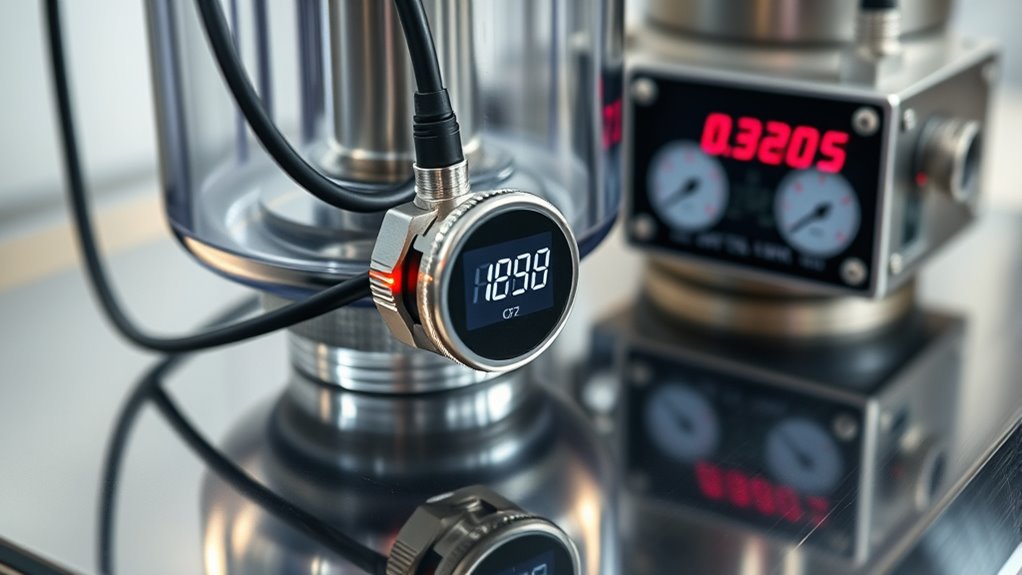
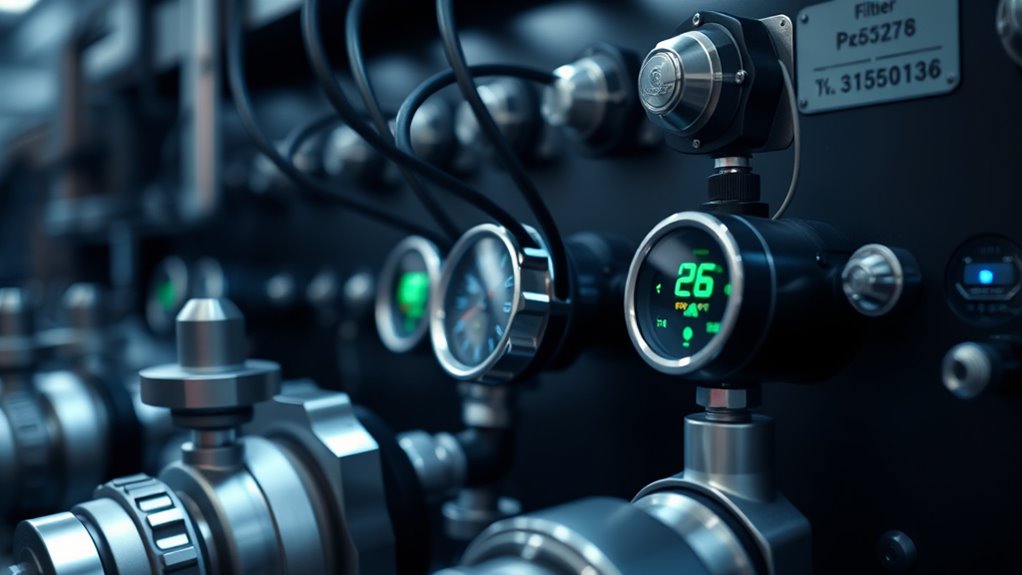
Monitoring filter pressure with sensors is essential for maintaining ideal filtration system performance. When you rely on a filter sensor to measure pressure, you gain real-time insights into how your system is functioning. Pressure monitoring allows you to detect issues before they escalate, ensuring your filtration process remains efficient and effective. Without proper monitoring, you risk system failures, increased downtime, or compromised product quality. A reliable pressure sensor provides continuous data, so you can quickly identify abnormal pressure changes that might indicate clogging, leaks, or other malfunctions.
Monitoring filter pressure with sensors ensures system efficiency, early issue detection, and optimal filtration performance.
Incorporating pressure monitoring into your setup means you can set thresholds for safe operation. When the filter sensor detects pressure levels outside of these parameters, it can trigger alarms or automated responses. This proactive approach minimizes the need for manual inspections and helps you respond swiftly to potential problems. The key advantage here is preventing filter fouling or rupture, which could lead to costly repairs or safety hazards. By actively tracking pressure, you not only extend the lifespan of your filters but also enhance the overall efficiency of your system.
The technology behind filter sensors has advanced considerably, making pressure monitoring more precise and easy to integrate. Modern sensors are highly sensitive, capable of detecting minute pressure variations, and are built to withstand harsh environments. This means you can deploy them in various industries, from water treatment to manufacturing, without worrying about sensor deterioration. Installing these sensors is straightforward; they typically connect to your existing control systems, providing seamless data flow. With this data, you can implement automated adjustments, such as increasing backflushing frequency or alerting maintenance teams to inspect the filter.
Additionally, choosing sensors with advanced durability features ensures reliable operation even in challenging conditions, further safeguarding your filtration system. Regularly reviewing pressure data from your sensors allows you to identify patterns and forecast maintenance needs. If you notice a gradual increase in pressure, it’s a clear sign that your filters are becoming clogged. Addressing this early prevents complete system shutdowns and maintains consistent flow rates. Conversely, if pressure drops unexpectedly, it might indicate a leak or a broken sensor, prompting immediate investigation. By continuously monitoring pressure, you maintain ideal filtration performance, reduce waste, and improve safety standards.
Frequently Asked Questions
What Are the Common Types of Sensors Used for Filter Pressure Monitoring?
You typically use pressure transducers, piezoelectric sensors, and strain gauge sensors for filter pressure monitoring. These sensors offer high accuracy and quick response times, ensuring reliable data. They easily integrate with control systems, enabling seamless data collection and analysis. By choosing the right sensor type, you improve monitoring precision, maintain filter efficiency, and facilitate better system management through accurate data integration.
How Often Should Filter Pressure Sensors Be Calibrated?
You should calibrate your filter pressure sensors at least once a year to guarantee optimal accuracy, though calibration frequency may vary based on sensor longevity and operating conditions. Regular calibration helps prevent measurement drift, maintaining reliable readings. If your sensors operate in harsh environments or show signs of inconsistency, consider calibrating more frequently. Consistent calibration keeps your system running smoothly and extends the lifespan of your pressure sensors.
What Are the Signs of Sensor Malfunction in Filter Pressure Systems?
Imagine your sensor’s accuracy suddenly falters, like a compass losing its true north. You’ll notice warning indicators flashing on your control panel, irregular pressure readings, or sudden drops and spikes that don’t match the system’s normal behavior. These signs suggest sensor malfunction, so it’s essential to inspect and recalibrate promptly. Ignoring these cues risks system inefficiency, potential damage, or safety hazards, so stay vigilant for any unusual activity.
Can Sensor Data Predict Filter Failure Before It Occurs?
Yes, sensor data can predict filter failure before it occurs, especially when you utilize predictive analytics and sensor integration. By analyzing pressure trends and anomalies, you can identify early warning signs of potential issues. This proactive approach enables you to schedule maintenance, prevent downtime, and extend filter life, ultimately saving you costs and ensuring system reliability. Regularly reviewing sensor data is key to effective predictive maintenance.
What Maintenance Is Required for Sensors Monitoring Filter Pressure?
You need to regularly perform calibration procedures on your pressure sensors to guarantee accuracy. Keep an eye out for sensor replacement if readings become erratic or drift over time. Clean the sensors periodically to prevent dust or debris from affecting performance. Checking connections and ensuring proper installation are also essential. Following these maintenance steps helps maintain reliable pressure monitoring, reduces downtime, and extends your sensor lifespan.
Conclusion
By using sensors to monitor filter pressure, you can catch issues early and prevent costly system failures. Some might think it’s unnecessary or too complicated, but with modern technology, setup is straightforward and reliable. Don’t wait until a filter fails—stay ahead with real-time data. Investing in sensor monitoring keeps your system running smoothly, saves money, and provides peace of mind. Take control today and ensure your filters always perform at their best.