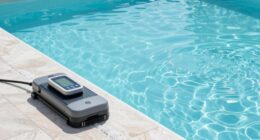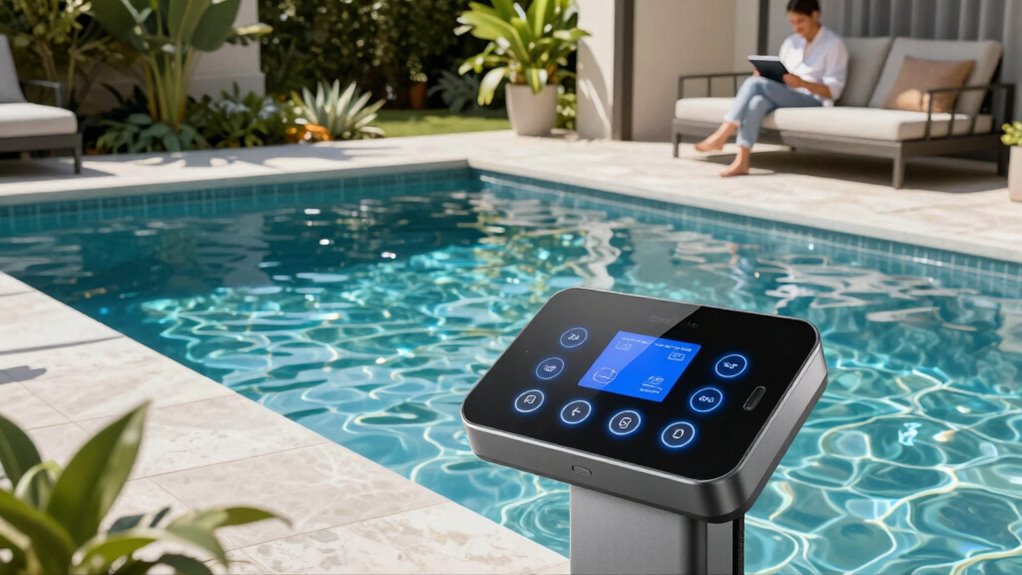
Before adding pool automation, consider your specific needs like controlling water temperature, chemical levels, and filtration cycles. Think about your budget and compatibility with existing equipment, ensuring the system offers energy-efficient features and easy user controls. Look for reliable brands with good support and updates. Maintenance, future-proofing, and smart home integration are also key. Keep these points in mind to make a smart choice—there’s more to explore on how to get started effectively.
Key Takeaways
- Assess your pool’s specific needs, including tasks like temperature control, chemical balancing, and filtration scheduling.
- Ensure compatibility with existing equipment and consider potential upgrades or adapters required.
- Prioritize energy-efficient features and programmable options to reduce long-term operational costs.
- Choose user-friendly systems with intuitive interfaces and reliable customer support.
- Evaluate the system’s ability to integrate with natural features, landscaping, and smart home devices.
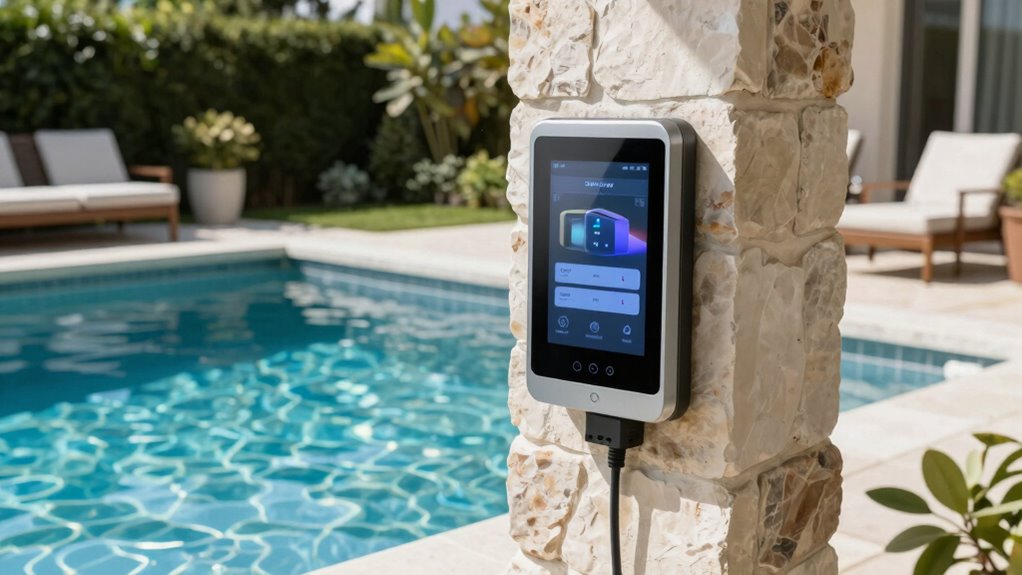
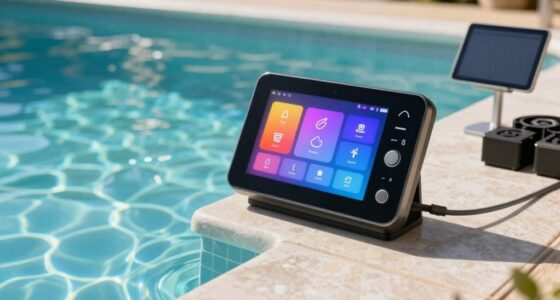
When considering pool automation, it’s essential to evaluate your specific needs and the features that will make maintenance easier for you. Automated systems can markedly reduce the time and effort you spend on pool maintenance, but they vary in complexity and capabilities. Think about what tasks you want to automate—whether it’s controlling water temperature, adjusting chemical levels, or managing filtration cycles. Understanding your priorities helps you select a system that aligns with your lifestyle and budget. For example, if you value convenience, look for automation that allows remote control via smartphone apps. If energy efficiency is a top concern, choose systems designed to optimize power consumption and minimize waste. Many modern pool automation solutions include energy-efficient features like variable-speed pumps and programmable schedules, which can cut operational costs over time. Additionally, consider how the system integrates with other natural pool features or landscaping to create a seamless backyard environment. It’s also wise to assess the system’s connectivity options to ensure smooth operation and updates. Being aware of the latest advancements in pool automation technology can help you select a more future-proof system that adapts to evolving needs.
Evaluate your needs and priorities to choose the right pool automation system for easier maintenance and energy efficiency.
Budget considerations are also essential. While high-end systems offer advanced functionalities, they often come with higher initial costs. However, the savings on energy bills and reduced maintenance effort can offset this investment. It’s worth comparing different brands and models to find one that balances affordability with features tailored to your needs. Additionally, consider compatibility with your existing pool equipment. Some systems work seamlessly with specific brands or models, while others may require additional adapters or upgrades. Ensuring compatibility prevents future headaches and makes installation smoother.
Ease of use is another vital aspect. You want a system that’s intuitive and straightforward to operate, especially if you prefer managing your pool without extensive technical knowledge. Many systems come with user-friendly interfaces and clear instructions, but it’s helpful to read reviews or seek advice from professionals. Also, check whether the automation system allows for software updates and integration with other smart home devices, which can enhance overall convenience and control.
Finally, think about long-term maintenance and support. Reliable customer service, warranties, and readily available parts are essential for ensuring your automation system remains functional and efficient over time. Investing in a reputable brand that offers comprehensive support can save you frustration down the line. In conclusion, carefully evaluating your specific needs, focusing on energy efficiency, compatibility, ease of use, and support options will help you choose the right pool automation system. This approach ensures that your investment simplifies pool maintenance and delivers lasting benefits, giving you more time to enjoy your pool rather than managing its upkeep.

Wireless Automatic Pool Water Level Control System with Three Modes and 500ft Range Ideal for Pools Spas and Water Tanks
AUTOMATIC WATER REFILL FUNCTION: The water level sensor monitors the water level and triggers the valve controller to…
As an affiliate, we earn on qualifying purchases.
As an affiliate, we earn on qualifying purchases.
Frequently Asked Questions
How Much Does Pool Automation Typically Cost to Install?
Pool automation typically costs between $1,500 and $4,000 to install, depending on the system’s complexity and features. You’ll want to weigh how the system impacts pool energy efficiency, helping you save on operational costs over time. Additionally, choose a system known for durability, ensuring it withstands weather and frequent use. Investing wisely in a reliable, energy-efficient automation system can enhance your pool experience and longevity.
Can Pool Automation Systems Be Integrated With Existing Smart Home Devices?
Think of your smart home devices as a well-orchestrated symphony, ready to harmonize with your pool automation system. Yes, many pool automation systems can be integrated with existing smart home devices, allowing seamless control through smart hubs or apps. You can even use voice control to adjust your pool settings effortlessly. Just make certain your automation system is compatible with your current smart home setup for smooth integration and easy operation.
What Maintenance Is Required for Pool Automation Systems?
You need to regularly check your pool automation system’s equipment calibration to guarantee it operates correctly. Maintaining proper chemical balance is essential for system longevity and water quality. Clean sensors and filters as needed, and update software when available. Routine inspections help prevent malfunctions, so stay proactive. With consistent maintenance, your automation system will run smoothly, keeping your pool inviting and in top condition.
Are There Compatibility Issues With Certain Pool Types or Brands?
You might find that compatibility issues arise if your pool type or brand isn’t supported by the automation system. For example, some automation brands work seamlessly with concrete pools but struggle with vinyl or fiberglass ones. Before installing, check if your pool’s brand and type are compatible. Coincidentally, this often aligns with whether the system can handle your specific equipment, ensuring smooth operation without surprises.
How Reliable Are Pool Automation Systems During Power Outages?
Pool automation systems can struggle during power outages, but their reliability depends on your setup. Without power, their power outage resilience is limited unless you invest in backup power solutions like generators or uninterruptible power supplies. These backups ensure your automation continues functioning smoothly, giving you peace of mind. Always assess your system’s capacity for power outage resilience and consider backup options to keep your pool running seamlessly during outages.
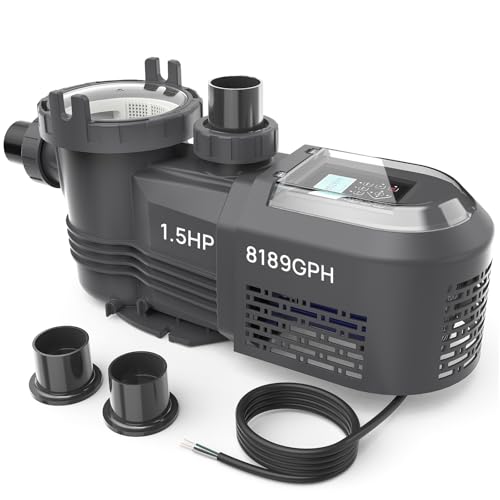
Aquastrong Variable Speed Pool Pump In/Above Pool Pump Energy Efficient High Flow Powerful Self Primming Swimming Pool Pumps with Filter Basket,Dark Black
Energy-Saving Design: Utilizing variable speed technology, our pump reduces energy consumption by up to 80% compared to traditional…
As an affiliate, we earn on qualifying purchases.
As an affiliate, we earn on qualifying purchases.
Conclusion
Before you decide on pool automation, remember to evaluate your budget, system compatibility, and maintenance needs. Automation can save you time and enhance your pool experience, but it’s essential to select wisely. Did you know that a well-implemented pool automation system can reduce energy costs by up to 30%? By considering these factors, you’ll guarantee your investment pays off, making your pool more enjoyable and efficient for years to come.

Hayward Automatic Chlorine Feeder, 9lbs, in-Line (incl Mounting Base) (Open Line) CL200EF
X-Ring seal provides long life and easy cover removal
As an affiliate, we earn on qualifying purchases.
As an affiliate, we earn on qualifying purchases.

DEWENWILS Pool Pump Timer, Outdoor Smart WiFi Box, Heavy Duty 40A 240VAC 3HP Wireless Controller Timer for Pool, Water Heater, Compatible with Smart Phone, Alexa, Google Assistant, ETL Listed
[Versatile Timer Function] This WiFi pool pump timer can turn your devices on/off automatically at scheduled times with…
As an affiliate, we earn on qualifying purchases.
As an affiliate, we earn on qualifying purchases.