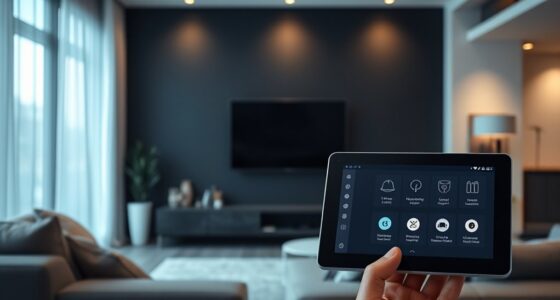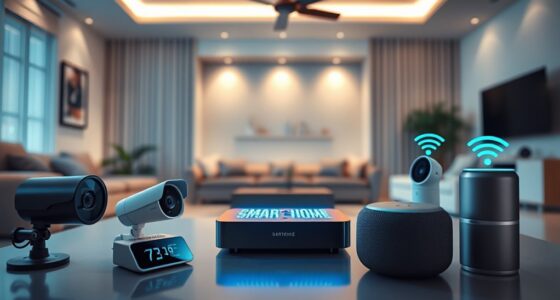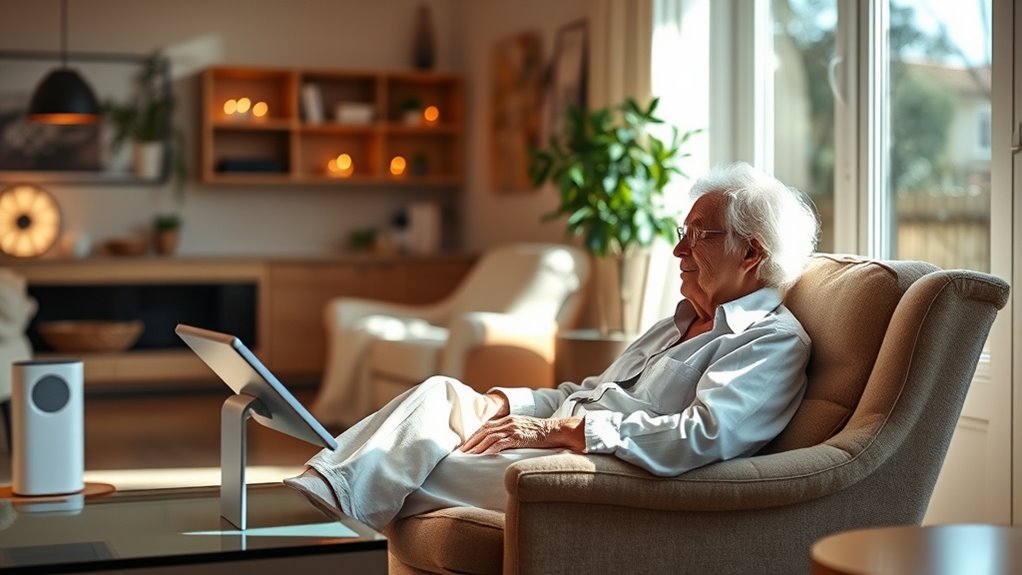

Smart home technologies are essential for aging in place, helping you stay safe, independent, and comfortable. Installing motion-activated lighting, grab bars, and non-slip mats can prevent falls, while smart sensors monitor movement and alert caregivers if needed. Medication management is simplified with digital dispensers and voice-activated reminders. These features work together to create a supportive environment that promotes confidence and peace of mind. Keep exploring to discover more ways to enhance your home’s safety and independence.
Key Takeaways
- Smart home solutions enhance safety and independence by reducing fall risks and enabling easy access to help.
- Motion-activated lighting and secure rugs prevent common tripping hazards for seniors.
- Smart sensors monitor activity and alert caregivers to irregular movements, supporting timely assistance.
- Medication management technologies like smart dispensers and voice assistants improve adherence and safety.
- Home modifications and active safety features create a secure environment that promotes aging in place.

Have you ever wondered how you can stay comfortable and independent as you age? Aging in place is all about creating a living environment that supports your daily needs while maintaining your independence. One of the key aspects of this is ensuring your safety through smart home solutions that focus on fall prevention and medication management. Falls are a leading cause of injury among older adults, so minimizing fall risks is essential. Installing motion-activated lighting in hallways and bathrooms helps eliminate dark spots that could cause tripping. Secure rugs, grab bars near the toilet and shower, and non-slip mats also play a crucial role in reducing fall hazards. Smart sensors can monitor movement and alert you or caregivers if irregular activity is detected, providing an extra layer of safety. These measures not only prevent accidents but also give you peace of mind, knowing your home is actively working to keep you safe. Vetted safety products can further enhance your home’s protective features.
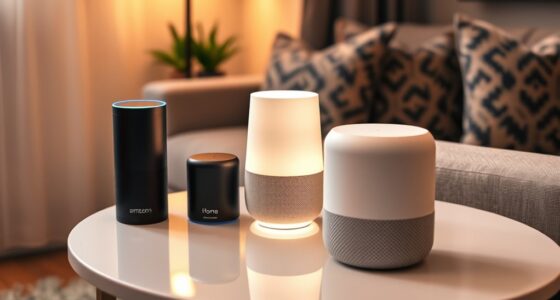
Medication management is another critical component of aging in place. Managing multiple medications can be confusing and sometimes dangerous without proper support. Smart medication dispensers remind you when it’s time to take your pills and dispense the correct dosage, helping you avoid missed doses or accidental overdoses. Some devices even send alerts to family members or caregivers if a dose is missed, ensuring prompt intervention if needed. Digital pill organizers sync with your smartphone or voice assistants, providing daily reminders and tracking adherence over time. This technology simplifies your routine and reduces the stress associated with complex medication schedules. Additionally, voice-activated smart speakers can help you set medication reminders, answer questions about your prescriptions, or even reorder refills, making medication management more straightforward and less overwhelming.
Frequently Asked Questions
How Much Does Smart Home Technology for Aging in Place Typically Cost?
Smart home technology for aging in place typically costs between $500 and $2,500 for installation, depending on the devices and setup you choose. Subscription fees usually range from $10 to $50 per month, covering services like remote monitoring and updates. Keep in mind that upgrading or expanding your system can add to these costs, but many find the benefits of increased safety and independence well worth the investment.
Are Smart Home Devices Easy for Seniors to Operate Independently?
Smart home devices can be quite user-friendly for seniors, especially with proper device customization. While usability challenges exist, many devices feature simplified controls and voice commands that make operation easier. You can personalize settings to match comfort levels, ensuring independence. With some initial guidance and choosing intuitive devices, seniors often find these technologies accessible and empowering, helping them manage daily tasks confidently without feeling overwhelmed.
What Privacy Concerns Exist With Smart Home Monitoring Systems?
Privacy concerns with smart home monitoring systems are like a double-edged sword, cutting both ways. You might worry about your data being accessed without permission, but good systems use data encryption to protect your information. Always guarantee you provide clear user consent, so you know what’s being collected and how it’s used. Staying informed and cautious helps you maintain control over your privacy while enjoying the benefits of smart technology.
How Can Families Ensure the Security of Smart Home Data?
To guarantee your smart home data stays secure, you should implement data encryption for all your devices and communications, making it harder for unauthorized access. Additionally, set strong access controls, like unique passwords and user permissions, to limit who can view or change your data. Regularly update your device software too, as it patches security vulnerabilities and helps protect your family’s information effectively.
What Training or Support Is Available for Seniors Using Smart Home Tech?
Imagine walking into your home, confident that you understand every smart device around you. You can find local classes or online tutorials designed to boost your tech literacy, making your smart home feel familiar and safe. Caregiver training programs also help family members assist you effectively. These resources empower you to use smart home tech independently, ensuring you stay secure, connected, and comfortable in your everyday environment.
Conclusion
With smart home supports, you can confidently age in place, maintaining independence and safety. These technologies are designed to adapt to your evolving needs, offering peace of mind for you and your loved ones. Isn’t staying in the comfort of your own home worth embracing the future? By choosing smart solutions, you’re taking control of your aging journey, ensuring comfort, security, and dignity every step of the way.