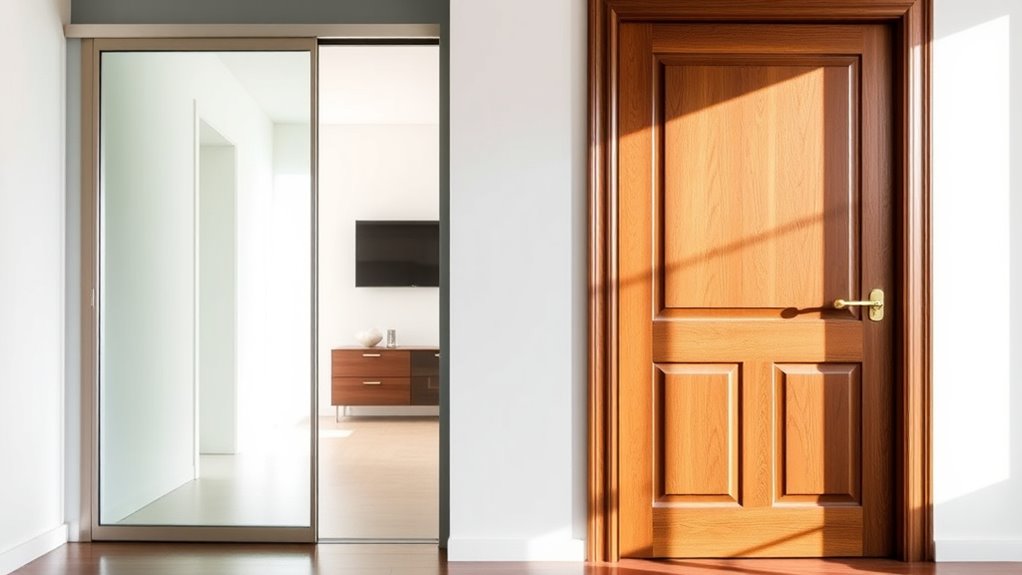

If you want to save space, sliding doors are your best option because they don’t require room to swing open, making them perfect for tight spots. Swing doors need extra clearance, which can limit furniture placement and reduce usable space. Although sliding doors may cost more upfront, they offer long-term benefits and maximize room efficiency. Keep exploring to discover ways these options can fit perfectly into your space and needs.
Key Takeaways
- Sliding doors do not require space to swing open, maximizing room utilization.
- Swing doors need clear clearance, which can limit furniture placement and reduce usable space.
- Sliding doors are ideal for small or tight spaces due to their space-saving design.
- Swing doors may require structural modifications to accommodate door swing, affecting space planning.
- Overall, sliding doors better optimize space, especially in limited or crowded areas.
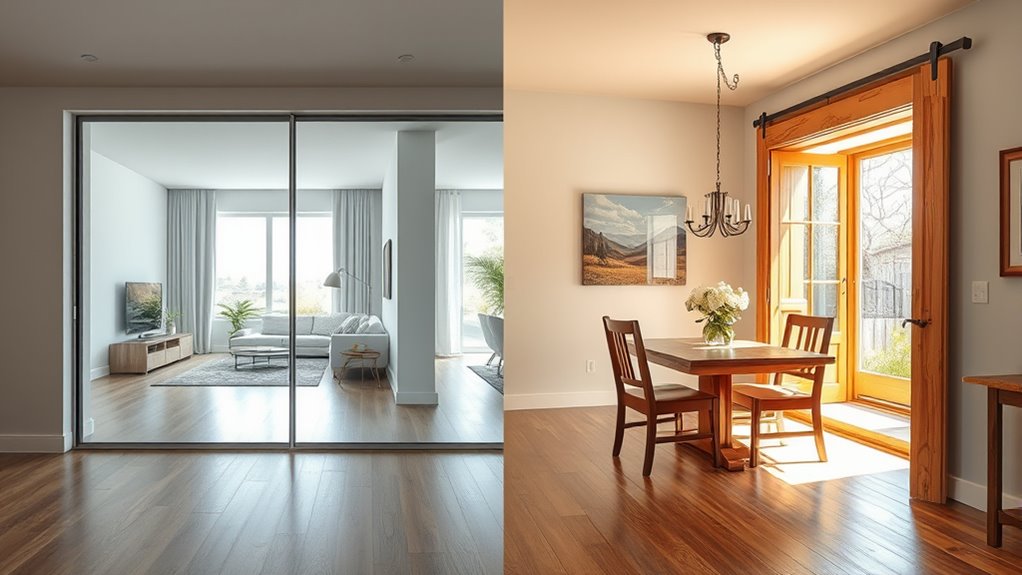
Are sliding doors or swing doors better suited for your space? When making this decision, you need to consider how each type of door fits your layout, aesthetic, and budget. One of the key factors is door material, as it influences both appearance and durability, but equally important is installation costs. Sliding doors typically feature a sleek, modern look and are made from materials like glass, aluminum, or wood, allowing you to choose something that complements your interior style. Swing doors, on the other hand, often come in solid wood or metal, and their material choice can substantially impact both their look and weight. Knowing the door material helps you gauge long-term maintenance needs and overall expense, but it’s also essential to factor in installation costs, which can vary depending on the door type and material complexity.
Sliding doors tend to have higher upfront installation costs, especially if they feature large glass panels or custom frames. Installing them requires precise hardware and track systems, which can add to labor expenses. However, once installed, they often require less ongoing maintenance and can last for years with minimal upkeep. Swing doors are generally easier and quicker to install, especially if they’re standard models, which keeps initial costs lower. But, if you opt for premium materials like solid hardwood or intricate metal designs, both the door material and installation process can drive up costs. Swing doors also require space to swing open, which might necessitate additional room clearance and potentially more structural modifications during installation, adding to the overall expense. Additionally, door maintenance varies depending on the material, influencing long-term affordability.
When it comes to saving space, sliding doors are the clear winner. Because they slide along a track rather than swinging outward, they don’t need clearance space, making them ideal for smaller rooms or tight corners. This can be especially advantageous in apartments or rooms where space is at a premium. Swing doors, on the other hand, require a clear arc of space to open fully, which can limit furniture placement and make tight spaces less functional. If you’re trying to maximize your room’s usable area, sliding doors offer a practical solution without sacrificing style or accessibility.

SMARTSTANDARD 6.8FT Barn Door Hardware Kit, Sliding Barn Door Track -Smoothly and Quietly -Easy to Install -Includes Step-by-Step Installation Instruction Fit 40" Wide Door Panel (J Shape Hanger)
【Strong and Durable】 Barn door track are made of high quality alloy with black powder coating, This greatly…
As an affiliate, we earn on qualifying purchases.
As an affiliate, we earn on qualifying purchases.
Frequently Asked Questions
Which Door Type Offers Better Insulation and Energy Efficiency?
Sliding doors generally offer better insulation and energy efficiency because they tend to have better thermal performance and reduce air leakage around the frame. Swing doors, especially if not properly sealed, can allow more air to escape, decreasing energy efficiency. You’ll notice that sliding doors help maintain consistent indoor temperatures, saving you money on heating and cooling costs. So, for better insulation, sliding doors are typically the smarter choice.
Are Sliding or Swing Doors More Cost-Effective Long-Term?
Sliding doors tend to be more cost-effective long-term, despite higher initial installation costs, because they require less maintenance and save space, reducing energy costs. Swing doors often have lower upfront prices but can increase heating and cooling expenses due to gaps and less insulation. Your choice depends on balancing immediate expenses with ongoing savings, making sliding doors a smart investment for long-term cost comparison.
How Do Maintenance Needs Compare Between Sliding and Swing Doors?
You’ll find that swing doors generally require more hinge maintenance and door lubrication over time, especially with frequent use. Sliding doors tend to need less maintenance; however, you should regularly clean and lubricate the tracks to guarantee smooth operation. Swing doors may need hinge adjustments or replacements, while sliding doors benefit from track cleaning and roller checks. Overall, sliding doors typically demand less ongoing maintenance.
Which Door Type Provides Better Security Features?
Imagine a sturdy fortress guarding your home; that’s how a swing door with robust door material and advanced locking mechanisms offers better security. Swing doors typically feature stronger frames and more secure locks, making them harder to breach. Sliding doors, while sleek, often have weaker locking points. If security’s your priority, choose a swing door with high-quality materials and modern locks to keep unwanted visitors out.
Can Sliding or Swing Doors Be Customized for Unique Spaces?
Yes, both sliding and swing doors can be customized for unique spaces. You can enhance design flexibility and aesthetic options by choosing different materials, finishes, and hardware. Sliding doors often suit modern, minimalist looks, while swing doors can be tailored with decorative panels or unique hardware. Customization allows you to optimize space, match your decor, and create a distinctive entrance tailored to your style and needs.

Saloon Swinging Doors 24/28/30/32/36 Inch Wide, Black Heavy Duty Swinging Half Door with Hinges and Hardware, Single Swing Cafe Doors for Doorway Bar Kitchen Decor
【 Heavy-Duty and Durable Saloon Door 】 Made of selected high-quality pine wood, not easy to crack and…
As an affiliate, we earn on qualifying purchases.
As an affiliate, we earn on qualifying purchases.
Conclusion
Choosing between sliding and swing doors is like deciding between a graceful dance and a reliable handshake. I once watched a tiny apartment turn chaotic with swinging doors, but when they installed sliding doors, everything opened up—literally and figuratively. Just like a puzzle piece fitting perfectly, selecting the right door saves space and simplifies your life. Think of it as carving out room for what truly matters—comfort, style, and ease. Your space deserves that kind of thoughtful upgrade.

Hugcoz 42" Dog Crate Furniture – Dog Crate with DIY Frame, Sliding Door Indoor Kennel, Wooden Dog Cage End Table, for Large Breed, Rustic Brown Size XL
Multi-Functional Home Decor: More than a sturdy dog kennel, this piece expertly doubles as a stylish end table,…
As an affiliate, we earn on qualifying purchases.
As an affiliate, we earn on qualifying purchases.

Kimberly Bay Closet Door, Bi-fold, 6-Panel Style Solid Wood (80×24)
Net size is 78-3/4 in. high x 23-11/16 in. wide x 1 inch thick
As an affiliate, we earn on qualifying purchases.
As an affiliate, we earn on qualifying purchases.