
To create kid-friendly zones in compact homes, choose corners away from busy areas, using foam mats and soft rugs for safe play. Incorporate vertical storage like wall shelves and clear bins to keep toys organized and maximize space. Secure furniture and install safety gates to prevent accidents. Focus on combining fun with safety by designing designated areas that are both functional and visually appealing. Keep exploring for practical tips to maintain a playful and secure environment in small spaces.
Key Takeaways
- Choose corners away from furniture and busy areas for safe, dedicated play zones.
- Use foam mats and soft rugs to create cushioned, defined play surfaces.
- Incorporate vertical storage like wall shelves to maximize limited space.
- Secure furniture and add safety gates to prevent accidents in small homes.
- Use transparent bins and labeled storage to keep toys organized and accessible.

Are you searching for the perfect spots where kids can play safely and happily? In a compact home, creating designated kid-friendly zones is essential to keep chaos at bay and ensure your little ones have a space to enjoy themselves. The key lies in combining creative storage solutions with safe play areas, transforming even the smallest spaces into functional, fun zones. With a little planning, you can maximize every inch of your home without sacrificing safety or style.
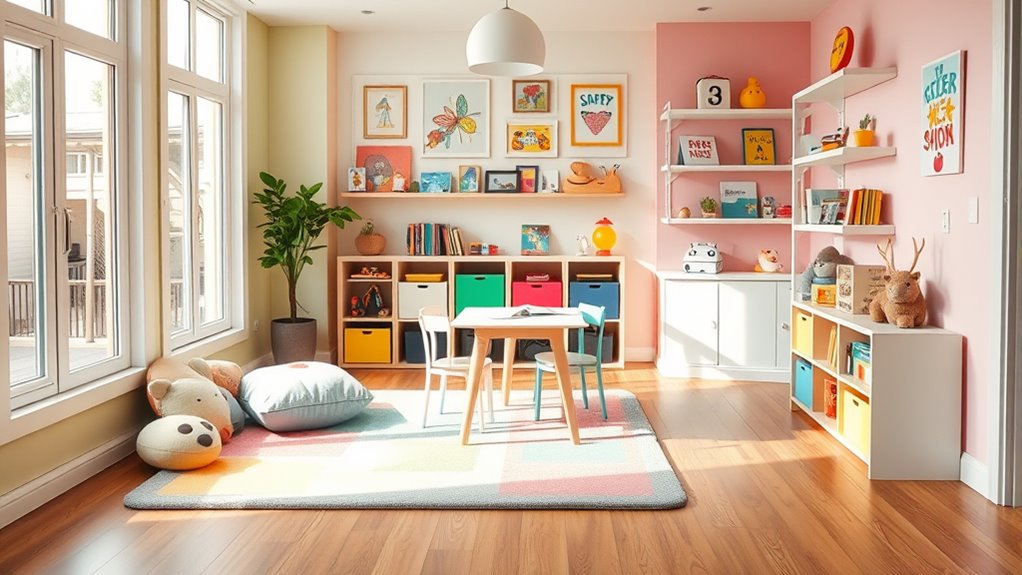
Start by designing a dedicated play corner that’s both inviting and secure. Choose a corner that’s away from heavy furniture and busy walkways to minimize accidents. Use soft, non-slip rugs or foam mats to create a safe play surface. These mats not only cushion falls but also define the space, making it clear where playtime begins. To keep toys and supplies organized, incorporate creative storage solutions like multi-functional furniture—think ottomans with hidden compartments, low shelves, or stackable bins. These keep clutter contained and encourage your children to tidy up after play, fostering independence and responsibility.
Create a safe, inviting play corner with soft rugs and smart storage solutions for a clutter-free space.
In a small home, vertical storage is your best friend. Wall-mounted shelves or hanging cubbies can hold books, art supplies, and small toys, freeing up precious floor space. Transparent containers make it easy for kids to see what’s inside, promoting quick cleanup and easy access. Labeling bins helps teach organization skills while ensuring everything has a designated spot. This approach keeps the area tidy and prevents toys from spilling into other parts of your home. Additionally, implementing active listening and empathy when communicating with children about tidiness can foster cooperation and a sense of responsibility.
Safety should always be your top priority when establishing kid-friendly zones. Secure furniture to the wall to prevent tipping, and opt for rounded-edged tables and shelves to reduce injury risks. Use safety gates or barriers if your play zone is near stairs or dangerous areas. Regularly check the area for hazards, like loose cords or small objects that could be choking hazards. Adequate lighting is also important—bright enough to keep the space cheerful and safe, but soft enough to avoid glare that could cause discomfort.
Incorporating these elements creates a safe, organized, and playful environment in your compact home. Not only do you give your kids a dedicated space to enjoy and learn, but you also keep your living area neat and functional. With creative storage solutions and a focus on safety, your home becomes a welcoming place where children can explore freely while you maintain peace of mind. It’s all about making smart choices that balance fun and practicality, turning small spaces into big opportunities for happiness and growth.
Frequently Asked Questions
How Do I Ensure Safety in Small Kid-Friendly Zones?
To guarantee safety in small kid-friendly zones, install safety gates at doorways to prevent falls or wandering. Use non-slip flooring to reduce slips and injuries during play. Keep sharp objects and choking hazards out of reach, and secure furniture to the wall. Regularly check all safety features, and create a clutter-free environment. By taking these steps, you can create a secure space where your kids can explore and enjoy freely.
What Are the Best Materials for Durable Furniture?
You might think soft materials are best, but research shows durable options like hardwood, metal, and high-quality plastics actually stand up better in kids’ play areas and toddler furniture. These materials resist scratches, dents, and spills, making them safer and easier to clean. Opt for finishes that are non-toxic and scratch-resistant, ensuring your little ones enjoy their space without worry. Durability is key to keeping your small zone functional and inviting.
How Can I Maximize Storage in Limited Spaces?
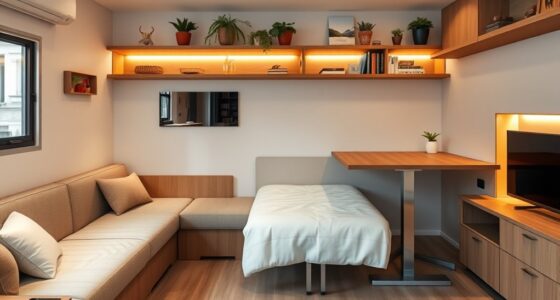
To maximize storage in limited spaces, you should focus on creative storage solutions and multi-purpose furniture. Opt for beds with built-in drawers, fold-away desks, and storage ottomans to save space. Use vertical storage like wall-mounted shelves and hooks, and incorporate furniture that serves dual functions. These strategies help you keep things organized without clutter, making your compact home more functional and comfortable for everyone.
What Colors Promote Calmness for Children?
Calming your child’s environment starts with choosing the right colors. According to color psychology, soothing shades like soft blues, gentle greens, and warm neutrals promote calmness and focus. These colors reduce stress and create a peaceful atmosphere. You should incorporate these hues into your kid-friendly zones to help your children feel relaxed and secure. Opt for muted tones and avoid overly bright or chaotic colors to maintain tranquility in your compact space.
How Do I Create Flexible Zones for Different Ages?
To create flexible zones for different ages, designate a play area with versatile furniture that can accommodate as your child grows. Incorporate a cozy study nook with adjustable lighting and seating, allowing older kids to focus. Use modular storage to keep toys and books organized, and add movable partitions to easily reconfigure spaces for play, study, or relaxation. This approach guarantees your home remains adaptable and supportive of all ages.
Conclusion
Creating kid-friendly zones in your compact home transforms chaos into calm. With thoughtful planning, you’ll turn even the tiniest space into a playground of creativity and comfort. These zones aren’t just areas—they’re the heart of your home, where your kids can grow, learn, and play without feeling cramped. Believe it or not, a well-designed corner can make your entire home feel twice as spacious and infinitely more joyful. You’ve got this—your home will be the happiest, most organized place on earth!