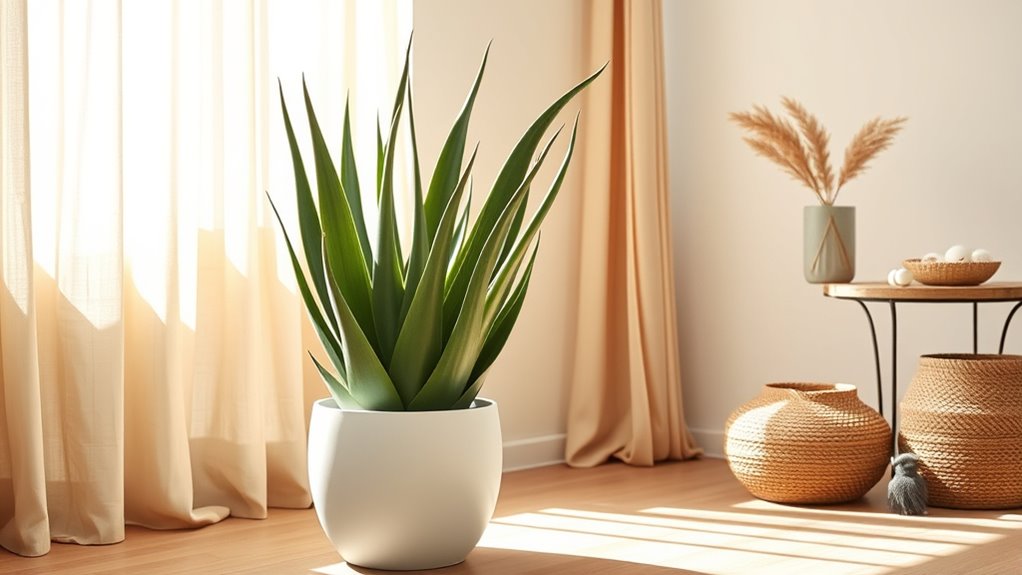

To give your indoor yucca that authentic desert vibe, water it sparingly and guarantee the soil drains well to prevent root rot. Place it where it gets bright, indirect sunlight, and keep good airflow around the plant to deter pests. Regularly prune dead leaves and inspect for common pests like spider mites or mealybugs. Maintaining these steps will help your yucca stay healthy and vibrant—continue on for more tips to perfect your care routine.
Key Takeaways
- Water deeply but infrequently, allowing the top 1-2 inches of soil to dry out between watering.
- Plant in well-draining soil and ensure good drainage to prevent root rot.
- Provide bright, indirect sunlight and ensure proper air circulation to promote healthy growth.
- Regularly inspect for pests like spider mites, scale, and mealybugs, and treat promptly.
- Prune dead or damaged leaves and maintain a clean, well-lit environment for optimal health.

Ever wondered how to bring a touch of desert elegance into your home? A yucca plant is the perfect choice. Its tall, spiky leaves and sturdy trunk give off a striking, minimalist vibe that instantly elevates any space. But to keep your indoor yucca thriving, you need to understand its specific care needs. One of the most crucial aspects is establishing a proper watering schedule. Unlike many houseplants, yuccas are drought-tolerant and prefer infrequent, deep watering. Overwatering can lead to root rot, so wait until the top inch or two of soil feels dry before watering again. During the warmer months, you might water every couple of weeks, while in winter, even less. Consistency is key to prevent stress and ensure healthy growth. Using well-draining soil is equally important, as it allows excess water to escape quickly, helping you avoid the common pitfall of overwatering.
Pest prevention is another critical factor in maintaining a healthy yucca indoors. While yuccas are generally hardy, they can fall prey to pests such as spider mites, scale insects, or mealybugs. Regularly inspecting your plant, especially the undersides of leaves and trunk, helps catch issues early. If you notice tiny webs, sticky residue, or discolored spots, take swift action. You can wipe down the leaves with a damp cloth or spray an insecticidal soap designed for houseplants. Keeping the plant healthy and stress-free also helps prevent pests from settling in. Avoid overwatering, which weakens the plant’s defenses, and make sure it’s placed in a well-lit area—yuccas thrive in bright, indirect sunlight. Proper light not only promotes lush growth but also discourages pests.
Another tip is to maintain good air circulation around your yucca. Stale, humid environments attract pests and can promote fungal issues. If you notice any pest activity, isolate the plant to prevent spreading and clean the surrounding area thoroughly. Regularly pruning dead or damaged leaves also keeps your yucca looking sharp and minimizes hiding spots for pests. Remember, the goal is to mimic the plant’s natural desert environment as closely as possible—bright light, infrequent watering, and good airflow. With these simple care tips, your indoor yucca will stay healthy, pest-free, and beautifully sculpted, giving your home that desert-inspired vibe you’re after.
Frequently Asked Questions
Can Yucca Plants Be Grown Successfully in Low-Light Conditions Indoors?
You might wonder if yucca plants can thrive in low-light conditions indoors. While yuccas have some low-light adaptation, they generally prefer bright, direct sunlight. To improve their chances, place your yucca near a south-facing window or use indoor placement strategies like supplementing with grow lights. Keep in mind, in low light, growth may slow, and the plant could become leggy. So, aim for as much light as possible for healthy growth.
What Are Common Pests That Attack Indoor Yuccas?
You might notice pests attacking your indoor yucca, like spider mites, scale insects, or mealybugs. To identify these pests, do pest identification by inspecting leaves and stems closely. Once you spot them, try natural remedies like wiping leaves with neem oil or applying insecticidal soap. Regular checks help catch infestations early, keeping your yucca healthy and pest-free without harsh chemicals.
How Often Should I Repot My Indoor Yucca?
Sometimes, your indoor yucca needs a little fresh space to grow. You should repot your yucca every 2-3 years, or when you notice roots circling the pot’s edge, which signals it’s time for a change. Regular repotting keeps root health in check and encourages vibrant growth. Keep an eye on your plant’s size and health, and don’t wait too long to give it a cozy new home.
Are There Any Toxic Effects of Yucca Plants on Pets?
You might wonder if yucca plants are safe around your pets. It’s important to know that yucca plants can have toxic plant effects if ingested, causing symptoms like vomiting or diarrhea. For pet safety, keep your yucca out of reach and monitor your pets closely. If you suspect ingestion, contact your vet immediately. Always better to be cautious and prevent any potential health risks for your furry friends.
How Can I Prevent Leaf Browning on My Indoor Yucca?
To prevent leaf browning on your indoor yucca, monitor your watering frequency and avoid overwatering, which can cause leaf tips to brown. Make certain the plant gets well-draining soil and let the top inch dry out before watering again. Regular leaf trimming helps remove brown or damaged tips, promoting healthy growth. Keep the plant in bright, indirect sunlight, and maintain consistent care to keep your yucca vibrant and healthy.
Conclusion
With a little love and the right care, your yucca will thrive like a desert sunrise, its spiky silhouette reaching confidently toward the sky. Imagine your home transformed into a tranquil oasis, where the bold leaves sway gently in the breeze, casting playful shadows. Keep watering wisely and basking in bright light, and your yucca will stand tall and proud, a striking centerpiece that brings a touch of the desert’s resilient beauty right into your living space.