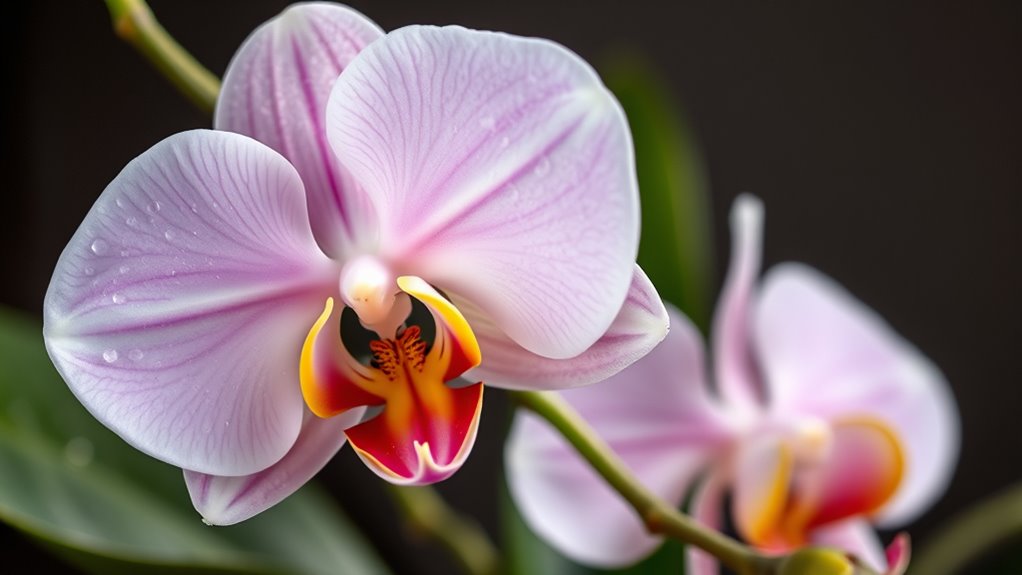

After your Phalaenopsis orchid finishes blooming, focus on consistent care to help it recover and prepare for future flowers. Water once a week, letting the medium dry slightly between waterings, and avoid overwatering to prevent root rot. Use a balanced orchid fertilizer every two to four weeks, but only when the medium is dry. Maintaining proper light, temperature, and humidity supports healthy growth. Keep these routines steady to encourage blooming again—more tips to help your orchid thrive await you.

Get garden gear delivered free with Prime
- Fast, free delivery on millions of items
- Prime Video, Amazon Music and more included
- Member-only deals all year
Key Takeaways
- Water once a week, ensuring the potting medium dries slightly between waterings.
- Fertilize with a diluted, balanced orchid fertilizer every 2-4 weeks, avoiding immediate post-watering.
- Maintain consistent watering and fertilizing routines to support plant recovery and prepare for next blooming.
- Monitor light and temperature, and avoid irregular care to prevent stress and blooming delays.
- Use self-watering pots to help maintain consistent moisture levels and promote healthy root growth.
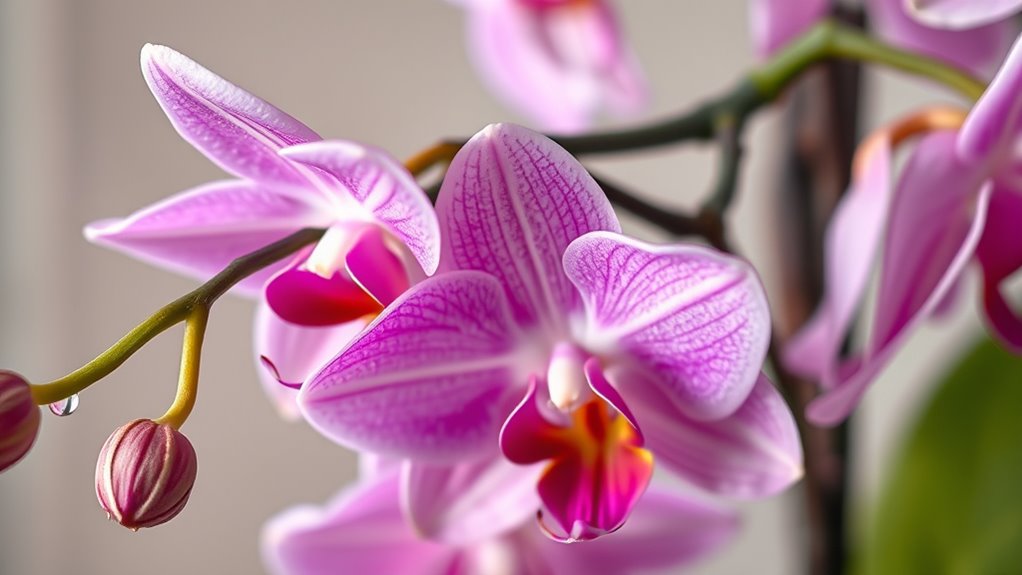
After your orchid blooms, it’s important to give it proper care to encourage future flowering and maintain its health. One of the key aspects is adjusting your watering frequency. During this post-bloom period, your orchid’s root system needs less water than when it’s actively flowering. Typically, you should water your Phalaenopsis once a week, ensuring the potting medium dries out slightly between waterings. Overwatering can lead to root rot, so always check the moisture level before watering again. Insert your finger about an inch into the potting mix; if it feels dry, it’s time to water. If it’s still moist, wait a few more days. Maintaining proper watering habits helps the plant recover, encourages healthy root growth, and prepares it for the next flowering cycle.
Along with adjusting watering frequency, establishing a consistent fertilizer schedule is essential. After your orchid has finished blooming, switch to a diluted, balanced orchid fertilizer—usually a 20-20-20 formula—applied every two to four weeks. This provides the necessary nutrients to support leaf and root development while the plant rests. Avoid fertilizing immediately after watering; instead, wait until the medium has dried out a bit to prevent fertilizer burn. During this period, the plant is focusing on root health and overall growth, so consistent feeding helps build strength for the next bloom. You can also consider using a water-soluble fertilizer that’s specially formulated for orchids, following the manufacturer’s instructions for dilution and frequency.
As your orchid transitions from flowering to vegetative growth, keep an eye on its light and temperature needs, but do not neglect the care routine. Proper watering and fertilizing not only maintain your orchid’s health but also signal to the plant that it’s time to prepare for its next flowering cycle. Consistency is key; irregular watering or inconsistent fertilization can stress the plant, delaying or diminishing future blooms. Remember, patience is essential—your orchid needs time to recover, grow new roots, and develop the energy stores necessary for flowering again. By sticking to a regular watering schedule and a balanced fertilizer routine, you’ll help your Phalaenopsis thrive long after its initial bloom, setting the stage for beautiful flowers in the seasons to come.
Additionally, understanding the benefits of Self Watering Plant Pots can help you maintain consistent moisture levels, reducing the risk of overwatering or underwatering your orchid during its recovery period.
As an affiliate, we earn on qualifying purchases.
Frequently Asked Questions
When Should I Repot My Phalaenopsis Orchid After Blooming?
You should repot your Phalaenopsis orchid when the blooms have faded and new roots start to develop, usually every 1-2 years. The best repotting timing is after flowering, during spring or early summer. Use orchid-specific containers with drainage holes, avoiding regular pots. This guarantees healthy growth and prevents root rot. Always choose a slightly larger container if roots outgrow the current one, promoting healthy development.
How Can I Encourage My Orchid to Rebloom?
Think of your orchid as a sleeping beauty waiting to awaken. To encourage reblooming, give it bright, indirect light, positioning it near a window but out of direct sun. Consistently apply a balanced fertilizer every 2-4 weeks during its active growing period, and reduce watering slightly after blooming. Patience and proper care will coax your orchid to bloom again, turning your home into a floral wonderland.
What Are Signs of Pest Infestation Post-Bloom?
You’ll notice pest infestation signs like tiny insects, webbing, or sticky residue on your orchid’s leaves and stems. Keep an eye out for discolored or deformed leaves, which can also indicate pests. To prevent pests, maintain good airflow and avoid overwatering. Regularly inspect your orchid and clean leaves gently to reduce pest risks. Early detection and pest prevention are key to keeping your orchid healthy after blooming.
Is It Necessary to Prune the Flower Spike?
Oh, absolutely, prune that flower spike! It’s not like deadheading has any benefits or anything. By doing some flower spike pruning, you encourage your orchid to focus its energy on new growth instead of wasting it on old blooms. Plus, deadheading prevents disease and keeps your plant looking tidy. So go ahead, cut that spike—your orchid will thank you with more flowers and healthier blooms!
How Do I Prevent Leaf Yellowing After Blooming?
To prevent leaf yellowing after blooming, focus on maintaining good leaf health by providing proper light and avoiding overwatering. Confirm your orchid gets bright, indirect sunlight and water only when the top inch of soil feels dry. Use balanced fertilizer tips regularly, especially a fertilizer formulated for orchids, to support healthy leaves. This combination keeps your plant vibrant and minimizes the chances of yellowing, encouraging strong growth and future blooms.
Conclusion
After your orchid blooms, remember that proper care encourages new growth and future blooms. Keep watering sparingly, provide indirect light, and consider trimming the flower spike if it turns brown. Did you know that with the right care, Phalaenopsis orchids can bloom up to three times a year? Staying attentive to their needs not only keeps your plant healthy but also rewards you with stunning flowers year after year. Your orchid’s beauty is worth the little effort!
Fall yard work Picks
leaf blowers
As an affiliate, we earn on qualifying purchases.