
TL;DR

Get garden gear delivered free with Prime
- Fast, free delivery on millions of items
- Prime Video, Amazon Music and more included
- Member-only deals all year
An Ideal Home gardening report outlines three October tasks for dahlias: deadhead flowers that have faded, leave healthy foliage untouched and cut stems back after the first proper frost. Gardeners can then decide whether to lift tubers for cool, dry storage or leave them in the ground with a protective mulch.
An Ideal Home gardening report advises dahlia growers to deadhead faded blooms in October, keep healthy foliage in place and wait until the first proper frost before cutting stems back. The timing matters because dahlias may still be flowering early in the month, while their leaves can continue supplying energy to the tubers before winter.
For dahlias that are still producing flowers, the report recommends removing spent blooms regularly. This can help keep the display tidy and encourage continued flowering, although how long plants bloom depends on weather and growing conditions. Ross Dyke, consultant horticulturist at Hornby George and host of The Plant Pod, says gardeners should watch the weather and let flowers continue for as long as possible.
When flowering ends, gardeners should not automatically cut the plant down. Annelise Brilli, a horticultural expert at Thompson & Morgan, advises leaving dahlias alone while their foliage remains healthy. Her guidance is to cut back after frost has blackened the leaves, allowing the plant time beforehand to replenish energy in its tuber.
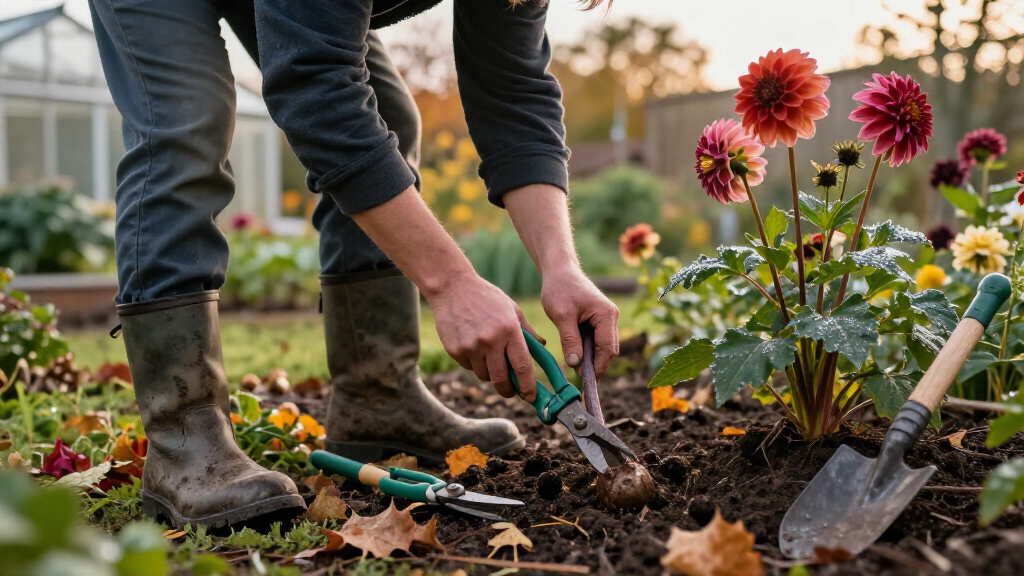
After the first proper frost causes foliage to blacken or die back, stems can be cut down with clean, sharp secateurs. Gardeners then need to choose how to protect the tubers: lift them and keep them somewhere cool and dry, or leave them in the ground and apply a substantial layer of mulch to help shield them from cold and wet conditions, Dyke says.
Frost Sets the Pruning Date
The advice gives gardeners a practical order of operations: maintain flowers while they last, preserve healthy foliage, then cut back after frost. Cutting too early can remove foliage before it has finished supporting the tuber, while waiting for frost offers a clearer seasonal signal than using a fixed date. Because frost arrives at different times across the UK, local conditions matter more than the calendar.
Winter protection also affects whether tubers are likely to survive to grow again. Lifting them for cool, dry storage and leaving them outdoors under mulch are different approaches, and the report does not present either as suitable for every garden. The choice makes October care relevant to both current blooms and next season’s growth.
As an affiliate, we earn on qualifying purchases.
The Three October Care Steps
The report describes October as a period when dahlias may still be in full flower, even as other parts of the garden wind down. Its first task is deadheading: remove flowers that have faded while leaving new blooms on the plant. This is aimed at maintaining the display rather than cutting back the whole plant.
The next steps depend on the plant’s condition and the weather. Healthy leaves are left in place; once frost blackens or kills them, the stems can be cut down. Afterward, the gardener decides whether to lift the tubers or leave them in the soil with mulch. The source also notes that a mild October forecast may delay the first frost, while colder UK areas could experience frost toward month’s end. That timing is not a guarantee for any particular garden.
“In October, I would keep an eye on the weather and let the flowers continue for as long as possible.”
— Ross Dyke, consultant horticulturist at Hornby George and host of The Plant Pod
Frost and Winter Conditions Vary
The report does not give a single date for cutting dahlias back because first-frost timing varies by location and year. A mild forecast for October does not rule out frost in colder areas, and the article does not provide a region-by-region forecast. Gardeners should base the decision on what is happening in their own garden, especially whether foliage has been blackened by a proper frost.
The source also does not set out detailed storage instructions, such as how to prepare lifted tubers, or specify how thick a mulch layer should be. It does not establish that leaving tubers in the ground will work in every soil or climate. Those details depend on local conditions and the gardener’s chosen method.
Watch for Frost Before Pruning
For the rest of October, the report’s sequence is to keep removing faded flowers, leave healthy leaves in place and monitor local weather. Once a proper frost has blackened or killed the foliage, cut the stems back with clean, sharp secateurs and choose a winter plan for the tubers.
Gardeners lifting tubers should store them in a cool, dry place; those leaving them outdoors should apply a protective mulch. The next practical milestone is the arrival of frost, not a fixed day on the calendar. The report gives no later forecast or universal recommendation on which overwintering method is best.
Key Questions
Should I deadhead dahlias in October?
Yes, if flowers have faded. The report recommends removing spent blooms while allowing healthy, open flowers to remain for as long as conditions permit.
When should I cut back dahlia foliage?
Wait until the first proper frost has blackened or killed the foliage, rather than cutting it back while leaves are still healthy.
Do I have to lift dahlia tubers for winter?
The report describes two options: lift tubers and store them somewhere cool and dry, or leave them in the ground under a good layer of mulch. The suitable choice can depend on local conditions.
What if there has been no frost by the end of October?
Leave healthy foliage in place and keep monitoring local weather. The guidance uses the first proper frost, not the end of the month, as the cue to cut stems back.
Source: rss
Fall yard work Picks
leaf blowers
As an affiliate, we earn on qualifying purchases.