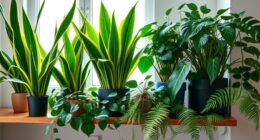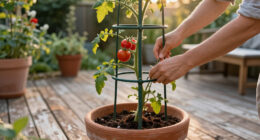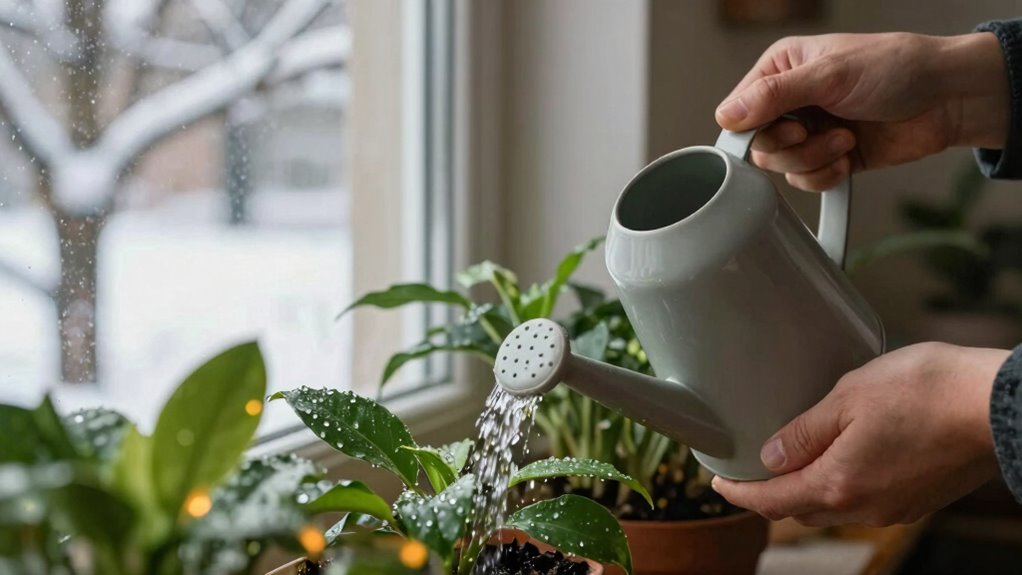

To water plants properly in winter, check soil moisture regularly using your fingers or a moisture meter, and only water when the top inch feels dry. Water early in the morning to allow moisture to evaporate during the day, avoiding overwatering and root rot. Adjust your watering schedule based on your plant’s needs, soil type, and weather conditions. Keep care consistent, and you’ll stay ahead of common winter watering mistakes. Continue to explore tips for healthier winter plants.

Get garden gear delivered free — and shop member deals
- Fast, free delivery on millions of items
- Access to Prime Big Deal Days deals on October 6–7
- Prime Video, Amazon Music and more included
Key Takeaways
- Check soil moisture regularly and water only when the top inch feels dry.
- Water early in the morning to allow evaporation and support plant recovery.
- Use targeted tools like a moisture meter or narrow spout watering can for precise watering.
- Adjust watering frequency based on plant type, soil drainage, and environmental conditions.
- Avoid overwatering; ensure proper soil drainage to prevent root rot and fungal issues.
As an affiliate, we earn on qualifying purchases.
How to Assess Your Plants’ Watering Needs in Winter
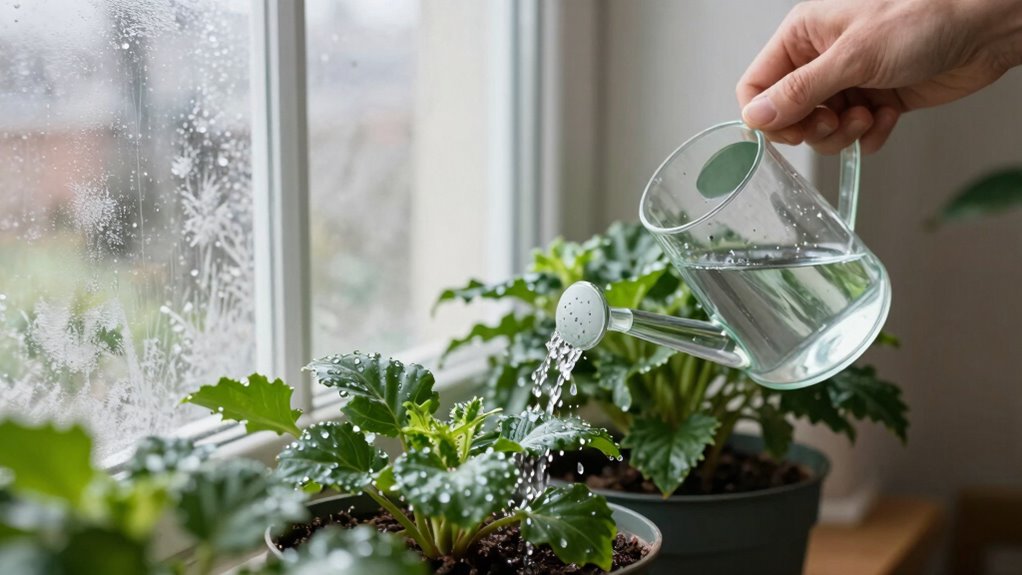
During winter, it’s essential to regularly check your plants’ moisture levels because their watering needs change with the season. As temperatures drop and days get shorter, plant growth slows, and water evaporates less quickly from the soil. This seasonal shift means you should adjust your watering routine accordingly. To assess your plants’ needs, check the top inch of soil; if it feels dry, it’s time to water. Use your finger or a moisture meter for accuracy. Pay attention to how your plants respond—wilting or yellowing leaves indicate they might need water, but overwatering can cause root issues. Regularly monitoring moisture levels helps you provide just the right amount of water, supporting healthy plant growth even during colder months. Being aware of seasonal changes in plant care can help you develop a more effective watering routine. Additionally, understanding how watering practices vary with season ensures you avoid common mistakes like overwatering during winter. It’s also helpful to note that soil moisture retention can differ based on your soil type and indoor environment. Recognizing these seasonal differences enables you to refine your watering schedule for optimal plant health.
Signs of Underwatering and Overwatering in Cold Weather
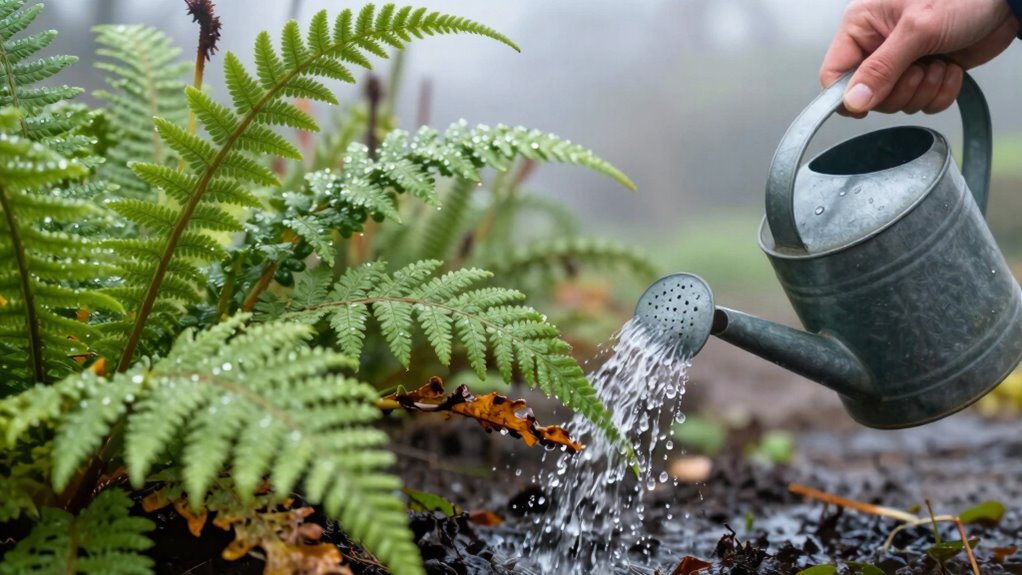
You’ll notice your plants drooping or wilting if they’re underwatered, but overwatering can cause leaves to turn yellow and develop mold or fungus. Both signs indicate that your watering habits might need adjusting for cold weather. Recognizing these clues helps keep your plants healthy throughout winter. Incorporating sound healing science concepts, such as gentle vibrations, can also promote plant relaxation and overall health during colder months. Understanding plant biology can further assist in tailoring your care routines to support winter resilience. Additionally, maintaining appropriate indoor humidity levels can prevent stress and diseases that thrive in dry or excessively moist environments. Proper watering practices, aligned with a basic understanding of plant health principles, are essential to avoid common winter-related issues.
Wilting or Drooping Leaves
Wilting or drooping leaves are common signs that your plants are struggling, especially in cold weather when watering habits can become tricky. If you notice this, it could be due to underwatering, causing dehydration, or overwatering, which leads to root rot. Frost damage can also contribute, weakening cell structures and making leaves droop. During plant dormancy, your plants naturally slow growth, so they may appear less vigorous and more prone to wilting if conditions aren’t ideal. Check the soil moisture first; if it’s dry, water lightly, but if it’s soggy, hold off to prevent overwatering. Proper watering techniques are crucial, especially when considering the best pet-friendly plant picks, to ensure your plants stay healthy through winter’s challenges. Understanding the watering needs in winter helps prevent common issues like over- or underwatering. Additionally, being aware of the plant’s overall health and environment can assist you in making better watering decisions during colder months. Regularly monitoring soil moisture levels can help you fine-tune your watering routine and prevent stress on your plants. Adjust your watering routine based on these signs, ensuring your plants stay healthy through winter’s challenges.
Mold or Fungus Growth
Mold and fungus growth often signal that your plant’s watering habits are off, especially in cold weather when moisture levels are tricky to maintain. If you notice fuzzy patches or dark spots on soil or leaves, it’s a sign of excess moisture leading to mold or fungus. To prevent mold and control fungus, adjust your watering schedule carefully.
- Ensure proper drainage to avoid water pooling.
- Water only when the top inch of soil feels dry.
- Use well-draining soil and avoid overwatering.
Keeping humidity levels in check and reducing excess moisture helps with mold prevention and fungus control. Proper watering techniques and adjusting your schedule are key to maintaining healthy plants during winter. If you catch these signs early, you can prevent serious infections. Regularly inspect your plants, and don’t overwater—cold weather can hide overwatering issues that foster mold growth. Proper watering techniques keep your plants healthy through winter, especially as automation challenges make manual monitoring more complex. Additionally, understanding moisture management in cold climates can further help in preventing fungal issues. Implementing effective indoor air quality practices can also reduce mold spores in your environment, contributing to healthier plant growth. Incorporating moisture regulation strategies can help maintain optimal soil conditions and prevent fungal outbreaks.
When Is the Best Time of Day to Water Plants in Winter?
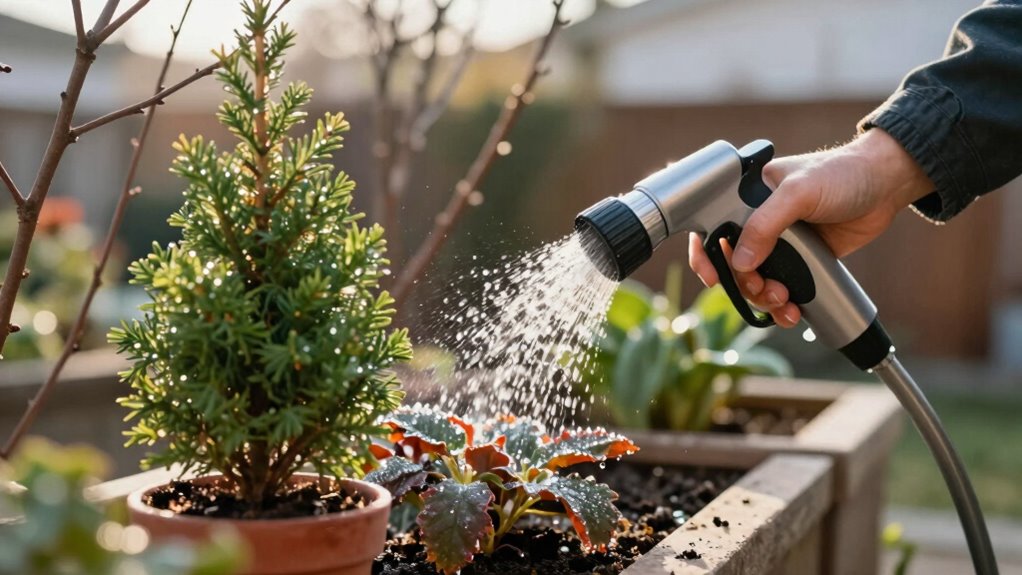
The best time to water your plants in winter is early in the morning, before the coldest part of the day sets in. Watering in the morning allows excess moisture to evaporate during the day, reducing the risk of mold or fungus growth. It also helps your plants recover from any nighttime stress. Keep in mind that proper watering timing supports plant pruning and fertilization routines; watering too late can interfere with these activities by encouraging disease. When you water early, plants absorb moisture efficiently, promoting healthy growth even in colder months. Avoid watering in the late afternoon or evening, as prolonged dampness can lead to problems. Consistent morning watering aligns with natural rhythms and helps your plants stay healthier throughout winter. Incorporating landscaping techniques that enhance natural drainage can also help prevent excess moisture buildup around your plants. Additionally, understanding the plant’s specific water needs during winter can optimize their health and resilience. Proper watering practices are essential for maintaining plant health, especially when growth slows down. Being aware of soil moisture levels can further refine your watering schedule and prevent over or under-watering. Moreover, using appropriate watering tools can improve the efficiency and accuracy of your watering routine.
How Often Should You Water Indoor and Outdoor Plants in Winter?
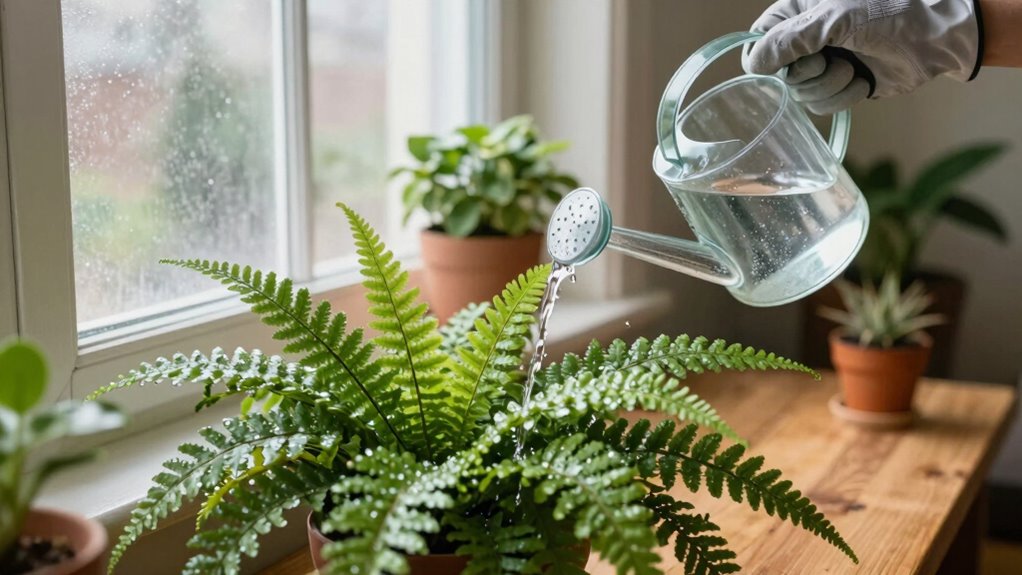
During winter, both indoor and outdoor plants require less frequent watering because their growth slows down and the air tends to be drier. You should check soil moisture regularly and water only when the top inch feels dry. Overwatering can lead to root rot, so be cautious. To keep your plants healthy, incorporate plant pruning to remove dead or damaged leaves, which helps reduce water loss. Also, avoid fertilizer application during this period, as it can encourage weak growth. Consider these tips:
Water plants sparingly, prune regularly, and skip fertilizing during winter for healthy growth.
- Water sparingly, focusing on soil dryness
- Prune to promote healthy growth and airflow
- Skip fertilizers until spring for better plant health
- Understanding dream symbolism related to timing can help you better interpret your plant care routines during seasonal changes. Being aware of smart irrigation systems can further optimize your watering practices, ensuring plants receive the right amount of moisture without overdoing it. Additionally, monitoring soil moisture levels can help prevent common watering mistakes during the winter months.
Adjust your watering schedule based on plant type and environment, ensuring they stay healthy through winter’s chill.
Using Soil Moisture to Water Plants Properly in Winter
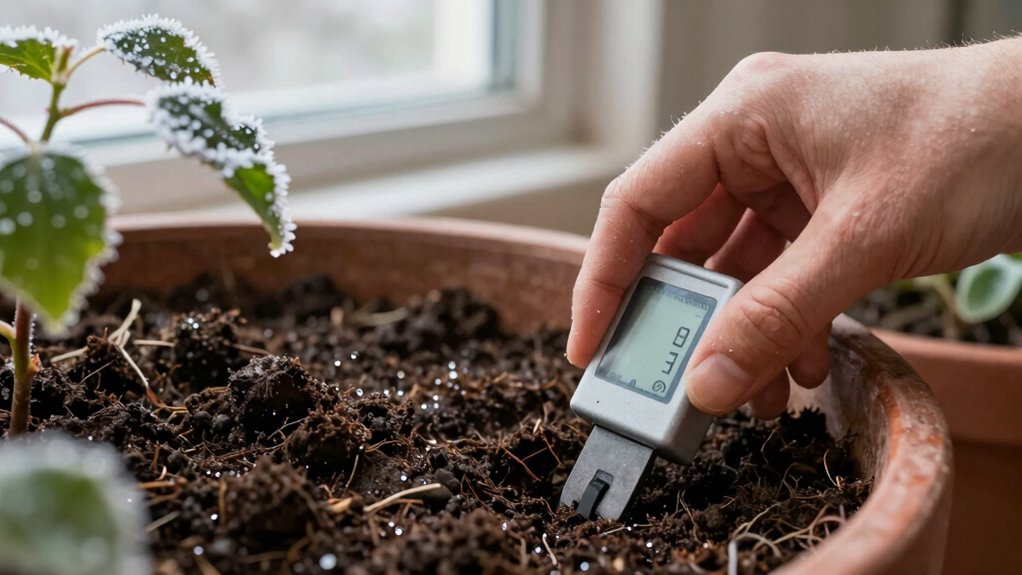
Checking soil moisture is the most reliable way to determine when your plants need watering in winter. By feeling the soil, you assess root absorption capacity directly, ensuring you don’t over- or underwater. Soil composition plays a vital role; well-draining soil retains moisture longer, reducing frequent watering needs, while dense or clay-heavy soil dries out slowly, risking root issues. Use a moisture meter or insert your finger about an inch deep to check moisture levels. If the soil feels damp, hold off on watering. If it’s dry, it’s time to water lightly. Adjust your watering schedule based on these readings, paying attention to how different soil types affect moisture retention. This approach helps keep your plants healthy and prevents stress caused by improper watering during winter months.
Tips to Prevent Root Rot and Dehydration During Cold Months
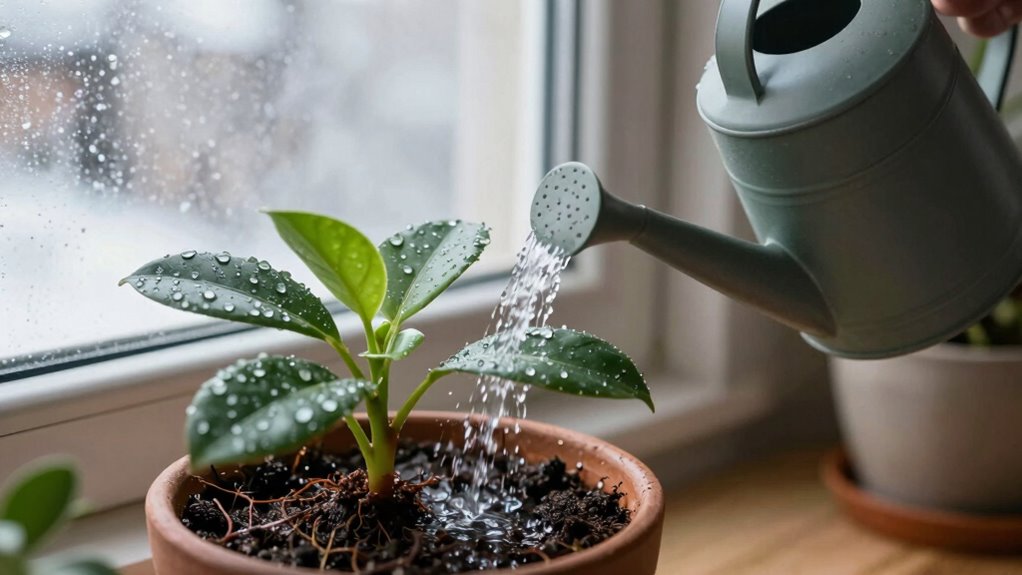
To prevent root rot and dehydration during winter, you need to set a proper watering schedule that matches your plants’ needs and the season. Improving soil drainage helps excess water escape, reducing the risk of rot. Pay attention to your plants’ moisture levels and adjust your watering habits accordingly.
Proper Watering Schedule
Establishing the right watering schedule in winter is essential to keep your plants healthy and prevent issues like root rot or dehydration. During colder months, plants need less water, so avoid overwatering. Instead, focus on consistent, moderate watering that allows the soil to dry slightly between sessions. Proper plant fertilization supports overall health, while pest control keeps your plants resilient. To help maintain this balance, consider these tips:
- Water early in the day to reduce moisture buildup overnight
- Check soil moisture regularly before watering
- Adjust frequency based on indoor heating and humidity levels
This approach prevents waterlogging and guarantees your plants stay hydrated without risking root rot. Stick to a tailored schedule to promote healthy growth and avoid common winter pitfalls.
Soil Drainage Improvement
Improving soil drainage is essential during winter to prevent root rot and dehydration, especially when plants are more vulnerable to water-related issues in cold weather. To enhance drainage, loosen compacted soil with a fork or aerator, increasing soil aeration and oxygen flow to roots. You can also add organic matter like compost or sand to improve permeability. Proper fertilizer timing is key; avoid heavy fertilizers late in the season, which can retain excess moisture. Use a drainage test by pouring water and observing how quickly it drains—if it pools, improve the soil. Here’s a visualization:
| Soil Condition | Drainage Tip | Result |
|---|---|---|
| Compact | Aerate | Better oxygen flow |
| Heavy clay | Add sand | Faster water runoff |
| Organic matter | Mix in | Improved permeability |
| Excess fertilizer | Reduce | Reduced water retention |
Best Tools and Techniques for Winter Plant Watering
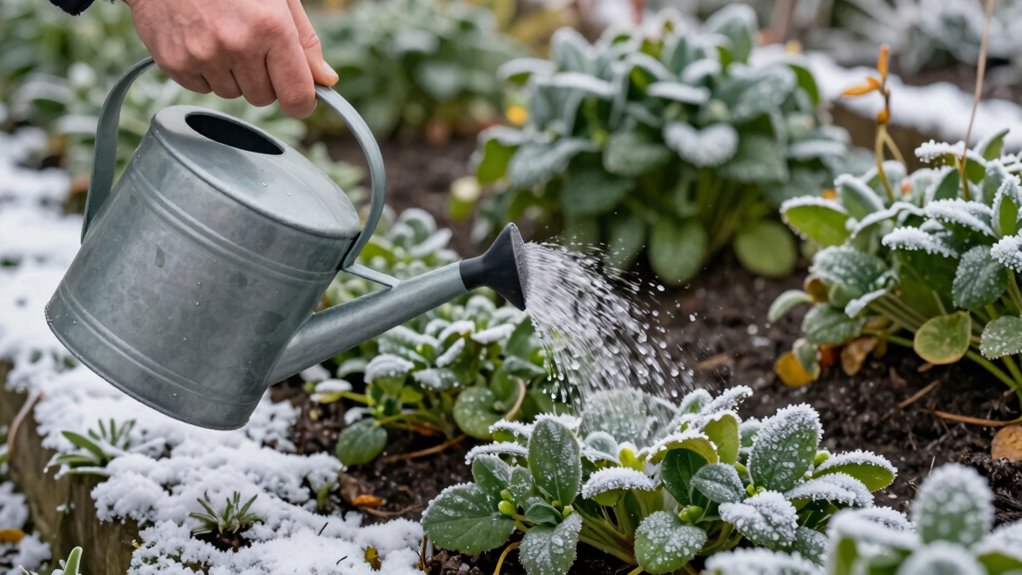
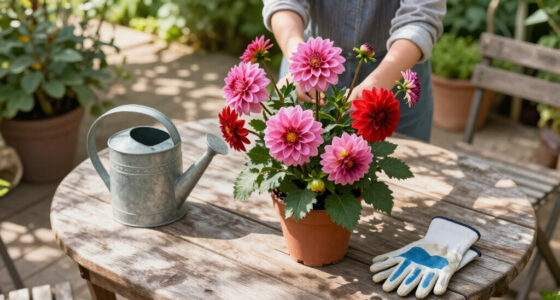
During winter, using the right tools makes watering plants more efficient and less risky. A watering can with a narrow spout helps deliver water directly to the roots, reducing waste and overwatering. A moisture meter allows you to monitor soil moisture levels accurately, preventing excess watering that could lead to root rot. Consider drip irrigation for consistent watering, especially for container plants. Proper tools support plant fertilization by ensuring nutrients reach roots effectively and help prevent pests by avoiding standing water that attracts insects.
- Use a watering can with a fine nozzle for gentle watering
- Incorporate a moisture meter to avoid overwatering
- Opt for drip irrigation for consistent, hands-free watering
How Humidity and Mulching Help Plants Retain Water in Winter
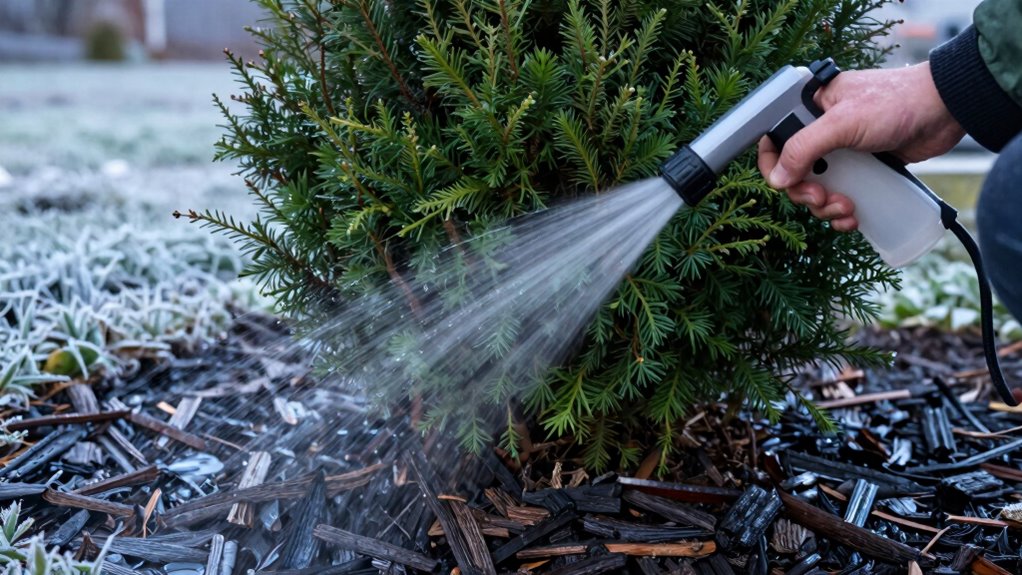
Maintaining proper humidity levels keeps the soil moist and prevents plants from drying out. Mulching insulates the soil, reducing moisture loss and protecting roots from cold temperatures. Using water retention techniques helps your plants stay hydrated throughout the winter months.
Humidity Levels Maintain Moisture
Humidity levels play an essential role in helping your plants retain moisture during winter’s dry air. Low indoor humidity can cause your plants to lose water faster, leading to dehydration. To improve plant hydration, you should monitor and increase indoor humidity when needed. Ways to do this include:
- Using a humidifier to add moisture to the air
- Grouping plants together to create a microenvironment with higher humidity
- Placing water trays near plants to evaporate and boost moisture levels
Maintaining proper humidity helps prevent wilting and keeps your plants healthy. Remember, consistent humidity levels support plant hydration, especially during cold months when dry indoor air can harm their roots. By managing indoor humidity, you guarantee your plants stay vibrant and well-watered throughout winter.
Mulching Insulates Soil
Mulching is a simple yet effective way to insulate soil and help your plants retain water during the cold winter months. It prevents rapid moisture loss, conserving water and maintaining a stable soil temperature. Proper mulching also supports plant pruning and fertilizer application by creating a protective barrier, reducing the need for frequent watering. To maximize benefits, use organic materials like straw, bark, or compost around your plants.
| Mulching Benefits | Tips |
|---|---|
| Insulates soil | Apply a 2-3 inch layer |
| Retains moisture | Keep mulch away from plant stems |
| Protects roots | Replenish as needed after pruning |
Water Retention Techniques
During winter, preserving water in your plants can be a challenge as cold air and dry conditions increase moisture loss. To improve water retention, focus on techniques that boost humidity and maintain healthy roots. Proper mulching traps moisture, moderates soil temperature, and aids root aeration, encouraging better nutrient absorption. Additionally, increasing ambient humidity around your plants helps prevent dehydration. Consider grouping plants together or using humidity trays. You can also mist leaves lightly, especially for indoor plants. These methods keep soil moisture consistent and protect roots from freezing damage. By maintaining adequate humidity levels and ensuring proper mulching, you support your plants’ hydration needs, roots stay healthy, and nutrient absorption continues smoothly even during the cold months.
Common Mistakes When Watering Plants in Winter (and How to Avoid Them)
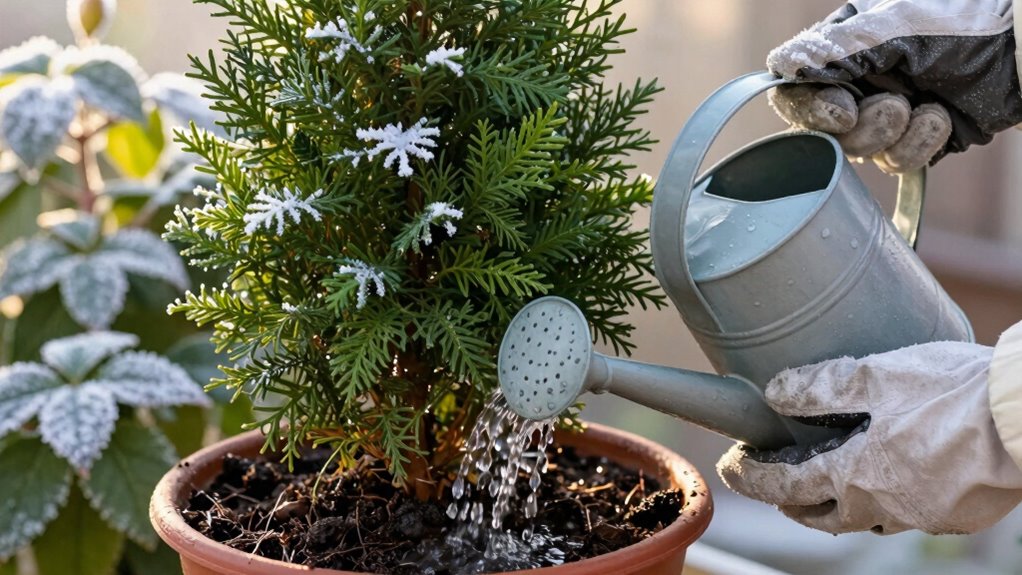
One common mistake when watering plants in winter is overwatering, which can lead to root rot and other health issues. During colder months, outdoor irrigation often becomes excessive, especially if you don’t adjust your watering habits. Remember, plants need less water in winter because their growth slows down, and moisture evaporates more slowly. Overwatering can drown roots and promote fungal diseases. To avoid this, monitor soil moisture carefully and only water when the top inch feels dry. Proper plant hydration is key, so don’t rely on the same watering schedule as in warmer months. Instead, check soil moisture regularly and adjust your outdoor irrigation accordingly. This helps prevent waterlogging and keeps your plants healthy during winter.
How to Create a Winter Watering Schedule That Keeps Your Plants Healthy
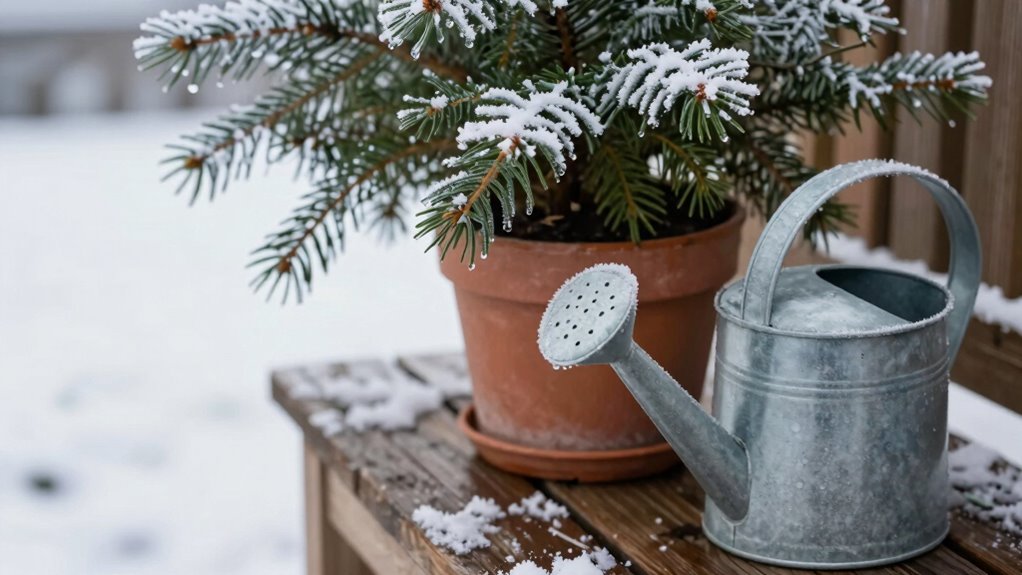
Creating a winter watering schedule that keeps your plants healthy starts with understanding how their needs change as temperatures drop. During winter, plants require less water, so overwatering can lead to root rot. To stay on track, consider these key tips:
- Adjust your watering frequency based on soil moisture, not a fixed schedule.
- Incorporate plant pruning to remove dead or damaged branches, reducing stress.
- Plan your fertilizer scheduling carefully; avoid heavy feeds that can encourage weak growth.
Frequently Asked Questions
How Do Indoor Heating Systems Affect Plant Watering Needs?
Indoor heating systems decrease indoor humidity, which makes your plants lose moisture faster, increasing their watering needs. The heating impact dries out the air, so you should check your plants more frequently and water them when the topsoil feels dry. Keep an eye on signs like wilting or browning edges, and adjust watering accordingly. Maintaining proper indoor humidity levels can also help reduce the extra watering your plants require during winter.
Can Overwatering in Winter Harm My Plants More Than Underwatering?
Back in the day, folks knew better than to drown their plants, and winter dryness can be tricky. Overwatering harms your plants more than underwatering during winter because excess water can lead to root rot and compromised root health. When you overwater, the roots sit in soggy soil, risking disease. Be mindful—watering just enough keeps your plants healthy, especially when indoor heating dries out the air.
Are There Specific Plant Types That Require Less Winter Watering?
Yes, some plants require less winter watering due to plant dormancy, which reduces their water needs. Succulents, cacti, and certain indoor plants like snake plants or pothos need less frequent watering during dormancy. You should adjust your watering frequency accordingly, allowing the soil to dry out between waterings. Overwatering during dormancy can lead to root rot, so be cautious and tailor your watering habits to each plant’s specific needs in winter.
How Does Soil Type Influence Watering Frequency in Winter?
Soil type greatly influences your winter watering routine. Well-draining soil prevents excess moisture, so you’ll need to water less frequently to avoid root rot. Conversely, soil with high moisture retention holds water longer, meaning you should water sparingly but consistently. Regularly check soil moisture levels to prevent overwatering or underwatering, adjusting your schedule based on whether the soil drains well or retains moisture, especially during colder months when plants are more vulnerable.
Should I Adjust Watering Routines During Snowfalls or Cold Snaps?
Yes, you should adjust your watering routines during snowfall or cold snaps. Snowfall impact insulates the soil, reducing evaporation, so you may water less often. During cold snaps, plants need less water because their growth slows down and they’re less active. Be cautious not to overwater, as excess moisture can cause root rot or freeze damage. Monitor soil moisture and plant health closely to determine the best watering schedule.
Conclusion
By paying close attention to your plants’ subtle signals and adjusting your watering habits accordingly, you’ll help them thrive even in the chilly months. Embrace the gentle art of mindful watering, and your greenery will flourish quietly, rewarding you with vibrant life and lush growth. Remember, a little care goes a long way—think of it as a tender dance that keeps your plants happy and healthy all winter long.
Halloween Picks
halloween
As an affiliate, we earn on qualifying purchases.