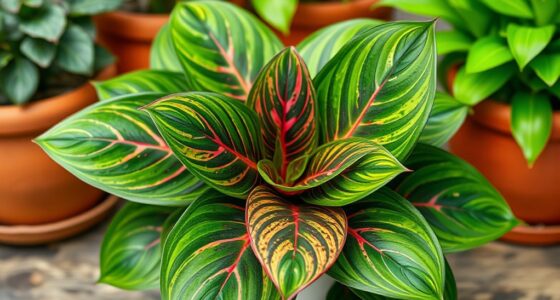
To care for a snake plant in low-light spots, water it sparingly—about every 2 to 6 weeks—and let the soil dry out completely between waterings. Keep pests like mealybugs and spider mites at bay by inspecting leaves and maintaining good airflow. Use well-draining soil and avoid over-fertilizing. Regular cleaning and proper watering promote healthy growth. Want to learn more tips to keep your snake plant thriving in low light? Keep going.
Key Takeaways
- Snake plants thrive in low light but require well-draining soil to prevent overwatering and root rot.
- Water only when the soil is completely dry, approximately every 2-6 weeks, especially in low-light conditions.
- Reduce watering frequency during winter and avoid excess moisture to prevent pests and diseases.
- Ensure good airflow and avoid overcrowding to minimize pest risks like mealybugs and spider mites.
- Regularly inspect leaves and soil, clean dust off leaves, and use neem oil for pest prevention and plant health.
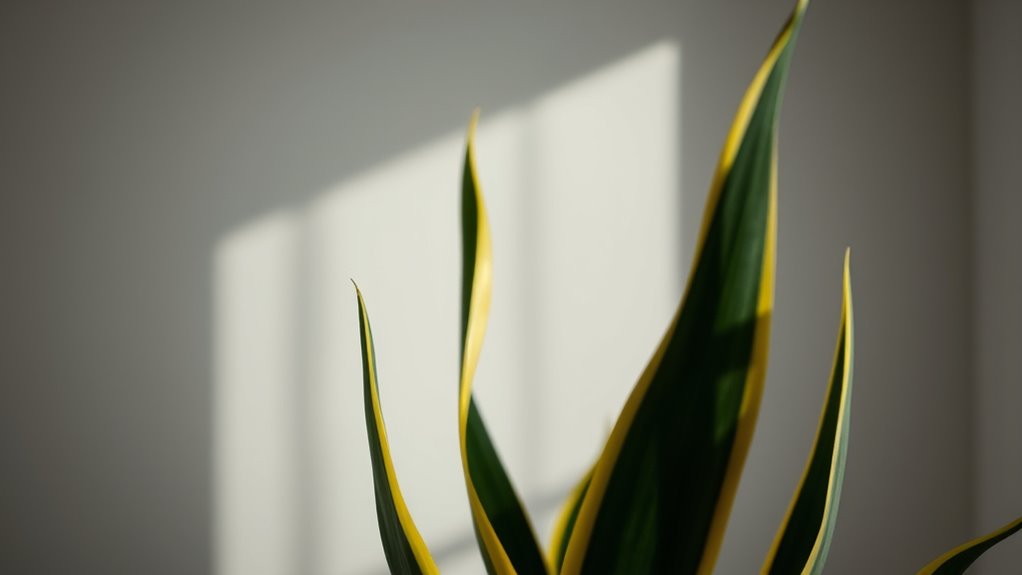
Ever wondered how to keep your snake plant healthy and thriving? The key lies in understanding its simple needs, especially when it comes to watering and pest prevention. Snake plants are incredibly resilient, but they still require a proper watering schedule to avoid overwatering or underwatering. You want to let the soil dry out completely between waterings, typically every 2-6 weeks depending on your home’s humidity and temperature. During the winter months, you might find yourself watering even less frequently. When you do water, give it a thorough soak until excess drains from the bottom, then make sure to empty the saucer to prevent water from sitting and causing root rot. This approach keeps the roots healthy and minimizes the risk of fungal issues.
Pest prevention is equally important for maintaining a thriving snake plant. Although these plants are naturally resistant to many pests, they can occasionally attract mealybugs, spider mites, or scale insects. Regularly inspecting your plant, especially the undersides of leaves and around the soil, can help catch any pests early. When you spot pests, act quickly by wiping the affected areas with a damp cloth or applying neem oil, which is safe and effective. Creating a clean environment around your plant also plays a role in pest prevention. Keep the leaves free of dust and debris by gently wiping them, and avoid over-fertilizing, which can make your plant more attractive to pests. Proper watering also contributes to pest prevention, as overwatering creates a damp environment that pests love, while underwatering weakens the plant’s defenses.
Additionally, good airflow around your snake plant discourages pest infestations. Don’t crowd it with other plants, and ensure your space isn’t overly humid or stagnant. Using well-draining soil is vital, as it prevents excess moisture from lingering in the roots, which can lead to both pests and diseases. Incorporating appropriate lighting conditions can further help the plant resist pests and thrive. By maintaining a consistent watering schedule that matches your indoor conditions, you prevent stress that could weaken your plant’s defenses. And by staying vigilant with pest prevention measures, you keep your snake plant looking lush and healthy. When you combine proper watering practices with proactive pest control, you’ll find that your snake plant will flourish with minimal fuss, providing you with its striking, low-maintenance beauty for years to come.

(2026 Upgrade) WYBOT C1 Pool Robot Vacuum for Inground Pools, 4-in-1 Cordless Robotic Pool Cleaner Lasts 150min, Triple-Motor up to 1,614 Sq.ft, Smart APP Support, Auto Wall & Waterline Cleaning
Powerful Suction with Dual Brushes: Built with an upgraded independent water pump motor delivering up to 3,038 GPH...
As an affiliate, we earn on qualifying purchases.
Frequently Asked Questions
Can Snake Plants Improve Indoor Air Quality?
Yes, snake plants can improve your indoor air quality by providing air purification and allergen reduction. They absorb toxins like formaldehyde, xylene, and toluene, helping to create healthier indoor environments. Plus, snake plants release oxygen at night, enhancing air freshness around your home. With their low-light needs, they’re an easy, natural way to boost air quality while adding a touch of greenery to your space.
How Often Should I Repot My Snake Plant?
You should repot your snake plant every 2-3 years, especially when its growth outpaces its current pot. Imagine the contrast between cramped roots and fresh soil with excellent drainage—this keeps your plant healthy. During repotting, check soil drainage and opt for a well-draining mix to prevent root rot. Regular repotting guarantees your snake plant remains vibrant and resilient, thriving in its new home.
What Pests Commonly Attack Snake Plants?
You’ll often find mealybugs, spider mites, and scale insects attacking snake plants. To prevent pests, practice pest prevention by keeping your plant healthy and clean. If pests appear, try natural remedies like wiping leaves with a mixture of water and mild soap or using neem oil. Regularly inspecting your plant helps catch issues early, so you can act quickly and protect your snake plant from potential harm.
Is It Safe to Keep Snake Plants Around Pets?
Think of your snake plant as a silent guardian—beautiful but potentially toxic. It’s generally unsafe to keep around pets because of toxicity concerns; ingestion can cause nausea or vomiting. I once knew a family whose cat chewed on a snake plant, leading to a quick vet visit. To keep your pets safe, consider placing the plant out of their reach or choosing pet-friendly alternatives.
How Do I Propagate a Snake Plant Successfully?
To propagate your snake plant successfully, start with leaf cuttings or division. Use rooting techniques like placing cuttings in well-draining soil or water until roots develop. make certain your cuttings are healthy and dry for a day before planting to prevent rot. Keep the soil slightly moist and place the plant in indirect light. With patience, your new snake plants will thrive and add greenery to your space.

(2026 Upgrade) WYBOT C1 Cordless Robotic Pool Vacuum for Inground Pools, Above Ground Pool Cleaner 4-in-1 Wall & Waterline Cleaning Up to 1,614sq.ft, 150mins Smart Navigation, App Support
Powerful Suction with Dual Brushes: Built with an upgraded independent water pump motor delivering up to 3,038 GPH...
As an affiliate, we earn on qualifying purchases.
Conclusion
Remember, a snake plant is as resilient as they come, thriving even in low light and neglect. With a little care, it will thrive and add beauty to your space. Think of it as a trusty friend that’s always there, no matter what. As the saying goes, “A little patience and care go a long way.” Keep it simple, and your snake plant will reward you with lush, green leaves for years to come.

(2026 New) AIPER Scuba V3 AI Vision Cordless Robotic Pool Cleaner, 10x Faster Pool Cleaning with AI Patrol, 24/7 Auto Cleaning, Smart Waterline Parking & Multi-Layer Filtration
10x Faster Pool Cleaning with AI Patrol System: Single front-facing AI camera detects over 20 debris types and...
As an affiliate, we earn on qualifying purchases.

iGarden Robotic Pool Cleaner K Series, Cordless Pool Vacuum Robot for Inground & Above Ground Pools, Smart Navigation, Touchscreen, Self-Parking, Cleans Floor, Wall & Waterline, 150 Min
Robust Cleaning Capability: Engineered with a turbine-grade impeller, an optimized flow system, and 3 brushless motors, the cordless...
As an affiliate, we earn on qualifying purchases.