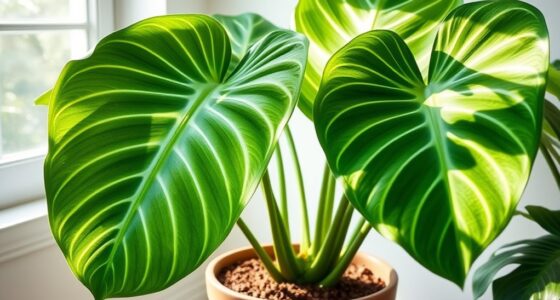
To care for and train your heartleaf philodendron, keep the soil evenly moist but not soggy, watering approximately once a week in warm months and less in cooler ones. Regular pruning and pinching promote bushier growth and shape, while guiding tendrils along supports helps create a climbing or cascading display. Using soft ties for new growth and maintaining proper drainage reduces pests and encourages healthy development. Stay tuned to learn more tips for a thriving, beautiful plant.
Key Takeaways
- Maintain consistent moisture without waterlogging to promote healthy growth and prevent pests.
- Use supports like trellises or moss poles to guide vining tendrils for climbing or cascading displays.
- Prune regularly to remove leggy or damaged stems, encouraging bushier, fuller foliage.
- Tie new growth gently to supports with soft ties to direct growth and prevent unruliness.
- Monitor growth patterns and adjust watering, pruning, and training to optimize plant health and appearance.
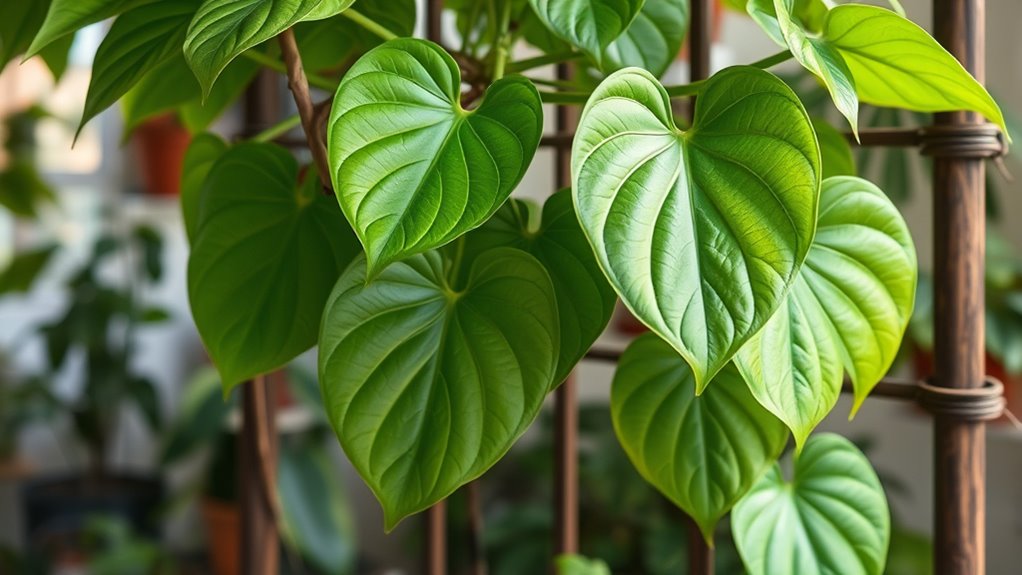
Are you looking for a low-maintenance plant that adds lush greenery to your space? The Heartleaf Philodendron is an excellent choice. Its resilient nature makes it perfect for beginners and seasoned plant lovers alike. To keep it thriving, you need to establish a proper watering schedule. This plant prefers its soil to be consistently moist but not waterlogged. Check the top inch of soil regularly; if it feels dry, it’s time to water. During warmer months, you might need to water more frequently, roughly once a week, while in cooler months, every couple of weeks may suffice. Overwatering can lead to root rot, so ensure your pot has good drainage. Allow excess water to escape, and avoid leaving the plant sitting in standing water. Proper watering not only supports healthy growth but also helps prevent pest issues. An overly moist environment can attract pests like spider mites or aphids, so keeping the watering routine balanced is essential for pest prevention. Additionally, using data analytics to monitor your plant’s growth patterns can help optimize your care routine.
Training your Heartleaf Philodendron is straightforward once you understand its growth habits. As a vining plant, it loves to cascade or climb. You can guide its tendrils along a trellis, moss pole, or even a wall hook to encourage upward growth. Regularly pruning helps maintain its shape and encourages bushier growth. Use clean, sharp scissors to trim back leggy stems or any damaged leaves. When training, gently tie new growth to support structures using soft plant ties or twine. This encourages the plant to grow in your desired direction and prevents it from sprawling uncontrollably. As it matures, you’ll notice new leaves emerging from the nodes, which you can encourage by pinching or pruning. Training also helps manage its size, making it suitable for small spaces or as a hanging plant. Remember, the Heartleaf Philodendron is quite forgiving; if it gets a bit unruly, a simple trim and guidance will bring it back into shape.
Frequently Asked Questions
How Often Should I Prune My Heartleaf Philodendron?
You should prune your Heartleaf Philodendron every 4 to 6 weeks to maintain healthy growth and encourage fullness. Regular pruning helps control its size and shape, so use shaping techniques like trimming back leggy stems or removing dead leaves. Keep an eye on the plant’s growth, and prune more often if it becomes unruly. Consistent pruning promotes a lush, attractive appearance and prevents overgrowth.
Can Heartleaf Philodendron Tolerate Direct Sunlight?
Your Heartleaf Philodendron can handle some direct sunlight, but it’s like a sunbather in moderation—too much burns its delicate leaves. Ideally, it prefers bright, indirect sunlight to keep its leaf coloration vibrant and lush. If you give it direct sun, make sure it’s filtered or limited to a few hours. Too much direct sunlight can cause leaf scorch, dulling its beauty and risking damage to the plant’s overall health.
What Are Common Pests That Affect Heartleaf Philodendron?
You’ll likely encounter pests like spider mites, mealybugs, and aphids on your Heartleaf Philodendron. To prevent these pests, practice disease prevention by inspecting your plant regularly and keeping it healthy. Water your plant properly—avoid overwatering and ensure good drainage—to reduce stress that attracts pests. If you spot pests early, treat with insecticidal soap or neem oil. Proper watering tips and pest vigilance will help your plant flourish.
How Do I Propagate Heartleaf Philodendron From Cuttings?
To propagate your Heartleaf Philodendron from cuttings, take a healthy stem with at least one leaf and a node. Place the cutting in water or moist soil, ensuring the node is submerged or in contact with the medium. Keep it in bright, indirect light and maintain consistent moisture. Roots will develop at the node, indicating successful root development, and you can then transplant the new plant into soil.
Is There a Recommended Soil Type for Optimal Growth?
Did you know well-draining soil helps heartleaf philodendrons grow faster? For ideal growth, use a soil mixture that’s light and airy, combining potting soil with perlite or orchid bark. This plant prefers good drainage requirements to prevent root rot, so avoid heavy, clay-based soils. Keep the soil slightly moist but not waterlogged, and you’ll see your plant thrive with healthy, lush foliage.
Conclusion
Now that you know how to care for and train your heartleaf philodendron, imagine the lush, vibrant wall it could become. With a little patience and attention, you’ll watch it thrive in ways you never expected. But beware—its true potential might surprise you when you least expect it. Keep nurturing your plant, stay attentive, and see where this journey takes you. The next chapter of your green thumb adventure is just around the corner—are you ready?