TL;DR

Get garden gear delivered free with Prime
- Fast, free delivery on millions of items
- Prime Video, Amazon Music and more included
- Member-only deals all year
Master gardener Rhonda Fleming Hayes says spring-flowering bulbs can generally be planted as long as the soil is not frozen or waterlogged, with timing varying by climate zone. If the ground has frozen, she recommends planting bulbs in containers and keeping them in a dark, unheated garage or shed until spring.
Master gardener Rhonda Fleming Hayes says gardeners can plant spring-flowering bulbs late in fall as long as the soil is not frozen or wet, according to guidance published by Country Living. For people who miss that window, Hayes recommends planting bulbs in containers and storing them in a dark, unheated garage or shed until spring.
The practical cutoff depends on local conditions rather than one date that applies everywhere. Hayes says gardeners can generally plant bulbs while the soil remains workable. Tulips, daffodils, hyacinths and crocuses need a chilling period to break dormancy and develop roots, but the source does not give a single universal planting deadline. Gardeners should use their USDA Plant Hardiness Zone as a guide alongside soil conditions.
Hayes’s rough schedule places planting in mid-September to mid-October in Zones 3–5; from mid-October to the first weeks of December in Zones 5–6; and in November or December in Zones 7–8. For Zones 8–10, she lists December and January only for bulbs that have been pre-chilled in a refrigerator for 10 to 12 weeks. The zone ranges overlap in the source, so these dates are best treated as approximate guidance, not precise cutoff dates.
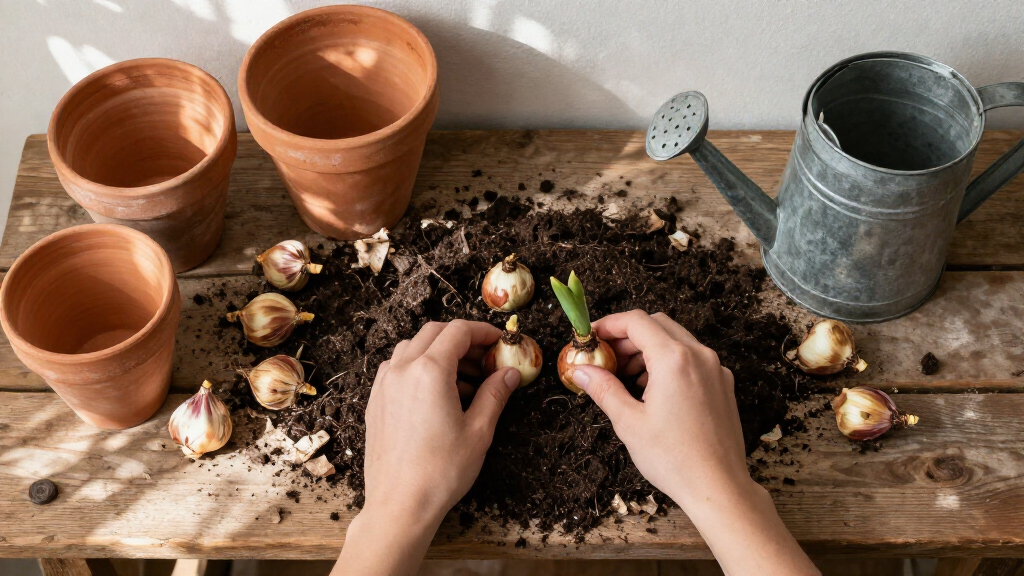
After planting, bulbs should be covered fully. Hayes recommends a 2- to 4-inch mulch layer to insulate the soil during deep freezes and potentially deter squirrels from digging. If the ground has already frozen, she says gardeners can plant bulbs deeply in containers, keeping the growing medium moist but not waterlogged. The containers should remain in a dark, unheated space until spring.
A Workable Soil Test Sets the Deadline
The advice gives late-season gardeners a condition they can check directly: whether the soil is frozen or excessively wet. That is more useful than relying on a calendar date alone, since planting windows vary across climates and the same month can bring different soil conditions in different locations. The guidance also offers a fallback for people whose beds are no longer workable: container planting can keep the project possible after a freeze.
Timing matters because many familiar spring bulbs require cold exposure before they resume growth. Hayes says that chilling supports dormancy breaking and root development. Gardeners in warmer zones face a different constraint: the source’s guidance says bulbs planted in Zones 8–10 should be pre-chilled for 10 to 12 weeks before planting. That makes climate zone and bulb preparation relevant, not just how late it is in the season.
Products Worth Considering

Samsung 48-Inch S90H OLED 4K Smart TV (2026)

LG C2 Series 65-Inch OLED evo 4K Smart TV (OLED65C2PUA, 2022)

Levoit Core 400S-P Smart Air Purifier for Large Rooms
As an affiliate, we earn on qualifying purchases.
Planting Dates Vary by Climate Zone
Country Living’s report addresses a common seasonal question: whether a missed fall planting date means missing spring flowers. Hayes, author of Garden for Life: Strategies for Easier, Greener, More Joyful Gardening as We Age and the Substack The Garden Buzz, provides the planting guidance in the article. The advice covers tulips, daffodils, hyacinths and crocuses, all identified as bulbs that need chilling.
The article gives a broad sequence: colder zones generally plant earlier, while warmer zones plant later, with refrigerator pre-chilling specified for Zones 8–10. It also distinguishes between planting directly in a garden bed and planting in a container after the soil freezes. The report does not offer a bulb-by-bulb schedule or specify how long containers should remain in storage, so readers should treat the recommendations as general seasonal guidance.
“You can generally plant them as long as the soil isn’t frozen or wet.”
— Rhonda Fleming Hayes, master gardener, as quoted by Country Living
Exact Cutoffs Depend on Local Conditions
The report provides approximate zone-based dates, but it does not identify a specific location, soil temperature or forecast that would set a final planting date for an individual garden. Its zone ranges also overlap at Zones 5 and 8, and no more precise rule is supplied to resolve those overlaps. The key stated test remains whether soil is unfrozen and not wet.
The source does not specify how long containerized bulbs should stay in an unheated garage or shed, or whether storage conditions differ by bulb type. It also does not provide separate planting instructions for every variety. The recommendations should not be read as a guarantee of flowering; the report offers general gardening guidance, not a forecast for any particular garden.
Check Soil Before Planting
Gardeners considering a late planting can check their USDA Plant Hardiness Zone and inspect the soil before choosing a date. If it is workable and not waterlogged, Hayes’s guidance supports planting in the ground, followed by full coverage and mulch. If the soil has frozen, her suggested next step is to plant bulbs deeply in containers, keep the medium moist but not saturated, and store them in a dark, unheated garage or shed until spring.
For gardeners in Zones 8–10, the report says to plan for 10 to 12 weeks of refrigerator pre-chilling before planting. The article does not give a further schedule for when stored containers should be moved outdoors, so that timing remains dependent on local spring conditions and the gardener’s circumstances.
Key Questions
How late can I plant spring bulbs?
Hayes says bulbs can generally be planted while the soil is not frozen or wet. The approximate calendar window varies by hardiness zone.What if the ground is already frozen?
Hayes recommends planting bulbs deeply in containers, keeping the soil or compost moist but not wet, and storing the containers in a dark, unheated garage or shed until spring.Which bulbs need a chilling period?
The report names tulips, daffodils, hyacinths and crocuses as bulbs that need chilling to break dormancy and develop roots.Do gardeners in warm zones need to pre-chill bulbs?
The article says bulbs for Zones 8–10 should be pre-chilled in a refrigerator for 10 to 12 weeks before planting.How much mulch should I use?
Hayes recommends covering planted bulbs with a 2- to 4-inch layer of mulch to help insulate the ground during deep freezes.Source: rss