To care for your jade plant indoors, water it thoroughly only when the top inch of soil feels dry, typically every 2-3 weeks in warmer months and less in winter. Make certain the pot has drainage holes to prevent standing water, which can cause root rot. Regularly check for pests like mealybugs or spider mites and keep the plant and surrounding air clean. With proper maintenance, your jade plant will thrive—more tips await if you keep exploring.
Key Takeaways
- Water infrequently, allowing the top inch of soil to dry between watering, especially in winter.
- Use pots with drainage holes and water thoroughly to prevent root rot.
- Regularly inspect leaves and stems for pests like mealybugs, spider mites, and scale.
- Maintain good airflow and hygiene to reduce pest attraction and promote healthy growth.
- Keep the plant in a well-ventilated area and avoid overwatering for optimal indoor health.
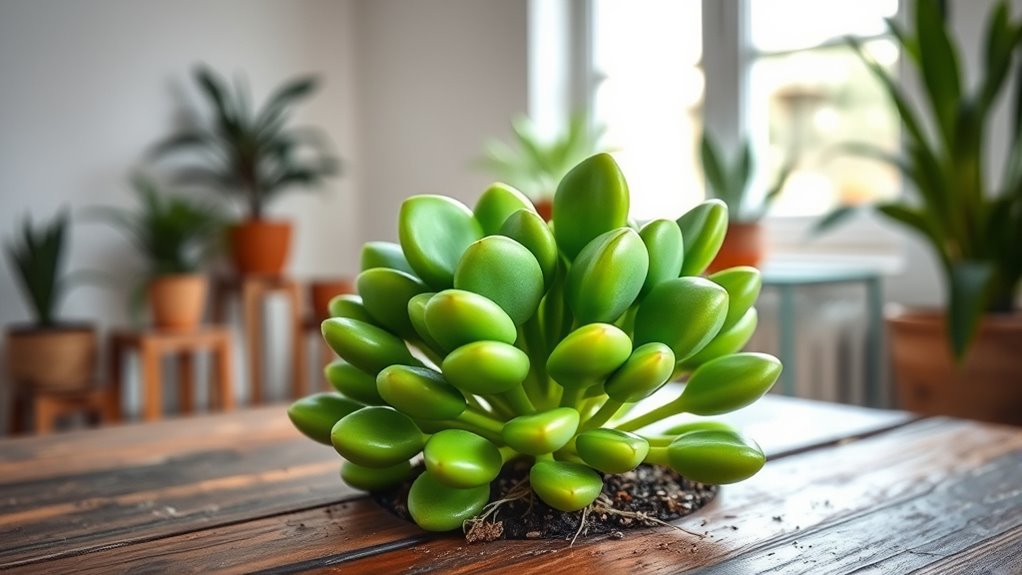
Jade plants are popular indoor succulents known for their attractive, fleshy leaves and easy maintenance. They add a touch of greenery to any space and are relatively forgiving, making them ideal for both beginner and experienced plant enthusiasts. To keep your jade thriving, you need to pay close attention to their watering schedule and pest prevention. Proper watering is key; these plants prefer infrequent but thorough watering. Typically, you should water your jade only when the top inch of soil feels dry. During the growing season in spring and summer, this might mean watering every two to three weeks. In winter, reduce watering further to prevent overwatering, which can lead to root rot. When you do water, make sure to soak the soil completely, allowing excess water to drain out of the pot’s drainage holes. Avoid letting your jade sit in standing water, as this can cause the roots to rot and compromise the plant’s health.
Pest prevention is equally important in maintaining a healthy jade plant. Common pests like mealybugs, spider mites, and scale insects can attack if you don’t stay vigilant. Regularly inspect your plant, especially the undersides of leaves and along the stems. If you notice sticky residue, white cottony patches, or tiny moving specks, it’s time to act. You can prevent pests by keeping your plant clean and healthy. Avoid overwatering, as damp conditions attract pests, and ensure good airflow around your plant. If you detect pests early, wipe affected areas with a damp cloth or use insecticidal soap to eliminate them. Neem oil is also effective as a pest preventative and treatment. Keep in mind that pest prevention isn’t a one-time effort; regularly checking your jade and maintaining good plant hygiene helps prevent infestations from taking hold.
Frequently Asked Questions
Can Jade Plants Survive in Low Light Conditions Indoors?
Jade plants can struggle in low light conditions indoors. They thrive best with bright, indirect natural sunlight, which promotes healthy growth and vibrant leaves. If your indoor lighting isn’t sufficient, the plant may become leggy or lose its color. To keep it happy, place it near a south-facing window or supplement with a grow light. Remember, ample natural sunlight is key to a thriving jade plant indoors.
How Often Should I Repot My Jade Plant?
You should repot your jade plant every 2-3 years or when you notice signs of root bound jade, like stunted growth or roots circling the pot’s surface. Repotting frequency helps prevent roots from becoming cramped. When repotting, choose a slightly larger pot with good drainage, and refresh the soil to promote healthy growth. Regularly check for root issues to keep your jade thriving indoors.
What Are Common Pests That Attack Jade Plants Indoors?
An ounce of prevention is worth a pound of cure. Common pests attacking your jade plant indoors include mealybugs, spider mites, and scale insects. Regularly inspect your plant, especially the undersides of leaves, to catch pests early. Pest prevention involves keeping the plant healthy with proper watering and light. If you notice pests, treat the plant promptly with neem oil or insecticidal soap to keep your jade thriving.
How Do I Propagate a Jade Plant From Cuttings?
To propagate your jade plant from cuttings, start by selecting healthy stems and using clean pruning shears to prune them. Let the cuttings dry for a few days to callus over, which helps prevent rot. Then, plant the cuttings in well-draining soil and water sparingly. Use pruning tips to encourage bushier growth, and keep your cuttings in bright, indirect sunlight as they establish roots through propagation techniques.
What Temperature Ranges Are Ideal for Indoor Jade Plants?
You’ll find that indoor jade plants thrive best between 65-75°F, aligning with your home’s comfortable warmth. Coincidentally, these temperature preferences match seasonal variations, making winter slightly cooler and summer warmer. Keep the temperature steady, avoiding drafts or sudden changes, especially below 50°F or above 85°F, to prevent stress. Consistent warmth guarantees your jade stays healthy and vibrant year-round, thriving in the environment you create.
Conclusion
With proper care, your jade plant can thrive indoors like a small, lush oasis. Water it sparingly, give it plenty of sunlight, and watch its thick, fleshy leaves shine. Think of your jade plant as a tiny green treasure chest—easy to care for but full of beauty. Keep up with regular care, and you’ll enjoy its vibrant presence, turning your space into a calming, green sanctuary that’s as inviting as a peaceful garden in full bloom.