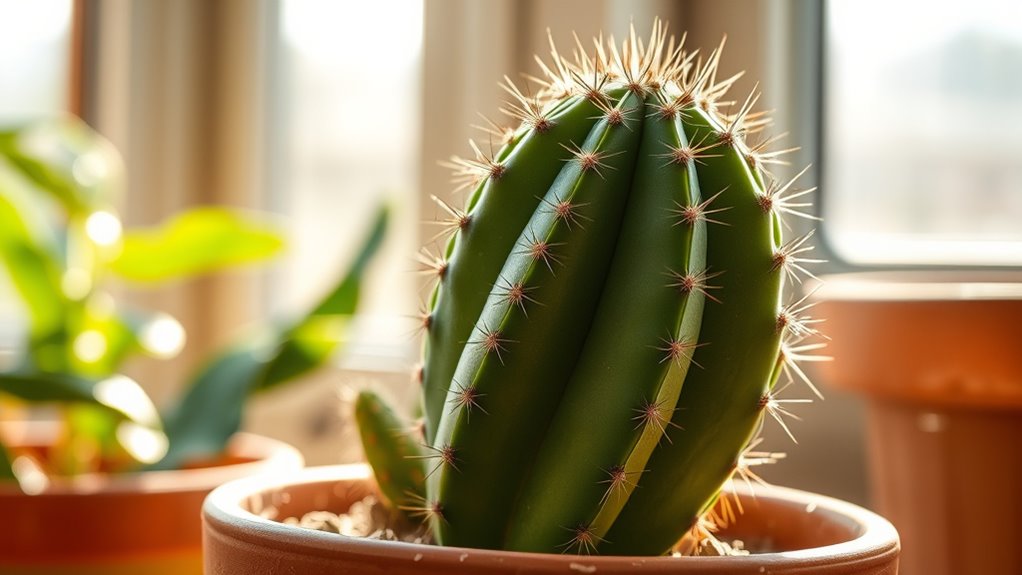

To care for your indoor cactus, place it where it gets plenty of bright, direct sunlight for at least 4–6 hours daily. Water it only every 2–4 weeks, checking that the soil is completely dry at least a few inches deep before watering again. Keep the temperature between 70°F and 85°F, and avoid drafts or cold spots. Mastering these timing and light needs will help your cactus stay healthy and vibrant—discover more tips as you go.
Key Takeaways
- Place your cactus near south-facing windows for at least 4–6 hours of direct sunlight daily.
- Water every 2–4 weeks, checking that soil is dry several inches below the surface before watering.
- Use well-draining soil and ensure the pot has drainage holes to prevent overwatering.
- Keep indoor temperatures between 70°F–85°F, and avoid cold drafts or temperatures below 50°F.
- Reduce watering frequency during winter dormancy to prevent root rot and support healthy growth.

Indoor cacti are a great way to bring a touch of desert charm into your home, but they require specific care to thrive. One of the most vital aspects of caring for these resilient plants is understanding their needs for soil drainage and temperature regulation. Cacti are adapted to arid environments, so they need well-draining soil that prevents excess moisture from lingering around their roots. Using a pot with drainage holes is essential, as it allows water to escape and keeps the roots from rotting. When potting your cactus, choose a specialized cactus or succulent mix, or create your own by combining regular potting soil with coarse sand or perlite. This guarantees adequate soil drainage, which is indispensable for healthy growth.
Indoor cacti need well-draining soil and proper watering to stay healthy and thrive.
Temperature regulation is another key factor. Cacti thrive in warm conditions, typically between 70°F and 85°F during the day. Avoid exposing your indoor cactus to drafts or sudden temperature drops, especially near windows or doors that are frequently opened. During winter, it’s important to keep the temperature above 50°F, as colder conditions can slow growth and damage the plant. If your home tends to be cool in winter, consider placing your cactus in a warmer spot or using a space heater to maintain consistent warmth. Proper temperature regulation not only promotes healthy growth but also mimics the desert environment in which cacti naturally thrive.
Lighting plays a significant role in conjunction with soil drainage and temperature regulation. Your cactus needs plenty of bright, direct sunlight to produce energy through photosynthesis. Position it near south-facing windows or areas where it can receive at least four to six hours of direct sunlight daily. If natural light is limited, you can supplement with grow lights to guarantee the plant gets enough light. Adequate lighting supports the plant’s growth cycle and helps it develop a strong, healthy structure.
Water timing is equally essential. Cacti need infrequent watering—about once every two to four weeks, depending on the season. Always check the soil before watering; if it feels dry several inches below the surface, it’s time to water. During winter months, reduce watering even further, as the plant enters dormancy. Overwatering is a common mistake that can lead to root rot, especially if combined with poor soil drainage and cold temperatures. By maintaining a balance of proper soil drainage, temperature regulation, and appropriate watering, you give your indoor cactus the best chance to flourish and add a unique desert vibe to your home.
Frequently Asked Questions
How Often Should I Fertilize My Indoor Cactus?
You should fertilize your indoor cactus about once a month during the growing season, typically spring and summer. Follow a balanced fertilizer schedule that meets its nutrient requirements without overdoing it. During fall and winter, reduce fertilization or skip it altogether since the cactus enters dormancy. This helps avoid nutrient buildup and keeps your plant healthy. Remember, over-fertilizing can harm your cactus, so stick to the recommended schedule.
Can Indoor Cacti Survive in Low-Light Conditions?
Indoor cacti can survive in low-light conditions because they have good shade tolerance and low light adaptation. While they won’t thrive in complete darkness, they will manage in areas with indirect or minimal sunlight. To keep them healthy, place your cactus near a window with filtered light or in a spot that receives some natural light daily. Remember, too little light can slow growth and affect flowering.
What Temperature Is Ideal for Indoor Cactus Growth?
You should aim for an indoor temperature between 65-80°F for ideal cactus growth. Keep humidity levels low, as cacti thrive in dry air, and guarantee good soil drainage to prevent root rot. Avoid sudden temperature drops or drafts. Consistent warmth encourages healthy growth, so monitor your indoor environment and adjust as needed to keep your cactus happy and thriving.
How Do I Prevent Pests on My Indoor Cactus?
Don’t let pests bug you—stay one step ahead with regular pest prevention. Inspect your cactus for signs of trouble and remove any pests with a gentle spray of neem oil or insecticidal soap. Use natural deterrents like garlic or chili spray to keep unwanted visitors at bay. Keeping your cactus healthy and stress-free makes it less appealing to pests, so give it proper light, water, and well-draining soil.
When Should I Repot My Indoor Cactus?
You should repot your indoor cactus every 2-3 years or when it outgrows its current pot. Choose the right pot with drainage holes and slightly larger than the current one to prevent root rot. Repotting during the active growing season, typically spring or early summer, helps your cactus recover quickly. This guarantees healthy growth and prevents overcrowding, making your plant happier and more resilient indoors.
Conclusion
Caring for your indoor cactus is simple when you get the light and water timing right. Remember, cacti thrive with just the right amount of sun and minimal watering—sometimes as little as once a month. Did you know that cacti can store water for up to two years? Keep these tips in mind, and your cactus will stay healthy and vibrant. With patience and proper care, you’ll enjoy a stunning, low-maintenance plant in your home!