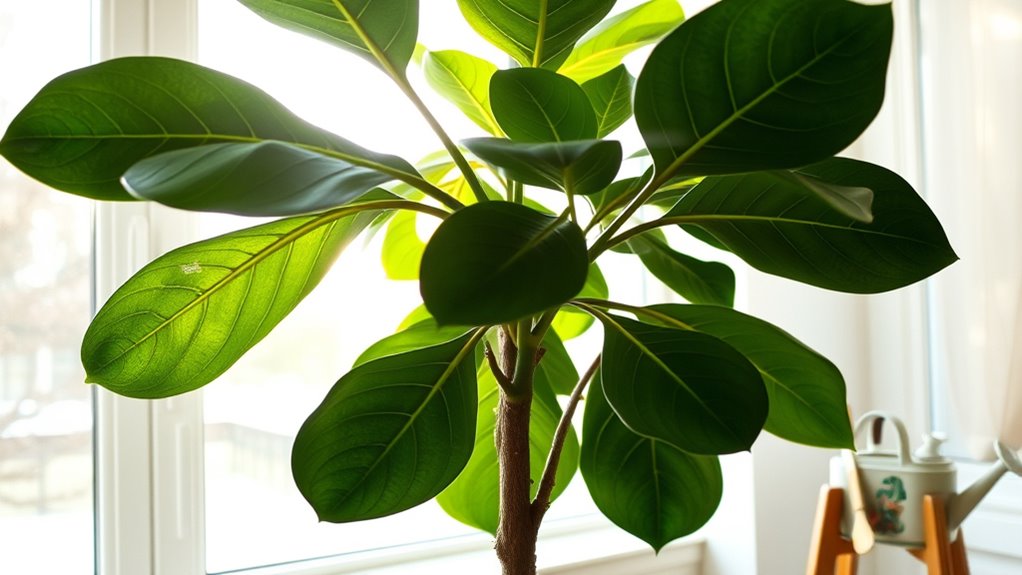

To promote consistent growth in your fiddle leaf fig, you should water it when the top inch of soil feels dry, ensuring good drainage to prevent overwatering. Prune dead or damaged leaves during the active growing season to encourage healthy, new growth and avoid a leggy appearance. Keep an eye on signs like drooping or yellowing leaves to adjust your care accordingly. By maintaining proper watering, pruning, and monitoring, you’ll help your plant thrive—more tips are just ahead.
Key Takeaways
- Maintain a consistent watering schedule, keeping soil moist but not waterlogged, adjusting seasonally.
- Regularly prune dead or overgrown leaves to promote healthy, balanced growth.
- Ensure proper drainage to prevent root rot and support steady development.
- Monitor lighting conditions; provide bright, indirect light to encourage vibrant growth.
- Observe plant responses and adjust watering and pruning routines accordingly for optimal health.
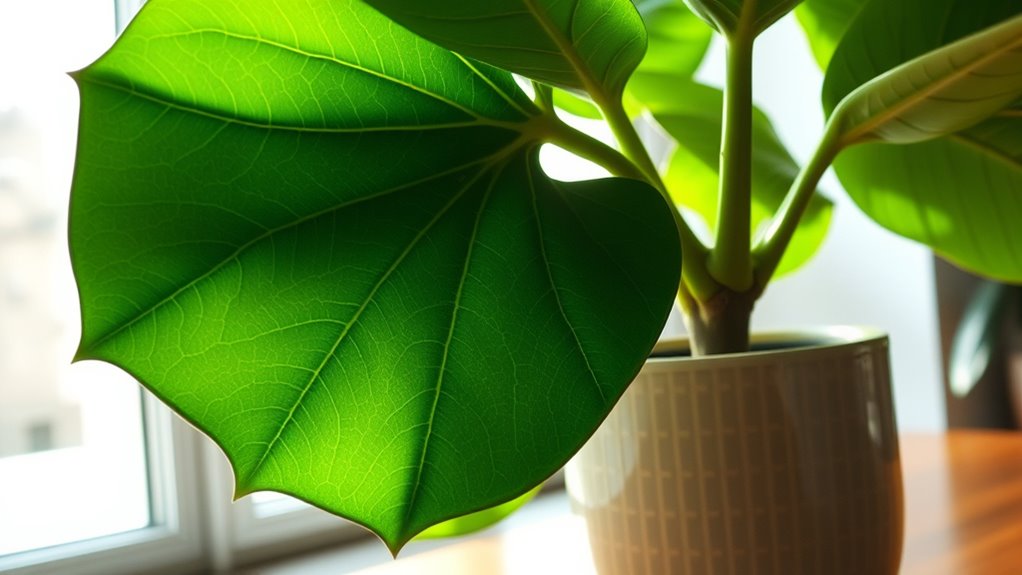
Caring for a fiddle leaf fig can be rewarding, but it requires paying attention to its specific needs. One of the most critical aspects of maintaining a healthy, thriving plant is establishing a consistent watering schedule. These plants prefer their soil to be kept moist but not waterlogged. To achieve this, check the top inch of soil regularly; if it feels dry, it’s time to water. When watering, give your fiddle leaf fig enough to allow excess water to drain out of the pot’s bottom, preventing root rot. Avoid overwatering, as it can lead to yellowing leaves and drooping, which are signs your plant is stressed. During the growing season, typically spring and summer, you may need to water more frequently—about once a week—while in winter, reduce watering to every two weeks or when the soil feels dry. Consistency is key, so stick to your schedule and adjust based on your home’s humidity and temperature. Additionally, monitoring for signs of overwatering or underwatering can help you fine-tune your care routine. Pruning techniques are equally essential in promoting healthy, consistent growth. Regular pruning helps shape your fiddle leaf fig and encourages new growth. Use clean, sharp scissors or pruning shears to trim away any dead, damaged, or yellowing leaves. Focus on cutting just above a node or leaf pair to stimulate new growth. Pruning also allows you to control the plant’s size and shape, preventing it from becoming too leggy or unruly. It’s best to prune during the active growing season, when the plant is most responsive. Don’t be afraid to prune heavily if needed; removing a significant portion of the plant can invigorate it and lead to a fuller, more balanced appearance. Be mindful of your pruning techniques to avoid damaging the main stem or causing unnecessary stress. After pruning, give your plant a little extra attention—ensure it’s in the right lighting and watering conditions—to help it recover quickly and continue growing steadily. Proper drainage and avoiding prohibited transactions in your plant care routines can help prevent common problems like root rot or stress. Maintaining a consistent watering schedule and employing proper pruning techniques create a solid foundation for your fiddle leaf fig’s health. These practices help prevent common problems like overwatering, underwatering, and misshapen growth. With patience and vigilance, you’ll see your plant thrive, producing lush, vibrant leaves that bring life to your space. Remember, each fiddle leaf fig is unique, so observe how yours responds and adapt your care routine accordingly. By paying close attention to its watering needs and pruning regularly, you set the stage for consistent, healthy growth that will reward you with a beautiful, resilient houseplant.
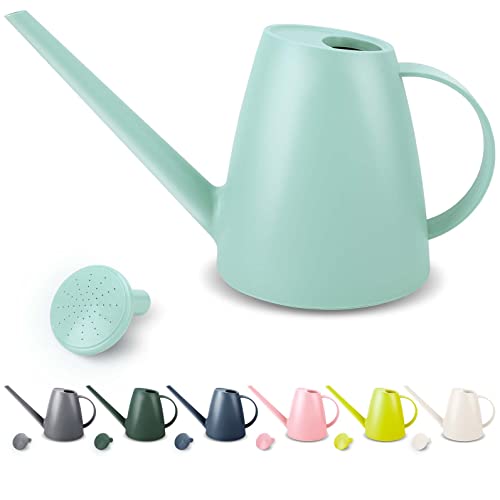
Watering Can for Indoor and Outdoor Plants – Long Spout Water Can for Garden, Flower, House Plants – 1.8L/1/2 Gallon (Green)
Customizable Water Flow: Watering can with a detachable shower nozzle, easily switch between a steady stream or gentle…
As an affiliate, we earn on qualifying purchases.
As an affiliate, we earn on qualifying purchases.
Frequently Asked Questions
How Often Should I Repot My Fiddle Leaf Fig?
You should repot your fiddle leaf fig every 1 to 2 years, or when it outgrows its current container. Check if the roots are circling the pot or growing out of drainage holes; these signs indicate it’s time for a larger container. Use a slightly bigger pot with proper drainage to promote healthy growth. Regular repotting prevents root-bound conditions and guarantees your plant stays vigorous and thriving.
What Are Common Pests That Affect Fiddle Leaf Figs?
You might notice pests like spider mites, mealybugs, or scale insects affecting your fiddle leaf fig. Don’t worry—pest identification helps you act quickly. While pesticides are an option, natural remedies such as neem oil or insecticidal soap are safer for your plant and environment. Regular inspection is key; catching pests early keeps your fiddle leaf fig healthy and thriving, ensuring it continues to grow beautifully.
How Do I Prune My Fiddle Leaf Fig for Healthy Growth?
To prune your fiddle leaf fig for healthy growth, start by using sharp, clean scissors or pruning shears. Remove any dead, damaged, or yellowing leaves first. Then, prune back overgrown stems to encourage bushier growth, making cuts just above a node. Use proper pruning techniques to avoid damaging the plant. Regular pruning helps promote healthy growth, prevents legginess, and maintains a balanced, attractive shape.
Can Fiddle Leaf Figs Survive in Low Light Conditions?
Can your fiddle leaf fig survive in low light? It might, but don’t count on it thriving. Indoor lighting isn’t always enough, especially if the light is dim or indirect. To keep your plant healthy, you need to find the ideal placement—near a bright window or well-lit corner. While it may tolerate low light temporarily, consistent growth depends on providing the right indoor lighting conditions.
What Are Signs of Overwatering or Underwatering?
You’ll notice signs of overwatering or underwatering through water stress, which impacts your fiddle leaf fig’s overall health. Overwatering causes yellowing leaves, soggy soil, and root rot, indicating poor root health. Underwatering results in drooping, crispy leaves, and dry soil. To keep your plant thriving, check soil moisture regularly, guarantee proper drainage, and adjust watering habits accordingly. Proper water management helps maintain healthy roots and promotes consistent growth.

VIVOSUN 6.5 Inch Gardening Scissors Hand Pruner Pruning Shear with Straight Stainless Steel Blades Orange 1-Pack
Reduce Hand Strain: These micro tip snips are made to reduces hand fatigue which makes them great for…
As an affiliate, we earn on qualifying purchases.
As an affiliate, we earn on qualifying purchases.
Conclusion
So, after all this fuss about watering, lighting, and pruning, you’d think caring for your fiddle leaf fig is rocket science. But honestly, the biggest trick is just giving it consistent attention — and maybe resisting the urge to overthink it. Ironically, the more you try to control every detail, the more unpredictable its growth becomes. Sometimes, simply trusting the process and letting nature take its course is the best way to guarantee your plant thrives.

UOUZ 8 Inch Plant Pots, 4 Pack Plastic Planters for Indoor Outdoor with Drainage Holes & Saucers, Waffle Texture Flower Pots for Indoor Plants, Indoor Plant Pots for Monstera, Fiddle Leaf Fig Colorful
Generous Size & Multi-Purpose Use – Our 4-pack UOUZ 8inch 3D Ripple Plastic Flower Pots with Drainage Holes…
As an affiliate, we earn on qualifying purchases.
As an affiliate, we earn on qualifying purchases.
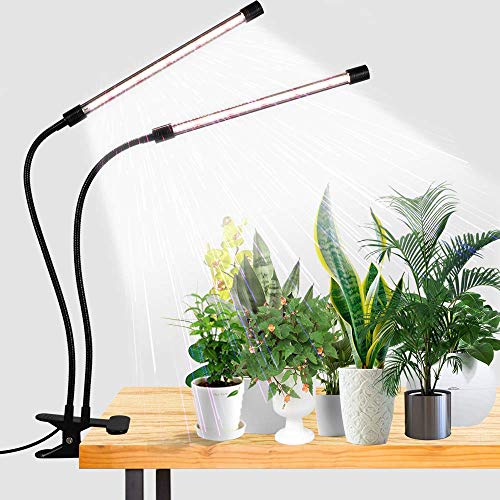
GooingTop LED Grow Light,6000K Full Spectrum Clip Plant Growing Lamp with White Red LEDs for Indoor Plants,5-Level Dimmable,Auto On Off Timing 4 8 12Hrs
6000K White Light – equipped with 10 Red + 74 White LEDs, this growing Lamp is similar to…
As an affiliate, we earn on qualifying purchases.
As an affiliate, we earn on qualifying purchases.