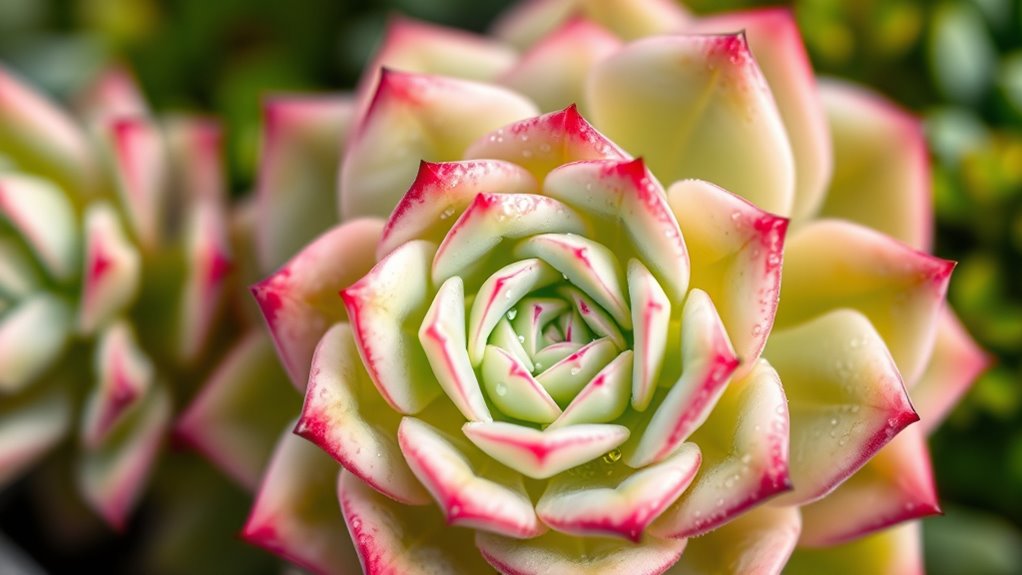

To care for echeveria rosette succulents, water only when the soil is completely dry, usually every 2-3 weeks in the growing season and less in winter. Use well-draining soil and guarantee excess water can drain away to prevent root rot. Keep an eye out for pests like mealybugs and spider mites, and address issues early. Maintaining proper watering, soil, and pest prevention helps your echeveria thrive—learn more tips for healthy growth below.
Key Takeaways
- Water only when the soil is completely dry, typically every 2-3 weeks, to prevent overwatering and root rot.
- Use well-draining soil to ensure excess moisture drains away, supporting healthy root development.
- Provide bright, indirect sunlight and good airflow to promote strong rosette growth.
- Regularly inspect for pests like mealybugs and treat early with insecticidal soap or neem oil.
- Remove dead leaves and avoid overwatering to keep your echeveria healthy and stress-free.

Are you wondering how to keep your Echeveria healthy and thriving? One of the most important aspects is establishing a proper watering schedule. Unlike many other plants, Echeverias are succulents that store water in their fleshy leaves, so overwatering can lead to root rot and overall decline. You want to water only when the soil has completely dried out, which usually means watering every 2-3 weeks during the growing season. In the winter, you can extend that interval even further, sometimes up to a month. When watering, do so thoroughly, ensuring water reaches the roots but drains away completely. Avoid leaving your Echeveria sitting in water, as this can cause root rot. Using a well-draining soil mix is essential, as it helps prevent excess moisture from lingering around the roots. Proper watering also supports the plant’s resilience against pests and diseases, which is vital for healthy growth.
Pest prevention is another critical factor in maintaining a healthy Echeveria. Keep an eye out for common pests like mealybugs, aphids, and spider mites, which can quickly infest your plant if neglected. Regular inspection is your best defense; look for tiny white cottony patches, sticky residue, or webbing around the rosette and underneath leaves. If you spot pests early, you can treat them with insecticidal soap or neem oil, which are safe and effective. Maintaining good airflow around your plant also helps reduce pest problems, so avoid overcrowding and ensure your Echeveria isn’t too close to other plants that might harbor pests. Quarantining new plants before introducing them to your collection minimizes the risk of bringing in unwanted pests.
Proper watering and pest prevention go hand in hand. Overwatering weakens your plant’s defenses, making it more vulnerable to pests and diseases, while dry, stressed plants can attract insects looking for moisture. Ensure you’re watering correctly and keep your Echeveria in an environment with good sunlight and airflow. If you notice pests, acting promptly prevents an infestation from spreading to other plants. Additionally, removing dead or damaged leaves helps keep pests at bay and promotes healthy growth. Remember, a healthy Echeveria is less likely to attract pests and more capable of bouncing back if problems do occur. By sticking to a consistent watering schedule and staying vigilant for pests, you’ll give your rosette succulent the best chance to flourish. Regular monitoring also involves checking for signs of stress, which can indicate underlying care issues.
Top picks for "echeveria care rosette"
Open Amazon search results for this keyword.
As an affiliate, we earn on qualifying purchases.
Frequently Asked Questions
How Do I Propagate Echeveria From Leaves?
To propagate echeveria from leaves, start by selecting healthy, plump succulent cuttings or leaves. Gently twist or cut a leaf from the rosette, letting it callus over for a few days. Place the leaf on well-draining soil and water sparingly until roots develop. This method, leaf propagation, is effective and easy, resulting in new echeveria plants from your succulent cuttings.
What Pests Commonly Attack Echeveria Plants?
You should watch out for common pests like mealybugs, aphids, and scale insects attacking your echeveria. Pest identification is key—look for white, cottony spots or sticky residue. To handle infestations, use natural remedies like neem oil or insecticidal soap, which are safe and effective. Regularly inspect your plant, and early intervention helps keep your echeveria healthy and pest-free.
How Can I Prevent Etiolation in Echeveria?
Did you know that over 80% of echeveria issues stem from improper light exposure? To prevent etiolation, guarantee your echeveria gets plenty of bright, indirect sunlight—aim for at least 4-6 hours daily. Also, provide proper spacing so air circulates freely around the plant, reducing stretch caused by insufficient light. Regularly rotate your echeveria to promote even growth and keep it healthy and compact.
What Are Signs of Overwatering in Echeveria?
If you notice your echeveria’s leaves become mushy, translucent, or overly soft, you’re likely overwatering. These are signs of poor watering habits and potential root rot. You should reduce watering frequency, ensuring the soil dries out completely between waterings. Check the roots for black or rotted areas, which indicate root rot. Proper watering habits prevent overwatering and keep your echeveria healthy and thriving.
Can Echeveria Survive Indoors Without Direct Sunlight?
Yes, your echeveria can survive indoors without direct sunlight, but it may not thrive. Indoor lighting can be enough if you place it near a bright window, preferably south-facing. Keep in mind, echeveria needs sunlight requirements to grow healthy and maintain its rosette shape. If natural light is limited, consider supplementing with a grow light to guarantee your succulent gets adequate light for proper growth and color vibrancy.
Conclusion
With proper care, your echeveria will thrive like a blooming jewel in your collection. Keep it bright, avoid overwatering, and give it the right soil to let it shine its rosette pattern proudly. Think of your echeveria as a delicate dance—gentle, precise, and full of beauty. By nurturing it with patience and attention, you’ll enjoy its stunning presence for years to come, a proof to your green thumb and love for succulents.