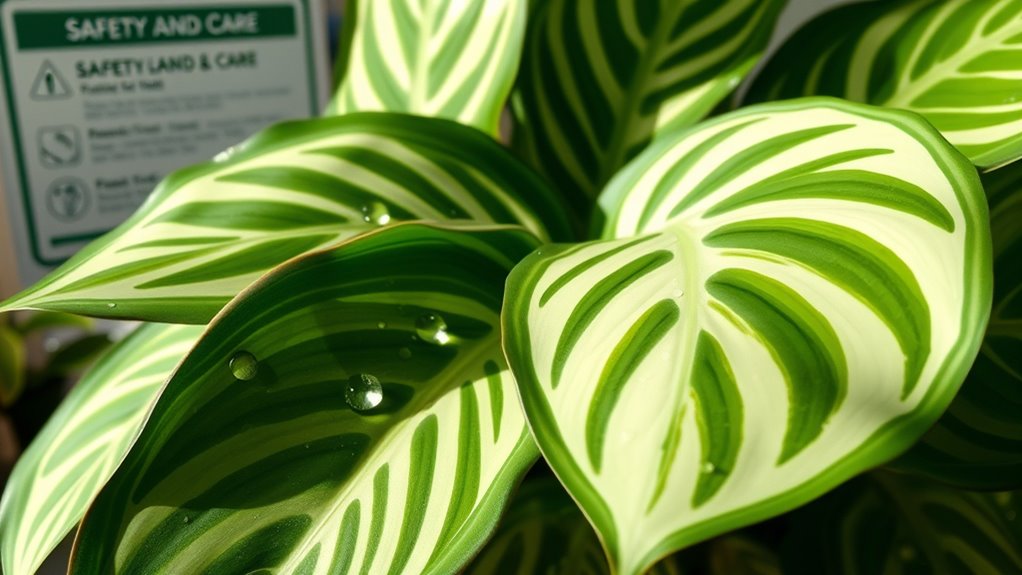

To care for your dieffenbachia, water it when the top inch of soil feels dry, avoiding overwatering to prevent root rot. Regularly inspect for pests and wipe leaves with a damp cloth or use insecticidal soap if needed. Keep the plant in well-draining soil, maintain good airflow, and avoid drafts. Proper watering and pest prevention keep your plant vibrant and healthy. For detailed safety tips and plant care advice, continue exploring these essential guidelines.
Key Takeaways
- Water only when the top inch of soil feels dry, and avoid overwatering to prevent root rot.
- Regularly inspect for pests like webbing or tiny insects, and isolate affected plants promptly.
- Keep the plant away from drafts and maintain good airflow to reduce pest and disease risks.
- Handle with care, keeping the plant out of reach of children and pets due to its toxicity.
- Use insecticidal soap or wipe leaves with a damp cloth to manage pests safely.
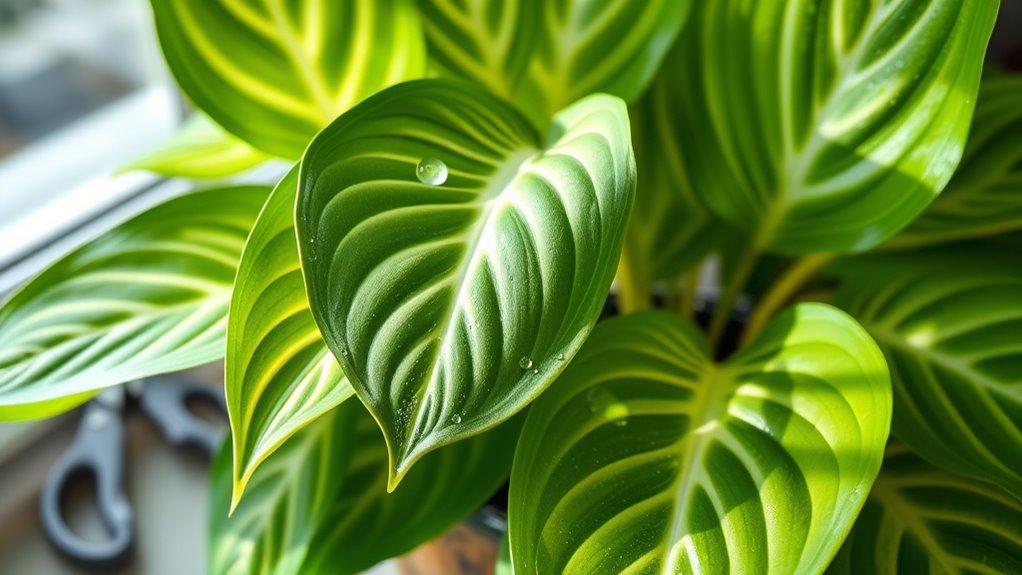
Dieffenbachia, often called dumb cane, is a popular indoor plant prized for its lush, variegated leaves and easy care. To keep it healthy, you need to pay attention to its watering frequency. Generally, you should water your dieffenbachia when the top inch of soil feels dry. Overwatering can lead to root rot, so it’s better to err on the side of dryness rather than waterlogged soil. During the growing season, usually spring and summer, you might need to water once a week, but in cooler months, cut back to every two weeks or so. Make sure your pot has drainage holes to prevent excess water from sitting at the bottom. Proper watering not only keeps your plant thriving but also helps ward off pest problems. When a plant is stressed from overwatering or underwatering, it becomes more susceptible to pests like spider mites, mealybugs, and scale insects. Regularly inspecting your dieffenbachia for signs of pests is essential. Look for sticky residues, webbing, or tiny insects on the undersides of leaves. If you catch pests early, wiping the leaves with a damp cloth or using insecticidal soap can prevent infestations from spreading and damaging your plant. Pest prevention also involves maintaining good airflow around your dieffenbachia and avoiding overcrowding. Keep your plant away from drafts or sudden temperature changes, which can weaken its defenses and invite pests. Also, always use clean tools when pruning or repotting to avoid introducing pests or diseases. When watering, be cautious not to splash water on the leaves, as excess moisture can promote fungal issues and attract pests. Consistent watering routines combined with vigilant pest prevention create a healthy environment for your plant. Proper watering practices help maintain the right moisture level, ensuring the roots stay healthy and strong, which in turn supports vibrant foliage. Additionally, understanding the importance of proper plant care can significantly reduce pest and disease issues. Pest prevention, on the other hand, minimizes the chances of infestations, keeping your dieffenbachia looking lush and lively. If you notice any signs of pests or disease, act quickly by isolating the affected plant and treating it with appropriate remedies. Remember, a healthy plant is less likely to suffer from pest attacks. By sticking to a consistent watering schedule and practicing good pest prevention, you can enjoy the beauty of your dieffenbachia for years to come. Proper care and vigilance are key to maintaining its vibrant appearance and ensuring it remains a lush centerpiece in your home.
Frequently Asked Questions
Can Dieffenbachia Thrive Outdoors in All Climates?
Dieffenbachia can’t flourish outdoors in all climates. You should focus on outdoor planting only in warm, frost-free zones, as it prefers tropical or subtropical conditions. Its climate adaptability is limited, so if you live in a cooler or temperate area, you’ll need to bring it indoors or provide protection during colder months. Always consider your local climate to make certain your Dieffenbachia stays healthy and vibrant.
How Often Should I Prune My Dieffenbachia?
Think of pruning your Dieffenbachia as giving it a fresh breath of air. You should prune it every 4 to 6 weeks during the growing season to promote healthy foliage. Remove dead or yellowing leaves promptly, and trim back overgrown stems to maintain shape. Regular pruning keeps your plant vibrant and healthy, preventing disease and encouraging new growth. Stay attentive, and your Dieffenbachia will reward you with lush, beautiful leaves.
What Are Common Pests That Affect Dieffenbachia?
You should watch out for common pests like spider mites, mealybugs, and aphids, which can damage your dieffenbachia. To identify these pests, look for tiny webs, cottony spots, or sticky residue on the leaves. For pest identification, inspect your plant regularly. Use natural remedies like neem oil or insecticidal soap to treat infestations safely. Prompt action helps keep your dieffenbachia healthy and vibrant.
Is It Safe to Keep Dieffenbachia in a Child’s Room?
You shouldn’t keep dieffenbachia in a child’s room. Its plant toxicity makes it dangerous if ingested, causing swelling and discomfort. Imagine tiny hands reaching for the vibrant leaves, unaware of the risk. For child safety, opt for non-toxic plants instead. Protect your little one by avoiding dieffenbachia in accessible areas, ensuring a safe environment where curiosity won’t lead to harm.
How Can I Prevent Leaf Browning on My Dieffenbachia?
To prevent leaf browning on your dieffenbachia, you should maintain proper leaf humidity by misting regularly and avoiding dry air. Make certain you’re using a balanced fertilizer to provide essential nutrients without overfeeding, which can cause leaf damage. Keep the plant in bright, indirect light and water consistently, allowing the topsoil to dry slightly between waterings. These steps help keep your dieffenbachia healthy and vibrant, reducing browning issues.
Conclusion
Taking care of your dieffenbachia is like tending to a delicate treasure—you’ll want to be gentle and attentive. Keep it in bright, indirect light, water it when the topsoil feels dry, and watch out for pests. Remember, safety comes first; keep it out of reach of curious pets and kids. With a little love and caution, your plant will thrive and bring vibrant greenery to your space, like a lush oasis in your home.