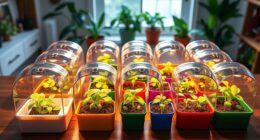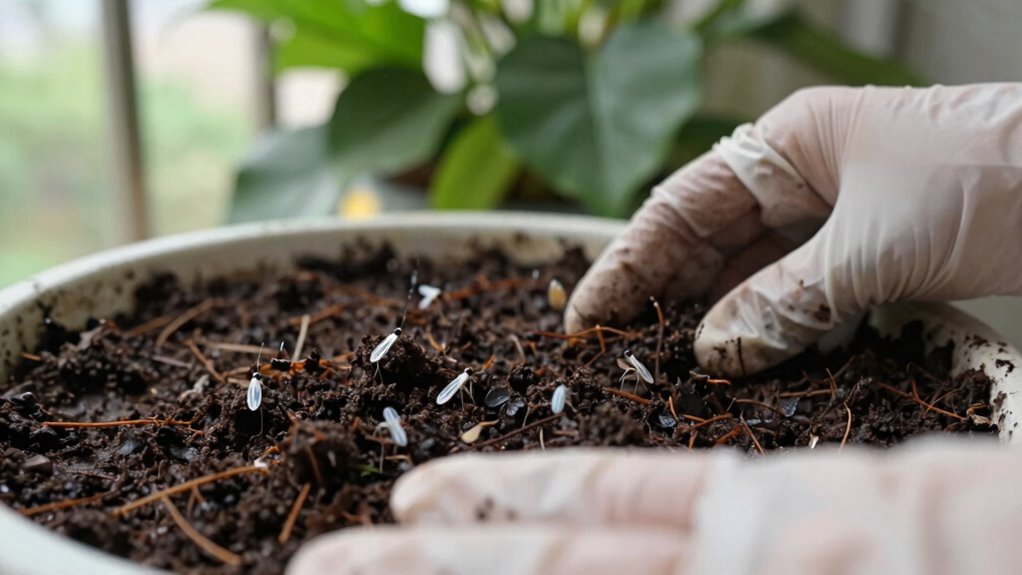

To prevent fungus gnats indoors, you should control soil moisture by watering only when the topsoil dries out, using well-draining soil mixes, and avoiding overwatering. Keep your space clean and dry by removing fallen leaves and plant debris, and use sticky traps to catch adult gnats early. Monitoring soil humidity levels and adjusting watering habits are key. Staying proactive about these practices can help you keep these pests at bay—learn more strategies for effective prevention.
Key Takeaways
- Avoid overwatering and ensure soil dries out between waterings to reduce breeding sites.
- Use well-draining soil mixes with perlite or sand to prevent excess moisture retention.
- Regularly monitor soil moisture levels with sensors and keep humidity low around indoor plants.
- Remove plant debris, fallen leaves, and clean surfaces to eliminate potential gnat breeding areas.
- Employ sticky traps and natural repellents like basil or marigolds to detect and deter adult gnats.
As an affiliate, we earn on qualifying purchases.
How Do Fungus Gnats Invade Indoor Plants and Why Prevention Matters
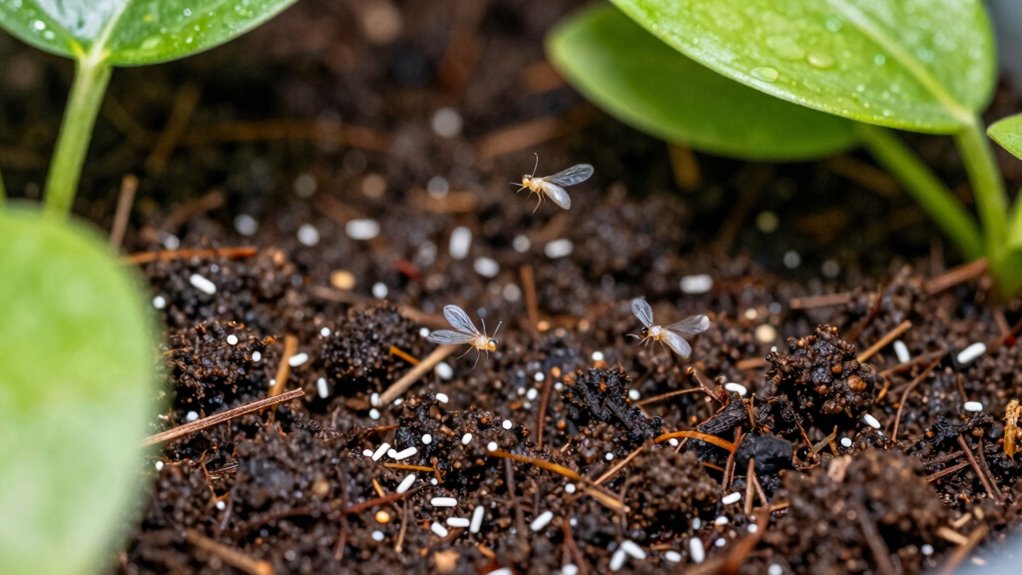
Fungus gnats often find their way into indoor plants through the soil or potting mix, especially when it’s kept moist and rich in organic material. These indoor plant pests are attracted to damp environments where they can lay eggs. This cycle can quickly establish a persistent problem if not addressed. Prevention matters because once these pests infest your plants, they can damage roots and hinder growth. Understanding how fungus gnats invade helps you take proactive steps to keep your indoor garden healthy and free from these nuisances. Additionally, maintaining proper soil moisture levels and avoiding overwatering can prevent infestation by reducing the dampness that attracts these pests. Being aware of favorable conditions for fungus gnat development can further help you create an environment less inviting to them. Recognizing the life cycle of fungus gnats can also guide effective control strategies to break their reproductive process. Knowing the environmental factors that promote their growth can help you modify your indoor gardening practices for better pest management.
Spotting Early Signs of a Fungus Gnat Infestation
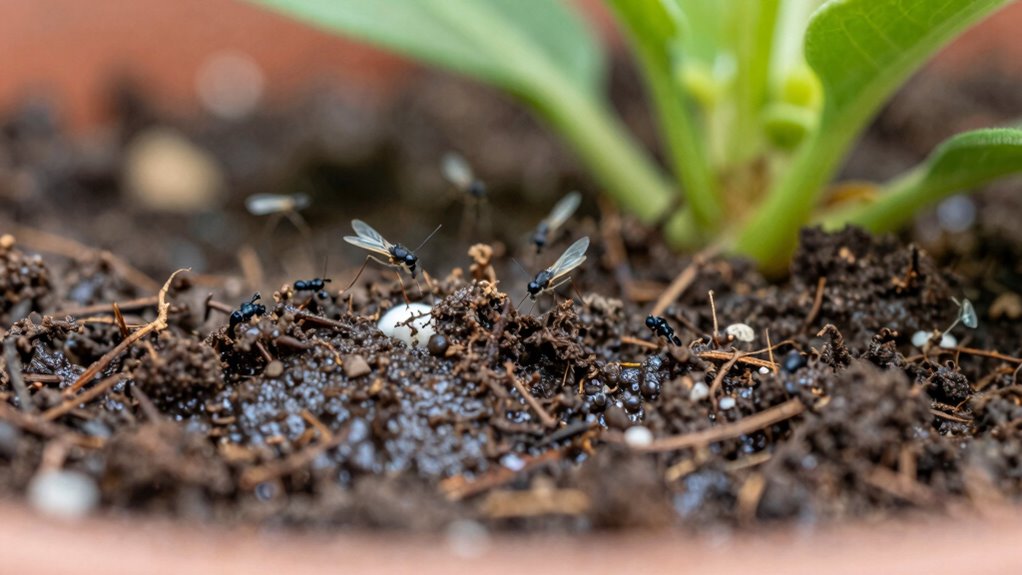
Early detection of a fungus gnat problem can save your plants from serious damage, so it’s important to recognize the subtle signs before the infestation worsens. Watch for tiny, dark larvae in the soil, especially near the surface, which indicate the fungal lifecycle is underway. You might also notice adult gnats flying around your plants, attracted by high indoor humidity that favors their breeding. These gnats are often mistaken for fruit flies but are drawn specifically to moist soil and decomposing organic matter. Keep an eye on overly damp soil and increased insect activity, as these are early warning signs. Recognizing these clues early helps you act swiftly to break the lifecycle and prevent a full-blown infestation. Additionally, understanding the Gold IRA markets and the various investment options available can help you appreciate the importance of proper maintenance and control of moisture levels for healthy plant growth. Regularly inspecting soil conditions and maintaining proper watering habits are essential in preventing fungal gnat infestations from establishing in your indoor garden. To further minimize the risk, consider using biological controls such as beneficial nematodes, which target the larvae without harming your plants.
How to Adjust Watering Habits to Keep Soil Gnat-Free
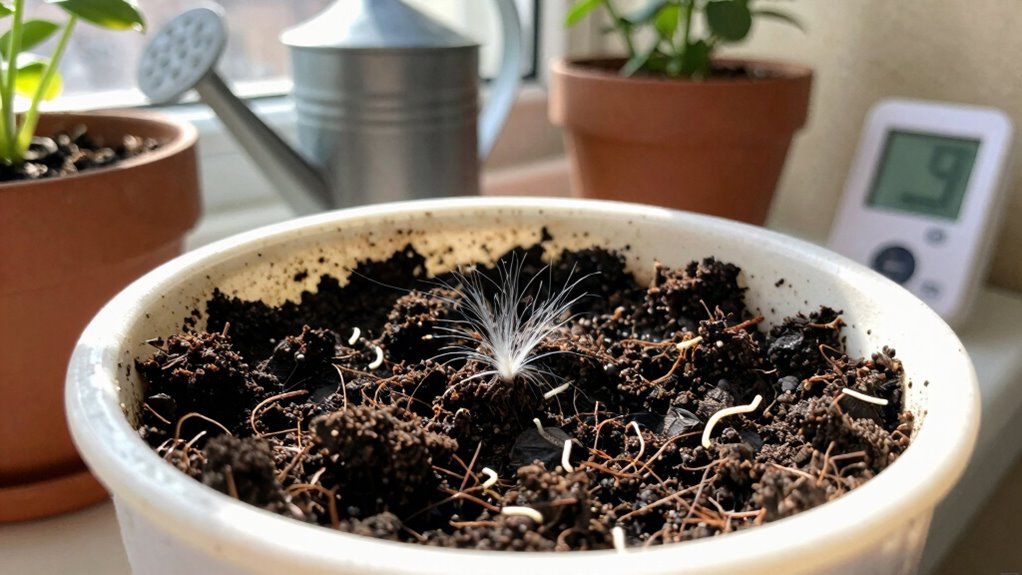
You should water your plants less often to prevent excess moisture that attracts fungus gnats. Make sure to use well-draining soil to help excess water escape quickly. These adjustments can substantially reduce the conditions fungi gnats thrive in. Incorporating personalized intervention strategies in your plant care routine can further enhance your efforts to keep pests at bay. Additionally, maintaining an environment that values inclusive practices and sustainable pest management can promote healthier indoor gardening. Employing sound healing science principles, such as utilizing specific sound frequencies to promote plant health, could also be an innovative way to support your indoor ecosystem. Regularly monitoring soil moisture levels and avoiding overwatering can make a significant difference in creating an inhospitable environment for fungus gnats, aligning with best practices for risk management strategies. Understanding the importance of color accuracy in your indoor environment can also contribute to a healthier, pest-free space by ensuring optimal conditions for your plants.
Water Less Frequently
Reducing watering frequency is one of the most effective ways to prevent fungus gnats from thriving in your indoor plants. Overwatering increases plant humidity, creating ideal conditions for gnats to complete their lifecycle. When soil stays moist longer than necessary, gnat larvae hatch and develop rapidly. To break this cycle, water only when the top inch of soil feels dry. This not only hampers gnat development but also discourages their eggs from laying. Keep in mind, balancing water help plants stay healthy without inviting pests. Here’s a quick guide:
| Soil Moisture | Plant Humidity | Gnat Lifecycle Stage |
|---|---|---|
| Dry to touch | Lower humidity | Eggs and larvae |
| Slightly moist | Moderate humidity | Larvae develop |
| Wet soil | High humidity | Adult gnats emerge |
Adjust watering habits accordingly.
Use Well-Draining Soil
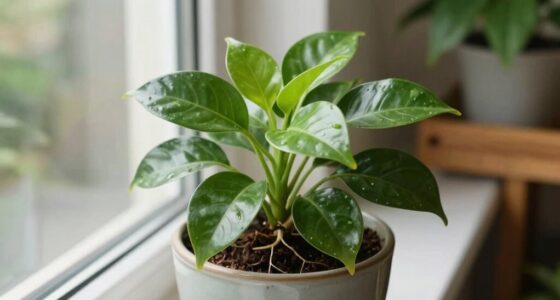
Using well-draining soil is essential for preventing fungus gnats indoors because it helps excess water escape quickly, reducing soil moisture levels that attract these pests. Focus on soil composition by choosing a mix that includes perlite, sand, or coarse bark to improve drainage. Avoid heavy, clay-based soils that retain moisture and create a damp environment ideal for fungus gnat larvae. Proper soil drainage promotes plant health by preventing overwatering and root rot, ensuring roots stay oxygenated and strong. When repotting or watering, check that water flows freely through the soil and out of the drainage holes. This simple adjustment helps maintain ideal soil conditions, discouraging fungus gnat breeding and supporting healthier plants overall.
Natural Remedies and DIY Tips to Repel Fungus Gnats
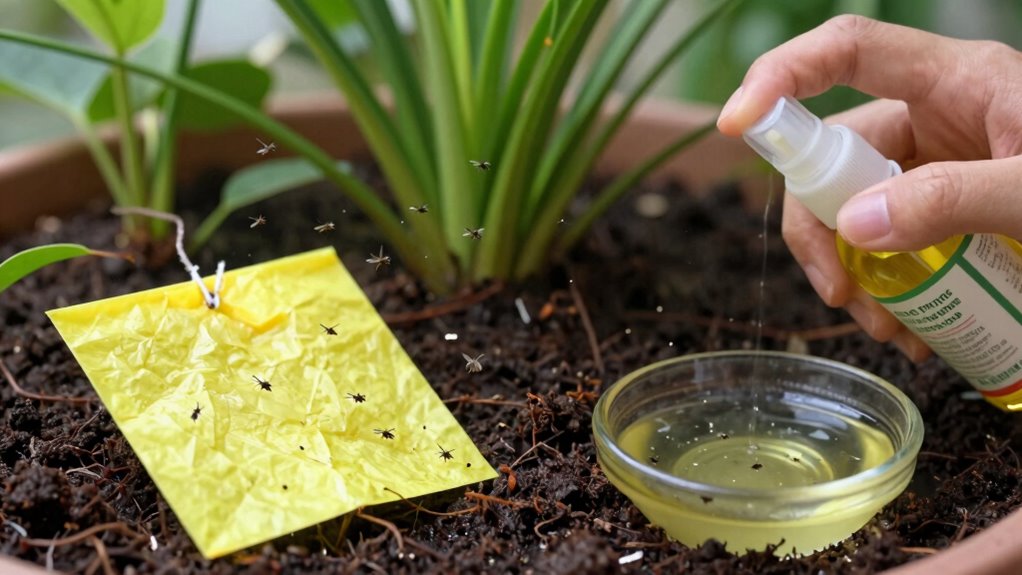
Natural remedies and DIY tips can be effective ways to keep fungus gnats at bay without resorting to harsh chemicals. One approach is companion planting, where you grow plants like marigolds or basil near your indoor plants to repel gnats naturally. Introducing beneficial insects, such as predatory nematodes or beneficial mites, can also help control gnat populations organically. You can make simple traps using yellow sticky cards or create a vinegar trap by filling a small container with apple cider vinegar and a few drops of dish soap. These methods attract and trap adult gnats, reducing their numbers. Combining these DIY strategies creates a pest-resistant environment, making it less inviting for fungus gnats and protecting your indoor plants effectively.
Choosing the Right Soil and Potting Practices to Stop Gnat Eggs
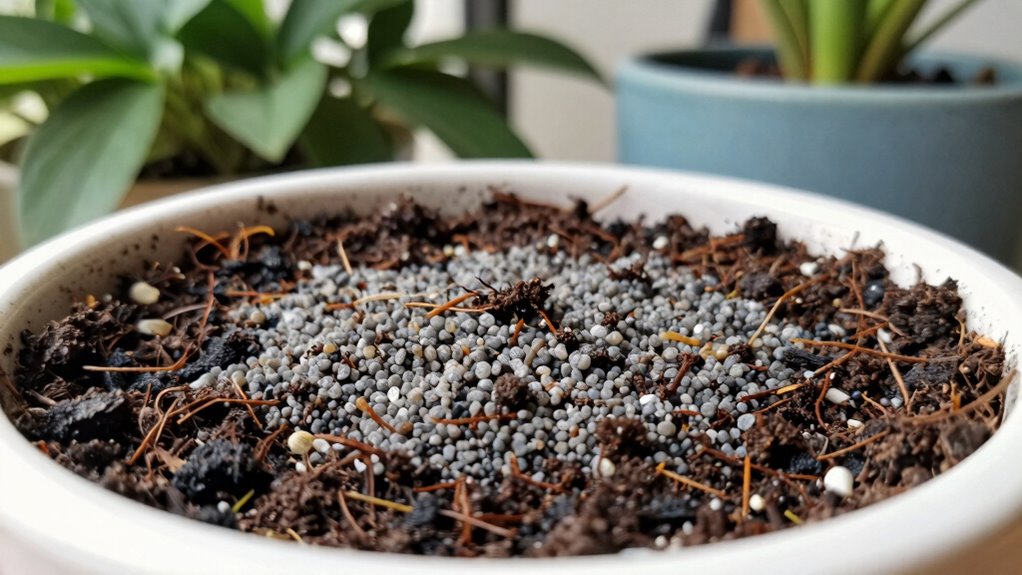
Choosing the right soil and potting practices is essential for preventing fungus gnat eggs from thriving in your indoor garden. Avoid using composting dangers like compost with high moisture or decomposing organic matter, which attract gnats. Instead, opt for well-draining soil to prevent excess moisture that supports egg development. Be aware of plant species susceptibility; some plants, like ferns or orchids, are more prone to gnats due to their soil conditions. Always let potting soil dry out between waterings and avoid overwatering, as damp soil encourages gnat larvae. Use sterile or fresh soil for repotting to reduce the risk of introducing gnat eggs. Proper soil management creates an environment that’s less hospitable to fungus gnat reproduction and helps keep your indoor plants healthy. Additionally, understanding the cutting-edge technology behind soil analysis can help you better monitor and optimize soil conditions for pest prevention. Utilizing soil testing kits can provide precise measurements of moisture and nutrient levels, further reducing gnat-friendly environments. Incorporating digital soil sensors can also give real-time feedback on soil health, enabling more proactive pest control measures.
Keeping Your Indoor Space Gnat-Free for Good

Once you’ve set up your soil and potting practices to prevent gnat eggs from hatching, maintaining a gnat-free indoor environment requires ongoing vigilance. Effective plant pest management involves regularly inspecting your plants for signs of gnats and promptly removing any infested soil or plant debris. Controlling indoor humidity is essential, as high humidity encourages gnat breeding. Use a dehumidifier or improve ventilation to keep humidity levels low, ideally between 40-60%. Avoid overwatering, as consistently damp soil provides an ideal breeding ground. Keep the area around your plants clean and dry, and consider using sticky traps to catch adult gnats. Regular cleaning of household surfaces can also prevent the spread of pests and maintain a safe environment. Additionally, understanding fungus gnat life cycle can help you target specific stages of development for more effective control. Monitoring the soil moisture levels regularly can help you identify overwatering early and adjust your watering habits accordingly. Recognizing the damp soil conditions that promote gnat breeding can enable you to take proactive measures before an infestation begins. Implementing preventive measures such as soil drying techniques can further reduce the risk of infestation. Consistent monitoring and adjusting your environment will help you keep fungus gnats at bay and maintain a healthy, pest-free indoor space.
Frequently Asked Questions
Can Fungus Gnats Harm My Indoor Plants’ Roots?
Yes, fungus gnats can harm your indoor plant roots, especially if soil moisture levels are high. They lay eggs in damp soil, and their larvae feed on organic matter and roots, which can weaken your plants. Some plants are more susceptible than others, so keeping soil dry and monitoring moisture helps prevent infestations. Regularly inspect your plants to catch problems early and protect your roots from potential damage.
Are Certain Houseplants More Prone to Fungus Gnat Infestations?
Did you know that over 80% of houseplants are prone to fungus gnat infestations? Some plants, like ferns and African violets, are especially vulnerable because their soil tends to stay moist longer. You should monitor moisture levels in your plant soil, as consistently damp environments attract fungus gnats. Choosing plants with well-draining soil and avoiding overwatering can markedly reduce your chances of infestation.
How Long Do Fungus Gnats Typically Live Indoors?
Fungus gnats typically live indoors for about a week as adults, but their larvae can persist longer, feeding on moist soil. You can identify larvae by tiny, transparent worms in the soil and observe adult behavior, like flying around your plants. To break their life cycle, reduce watering and keep soil dry. This approach helps prevent larvae development and limits adult fungus gnat activity inside your home.
Do Fungus Gnats Spread Plant Diseases?
Fungus gnats can be sneaky, and yes, their larvae sometimes spread plant diseases. When you neglect soil moisture management, the larvae thrive and can transfer harmful pathogens from decaying organic matter to your plants. These tiny pests might seem harmless, but they can cause root damage and transmit diseases, turning your lush garden into a battleground. Keep soil dry and healthy to stop their destructive journey before it starts.
Can Fungus Gnats Establish Themselves in Indoor Compost Bins?
Yes, fungus gnats can establish themselves in your indoor compost bin. They thrive in moist, organic material like compost, where the gnat lifecycle continues rapidly. To prevent this, turn your compost regularly and keep it dry. Cover it with a layer of dry material, like straw or shredded paper, to disrupt their breeding environment. Proper maintenance stops the gnat lifecycle from perpetuating inside your indoor compost.
Conclusion
By staying vigilant and adjusting your watering and soil habits, you can keep fungus gnats at bay. Did you know that a single gnat can lay up to 300 eggs in just a few weeks? That’s enough to turn your thriving indoor garden into a gnarly nightmare. But with the right prevention techniques, you have the power to stop them before they take over. Keep your plants healthy and your space pest-free—you’ve got this!