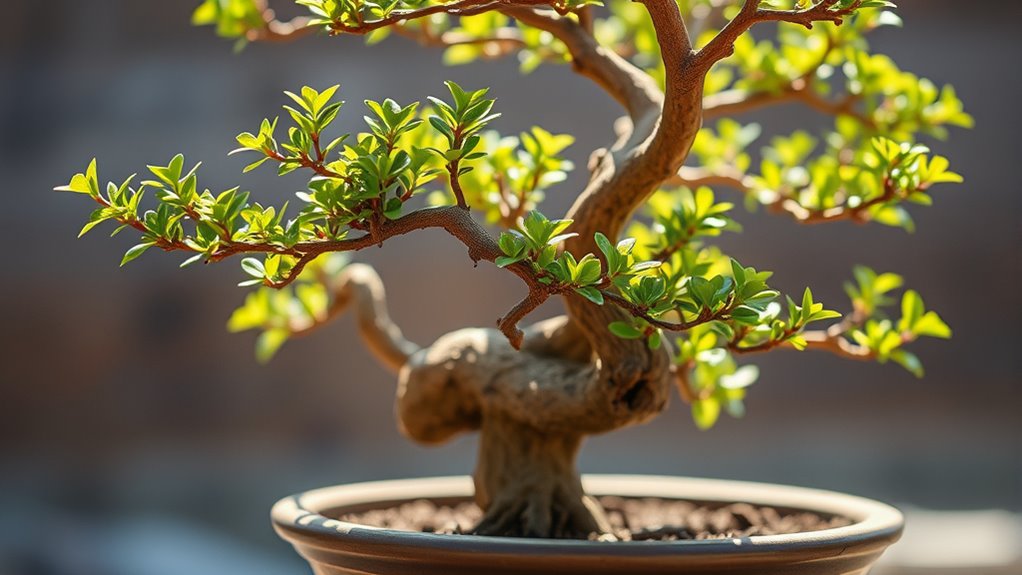

To cultivate a bonsai, you’ll need to master techniques like root pruning and wiring. Root pruning helps control the size and encourages a healthy, vigorous root system, while wiring shapes the branches and trunk into your desired form. Regularly maintaining these techniques guarantees your miniature tree remains proportionate, healthy, and beautiful over time. With patience and care, you’ll develop a skill set that keeps your bonsai thriving and looking stunning — and there’s much more to discover as you continue your journey.
Key Takeaways
- Regular root pruning during repotting maintains the bonsai’s size and promotes healthy, vigorous root growth.
- Wiring techniques shape and refine the branches and trunk, guiding growth into desired artistic forms.
- Consistent maintenance, including monitoring wire and root health, ensures the bonsai remains balanced and proportionate.
- Proper watering, pruning, and fertilizing are essential to support the miniature tree’s overall health and development.
- Patience and gentle care are crucial for shaping and nurturing a thriving, miniature bonsai over time.
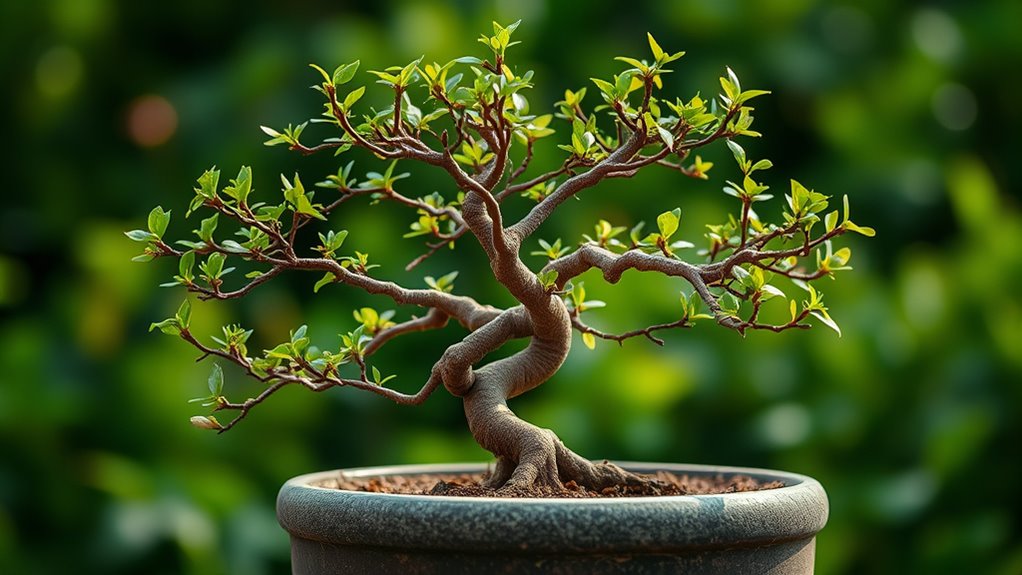
Have you ever wondered what makes a bonsai tree so mesmerizing? It’s the intricate balance of artistry and horticulture that transforms a tiny plant into a living sculpture. One of the fundamental techniques behind this transformation is root pruning. When you perform root pruning, you carefully trim the roots of your bonsai during repotting to control its growth and maintain its miniature size. This process encourages a healthy root system, which is essential for nutrient absorption and stability. By removing overly long or thick roots, you prevent the tree from becoming root-bound, ensuring it stays proportionate and vibrant. Root pruning also stimulates new root growth, which helps the tree stay healthy and vigorous. You’ll find that regular root pruning is key to maintaining the overall balance of your bonsai’s size and health over the years. Research supports that proper root management is crucial for the longevity of your bonsai.
Alongside root pruning, wiring techniques play a *vital* role in shaping your bonsai. Wiring involves wrapping thin wire around branches or the trunk to guide their growth into desired positions. You might start wiring a branch to encourage a specific bend or twist, gradually shaping the tree’s silhouette to mimic nature’s intricate forms. It’s a delicate process—you want to apply the wire carefully, avoiding damage to the bark, and monitor it regularly to prevent it from cutting into the growing tissue. As the branch or trunk grows, you can adjust or remove the wire, refining the shape further. Wiring techniques give you precise control over the development of your bonsai’s structure, enabling you to craft a harmonious and aesthetically pleasing miniature tree.
Both root pruning and wiring techniques require patience and a gentle touch. They’re ongoing processes that demand attention to detail. When you prune roots, you’re not just trimming; you’re shaping the tree’s future growth. When you wire branches, you’re sculpting its form. These methods work together to create a balanced, natural appearance that captures the essence of mature trees in a tiny form. Over time, as you develop your skills, you’ll see how these techniques allow your bonsai to evolve into a living work of art. Remember, the key is consistency and care—by regularly practicing root pruning and wiring, you’ll better understand the unique needs of your tree, ensuring it remains healthy and beautifully styled for years to come.
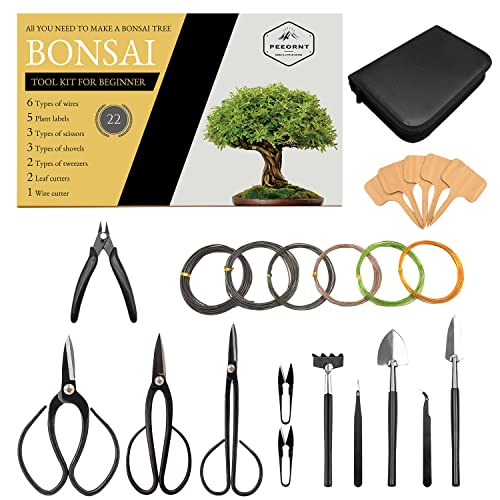
PEEORNT Bonsai Tree Tools Kit, 22 PCs Bonsai Tools Set High Carbon Steel Trimming Tools Set Include Pruning Shears, Cutters, Training Wires, Bonsai Grooming Care Kit for Beginner Gardening Gifts
EVERYTHING YOU NEED TO START BONSAI – The bonsai tree kit includes 3 x bonsai scissor, 2 x…
As an affiliate, we earn on qualifying purchases.
As an affiliate, we earn on qualifying purchases.
Frequently Asked Questions
How Often Should I Repot My Bonsai Tree?
You should repot your bonsai tree every 1 to 3 years, depending on its size and growth rate. The repotting frequency allows for healthy root development and prevents root binding. When repotting, use proper root pruning techniques to trim overly long or tangled roots, encouraging new growth. Keep an eye on your tree’s health, and repot sooner if you notice roots circling the pot or growth slowing.
What Is the Best Fertilizer for Bonsai Trees?
You ask about the best fertilizer for bonsai trees, and choosing the right fertilizer types is key to healthy bonsai nutrition. You should opt for a balanced, water-soluble fertilizer with equal parts nitrogen, phosphorus, and potassium, applied during the growing season. Organic options, like fish emulsion or composted plant teas, also promote healthy growth. Regular feeding keeps your bonsai vibrant, but avoid over-fertilizing to prevent root damage.
How Do I Prune My Bonsai for Optimal Growth?
Sure, pruning a bonsai is as simple as giving it a haircut, right? Well, not quite. Use precise pruning techniques to shape your tree and stimulate growth. Focus on trimming new shoots and removing dead or crossing branches to encourage healthy development. Remember, gentle cuts foster growth stimulation, so avoid over-pruning. With patience and care, your bonsai will thrive, proving that even tiny trees need a little big-picture pruning.
Which Watering Schedule Is Ideal for Different Bonsai Species?
You should tailor your watering schedule based on your bonsai species and seasonal changes. Generally, you’ll water when the topsoil feels dry, but some species need more frequent watering, especially in summer, while others prefer less in winter. Adjust your watering frequency seasonally, ensuring your bonsai stays hydrated without overwatering. Observe your tree and soil moisture regularly to maintain ideal health and promote healthy growth throughout the year.
How Can I Prevent Pests and Diseases in Bonsai Trees?
Think of your bonsai as a delicate fortress, easily invaded by pests or weakened by disease. To prevent these threats, regularly inspect your tree for pest identification signs and act swiftly. Maintain good airflow, avoid overwatering, and keep the environment clean. Consistent disease prevention and early pest detection are your best defenses, helping your miniature tree stay healthy and resilient amid potential invasions.

Mudder 5 Roll Aluminum Bonsai Training Wire Tree 160 Feet Total with Bonsai Wire Cutter Anodized Training for Holding Branches Small Trunks(1/1.5/2.0mm,Classic)
Package includes: 1 piece of wire cutter and 5 rolls of bonsai wires in different colors and sizes,…
As an affiliate, we earn on qualifying purchases.
As an affiliate, we earn on qualifying purchases.
Conclusion
Now that you know the essentials of cultivating a bonsai tree, you’re ready to start your miniature forest. Remember, patience and practice are key—don’t expect perfection overnight. With time, your skills will grow, and your bonsai will flourish. Keep nurturing it, and watch as it becomes a living piece of art. After all, a journey of a thousand miles begins with a single step, so take yours with confidence and care.
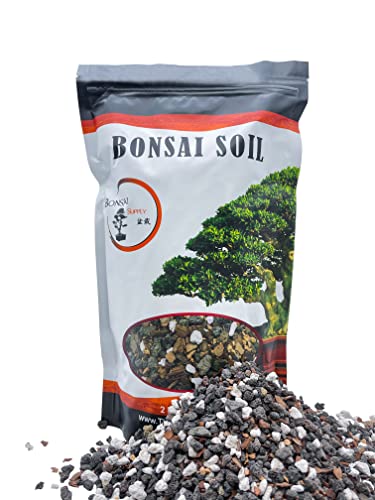
Bonsai Soil All Purpose Mix | Fast Draining Pre Blend (2 Quart Bag) Plant | Pumice, Lava, Calcined Clay and Pine Bark ● Potting Pre Mixed Bonsai Plant Soil Mixture By The Bonsai Supply
🌱【Ready-to-use Pre-mix】: Simplify repotting your Bonsai and other plants with our premium, fast-draining Bonsai potting soil mix. It…
As an affiliate, we earn on qualifying purchases.
As an affiliate, we earn on qualifying purchases.

Bonsai Tree Kit for Beginners – 5X Unique Japanese Bonzai Trees | Complete Indoor Bonsai Starter Kit for Growing Bonsai Plants with Tools & Planters – DIY Gardening Gifts for Women & Men
FREE EXTRA SEEDS!! Avergo’s bonzie starter kit comes with additional seed packets just in case you’ll need more
As an affiliate, we earn on qualifying purchases.
As an affiliate, we earn on qualifying purchases.