To care for your indoor Bird of Paradise, provide bright, indirect sunlight near south or east-facing windows, and keep the soil evenly moist without waterlogging by watering thoroughly when the top inch feels dry. Use well-draining soil and make certain pots have drainage holes. Maintain warm, humid conditions between 65-70°F, clean the leaves regularly, and adjust watering if leaves yellow or droop. Continued care tips will help your plant thrive and produce its signature vibrant foliage and flowers.
Key Takeaways
- Provide bright, indirect sunlight near south or east windows for healthy growth.
- Water thoroughly when the top inch of soil feels dry, avoiding waterlogging.
- Use well-draining soil and ensure pots have drainage holes to prevent root rot.
- Maintain warm, humid conditions (65-70°F) and keep away from cold drafts.
- Regularly clean leaves and adjust watering based on plant health signals like yellowing or drooping leaves.

Taking proper care of your Bird of Paradise guarantees it stays vibrant and healthy. One of the most essential aspects of care is establishing a consistent watering schedule. These plants thrive when their soil remains evenly moist but not waterlogged. During the growing season, typically spring and summer, you should water your Bird of Paradise thoroughly, allowing excess water to drain out of the pot. Wait until the top inch of soil feels dry before watering again. In the cooler months, reduce the frequency, as the plant’s growth slows down and it needs less moisture. Overwatering can lead to root rot, so always check the soil moisture first. Using well-draining soil mixes and pots with drainage holes can help prevent excess water from sitting around the roots.
Light requirements are equally vital for your Bird of Paradise’s health and vibrancy. These plants love bright, indirect sunlight and flourish in well-lit environments. If you keep your indoor Bird of Paradise near a south or east-facing window, it’ll likely get enough light to thrive. However, avoid direct, harsh sunlight, especially during peak hours, as it can scorch the leaves. If natural light is limited, you might consider supplementing with grow lights for a few hours daily to guarantee your plant receives adequate illumination. Insufficient light can cause your Bird of Paradise to grow leggy, with weak, spindly stems and dull leaves, while too much direct sunlight can burn the foliage. Positioning your plant in a spot with consistent, bright light will promote lush, vibrant leaves and encourage the development of those iconic, bird-like flowers.
In addition to watering and light, be mindful of the humidity and temperature your Bird of Paradise prefers. It thrives in warm, humid conditions, ideally between 65-70°F. Keep it away from cold drafts or sudden temperature drops, which can stress the plant and stunt its growth. When it comes to watering, always observe your plant’s response—if the leaves start to yellow or droop, you might need to adjust your watering schedule. Similarly, if the plant isn’t receiving enough light, it may stop flowering and look less vigorous. Regularly cleaning the leaves and providing the right environment will help your Bird of Paradise stay healthy, lush, and striking.
Frequently Asked Questions
How Often Should I Repot My Bird of Paradise?
You should repot your bird of paradise every 1 to 2 years, following a repotting schedule that matches its growth. When choosing a container, pick a slightly larger one with good drainage to prevent root rot. Repotting during spring or early summer encourages healthy growth. Keep an eye on the plant’s roots; if they’re crowded or growing out of drainage holes, it’s time to upgrade its container.
Can Bird of Paradise Tolerate Low Light Conditions?
Think of your Bird of Paradise as a sunbather who loves bright days. While it can tolerate low light conditions, its vibrant leaf color changes and overall health may suffer. To keep it thriving, provide bright, indirect lighting and avoid deep shade. When light’s limited, its leaves might turn dull or pale, signaling it needs more sun. For lush, colorful growth, prioritize proper lighting requirements.
What Are Common Pests Attacking Indoor Bird of Paradise?
You’ll often find pests like spider mites, scale, and aphids attacking your indoor bird of paradise. To handle pest identification, look for discolored or sticky leaves, webbing, or small insects. Use natural remedies such as neem oil or insecticidal soap to treat infestations safely. Regular inspection helps catch pests early, keeping your plant healthy and vibrant. Stay vigilant, and treat any issues promptly for the best results.
How Do I Prune My Bird of Paradise for Optimal Growth?
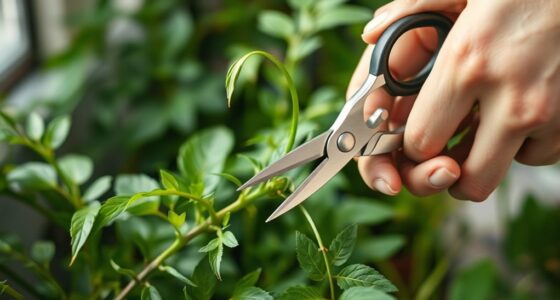
To prune your bird of paradise for ideal growth, start by removing dead or damaged leaves using clean, sharp scissors or pruning shears. Use proper pruning techniques to cut just above a leaf node or a healthy leaf base. This helps regulate growth, encouraging new, vigorous shoots. Regular pruning keeps your plant looking attractive and promotes better flowering, so make it a routine to trim as needed throughout the year.
Is It Safe to Keep Bird of Paradise Around Pets?
You shouldn’t keep a Bird of Paradise around pets because it’s highly toxic—they’d likely ignore bird behavior and get into trouble! The plant contains substances that can cause pet toxicity, leading to symptoms like vomiting or difficulty breathing. Keep your furry friends safe by placing your Bird of Paradise out of reach. It’s better to be cautious than risk upsetting your pet’s health with a beautiful but dangerous plant.
Conclusion
With proper care, your Bird of Paradise will flourish like a tropical miracle, transforming your space into an exotic paradise. Watch in awe as its majestic leaves and stunning blooms become the centerpiece of your home, drawing admiration from everyone who steps inside. Mastering its needs isn’t just gardening—it’s releasing a breathtaking display of nature’s artistry. With patience and love, you’ll create a living masterpiece that rivals the most luxurious jungles on Earth.