To care for your indoor Alocasia or elephant ear, keep its soil consistently moist but not waterlogged, watering about once a week and more often in warm months. Make certain it has bright, indirect sunlight and high humidity for healthy growth. Check for pests regularly and wipe leaves to prevent infestations. Good drainage and proper fertilization support vibrant foliage. If you want to know more tips to help your plant thrive, keep exploring—there’s much more to discover.
Key Takeaways
- Water thoroughly once a week, keeping soil consistently moist but not waterlogged.
- Provide bright, indirect sunlight and maintain humidity around 60-80%.
- Ensure the pot has good drainage to prevent root rot and check soil moisture regularly.
- Fertilize every few weeks during the growing season with a balanced, diluted liquid fertilizer.
- Regularly inspect leaves for pests and wipe with a damp cloth to keep plant healthy.
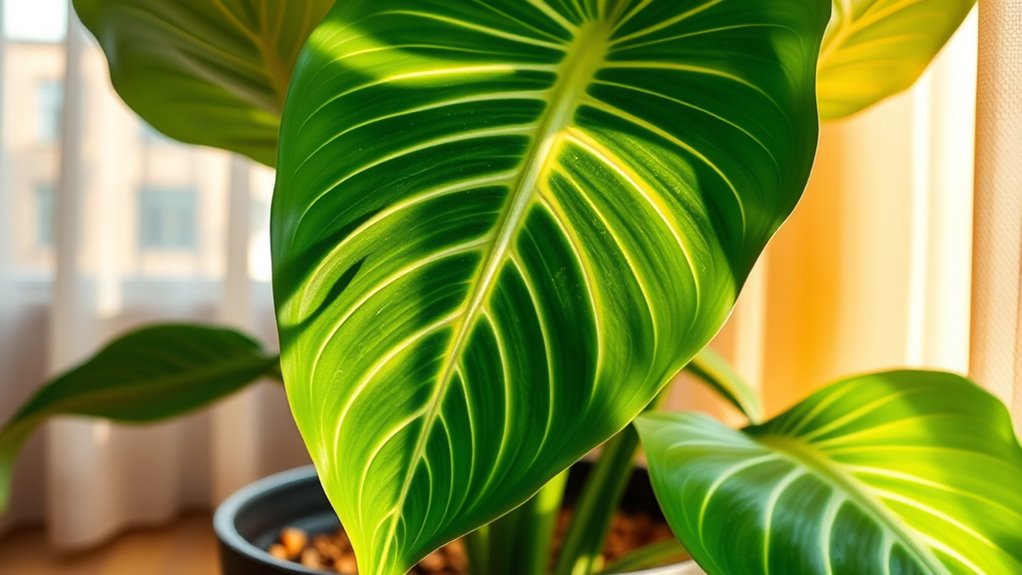
Alocasia plants are striking and unique additions to any indoor or outdoor space, but they require specific care to thrive. One of the most important aspects of caring for your elephant ear is establishing a proper watering schedule. These plants prefer consistently moist soil, but they don’t like sitting in water. You should water them thoroughly when the top inch of soil feels dry to the touch, usually once a week. During warmer months or if your indoor environment is particularly dry, you might need to water more frequently. Conversely, in cooler weather or lower humidity, reduce watering to prevent overwatering, which can lead to root rot. Always make sure your pot has good drainage to allow excess water to escape, helping to maintain the right moisture level without risking waterlogged roots. Regularly checking soil moisture helps you avoid underwatering or overwatering, both of which can stress the plant and hinder growth. Proper watering practices are also essential for preventing pests like spider mites and mealybugs, which thrive in overly moist conditions. Pest prevention is another vital element of Alocasia care. These plants can be susceptible to common pests like spider mites, mealybugs, and scale insects. To keep pests at bay, regularly inspect the undersides of leaves and stems for any signs of infestation. A proactive approach includes wiping leaves with a damp cloth to remove dust and potential pests, which can make plants less inviting to insects. If you spot pests early, treat the plant with insecticidal soap or neem oil, following the instructions for safe application. Maintaining good airflow around your plant also helps prevent pest issues by reducing humidity and limiting pest hiding spots. Avoid overwatering, as overly moist conditions attract pests and promote fungal diseases. Quarantining new plants before introducing them to your existing collection minimizes the risk of bringing pests into your home or garden. Additionally, understanding the importance of plant environment helps you create optimal conditions that support healthy growth and reduce pest and disease problems. In addition to watering and pest prevention, it’s essential to keep the environment suitable for your Alocasia. Bright, indirect sunlight is ideal, and maintaining humidity levels around 60-80% supports healthy growth. Fertilize during the growing season with a balanced, diluted liquid fertilizer every few weeks. Proper watering and pest prevention form the foundation of a healthy Alocasia, ensuring your plant remains vibrant and robust. With attentive care, your elephant ear will reward you with stunning foliage and a striking presence in your space. Remember, consistency is key—monitor your watering schedule regularly and stay vigilant for pests. By doing so, you’ll nurture a thriving, beautiful plant that’s sure to be a conversation piece wherever you choose to display it.
Top picks for "alocasia care elephant"
Open Amazon search results for this keyword.
As an affiliate, we earn on qualifying purchases.
Frequently Asked Questions
How Often Should I Repot My Alocasia?
You should repot your Alocasia every 1-2 years, depending on its growth stages. During active growth in spring and summer, it may need more frequent repotting if roots become crowded or roots start to show at the soil surface. Check annually for signs of root-bound plants. Repot when you notice slowed growth or roots circling the pot’s edges, ensuring your plant stays healthy and continues thriving indoors.
Can Alocasia Survive in Low Light Conditions?
Think of your Alocasia as a sunbeam trapped indoors; it can survive in low light conditions, but it won’t thrive. Its low light tolerance means it adapts best with bright, indirect indoor lighting. While it might hold on in dim corners, expect slower growth and less vibrant leaves. For a healthier plant, place it where it can soak up some gentle, filtered sunlight—your indoor space’s version of a sunlit meadow.
What Are Common Pests That Target Alocasia Indoors?
You’ll often find common pests like spider mites, mealybugs, and scale insects targeting your Alocasia indoors. To prevent pests, regularly inspect your plant, keep leaves clean, and avoid overwatering. Use organic insecticidal soap or neem oil if you spot pests early. Consistent pest prevention helps keep your Alocasia healthy and thriving indoors, ensuring it remains a stunning focal point in your space.
Is It Safe to Have Alocasia Around Pets?
About 90% of pet toxins are from common household plants, and alocasia is one of them. It’s not safe to have alocasia around pets because it contains compounds that can cause pet toxicity if ingested. To keep your pets safe, place your plant in a secure, elevated spot out of their reach, ensuring safe plant placement and avoiding accidental poisoning. Always consult your vet if you’re unsure.
How Do I Prevent Leaf Drop During Winter?
To prevent leaf drop during winter, you should adjust your watering habits by reducing winter watering to prevent overwatering. Additionally, control humidity levels by increasing ambient humidity with a humidifier or placing a tray of water nearby. Keep your alocasia in a warm spot away from drafts, and avoid sudden temperature changes. These steps help maintain healthy leaves and reduce stress that causes leaf drop.
Conclusion
Just like the mighty elephant, your Alocasia thrives with patience and attention. By providing the right light, water, and warmth, you nurture its vibrant presence indoors. Remember, even the most majestic plants require time to flourish—a reminder that growth often comes from patience and care, much like life’s greatest successes. Embrace the journey, and let your indoor jungle become a demonstration to your dedication. With love and consistency, your elephant ear will flourish beautifully.