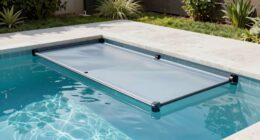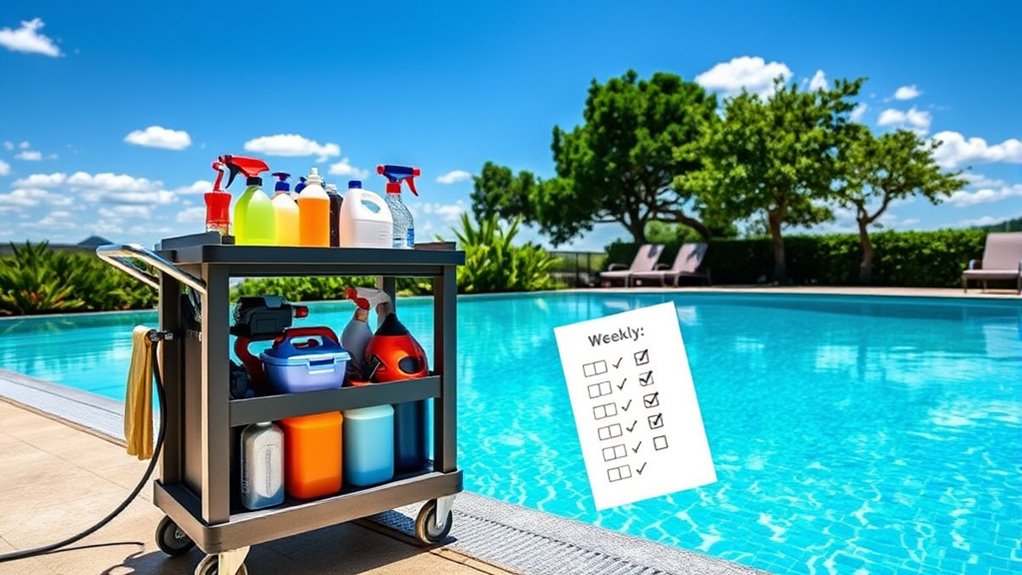

To keep your infinity pool in top shape, you should weekly check and balance the water chemistry, ensuring pH and sanitizer levels are correct. Skim the surface to remove debris, then brush and vacuum the walls and floor. Clean and backwash the filter system, inspecting equipment for leaks or damage. Also, monitor the water level and top off as needed. Continuing with regular maintenance helps keep your pool pristine and trouble-free.
Key Takeaways
- Regularly test and adjust water chemistry, including pH, alkalinity, and sanitizer levels, to ensure optimal water quality.
- Remove surface debris with skimming tools and brush pool surfaces to prevent algae buildup and maintain clarity.
- Inspect and clean the filter system, checking for leaks or damage, and backwash or rinse filters as needed.
- Check equipment performance, including pumps and heaters, and ensure all electrical connections are secure and functioning properly.
- Examine pool edges, tiles, and surrounding areas for cracks, leaks, or damage, and ensure drainage systems operate correctly.
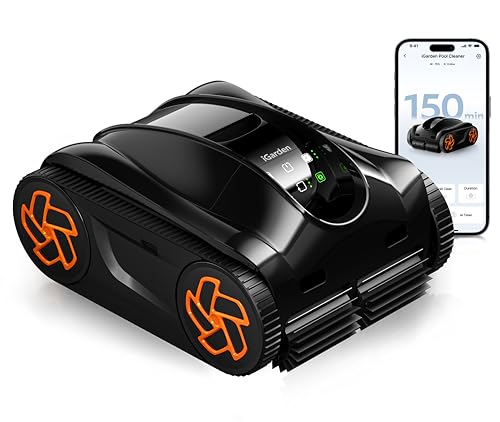
iGarden Robotic Pool Cleaner K Series, Cordless Pool Vacuum Robot for Inground & Above Ground Pools, Smart Navigation, Touchscreen, Self-Parking, Cleans Floor, Wall & Waterline, 150 Min
Robust Cleaning Capability: Engineered with a turbine-grade impeller, an optimized flow system, and 3 brushless motors, the cordless...
As an affiliate, we earn on qualifying purchases.
Check and Adjust Water Chemistry Levels

Maintaining proper water chemistry is essential for keeping your infinity pool clean and safe. You need to regularly test your water’s pH, alkalinity, and sanitizer levels using reliable test kits. Aim for a pH between 7.2 and 7.8 to prevent skin irritation and equipment damage. If your pH is too high or low, add pH increasers or decreasers accordingly. Check alkalinity, keeping it between 80 and 120 ppm, to stabilize pH levels. Test your sanitizer, whether chlorine or bromine, and add more if levels are low to prevent bacteria growth. Adjusting these levels regularly guarantees your pool remains crystal clear and healthy. Always follow product instructions for chemicals, and retest after each adjustment to confirm proper balance. Additionally, monitoring water chemistry levels ensures optimal performance of your pool’s filtration and sanitation systems.

(2026 Upgrade) WYBOT C1 Cordless Robotic Pool Vacuum for Inground Pools, Above Ground Pool Cleaner 4-in-1 Wall & Waterline Cleaning Up to 1,614sq.ft, 150mins Smart Navigation, App Support
Powerful Suction with Dual Brushes: Built with an upgraded independent water pump motor delivering up to 3,038 GPH...
As an affiliate, we earn on qualifying purchases.
Skim and Remove Debris From the Surface

Grab your skimmer net and gently remove any floating debris from the pool’s surface. Regularly check for leaves, insects, or other unwanted materials to keep the water clear. A quick surface inspection helps you spot debris early and maintain a pristine infinity pool. Incorporating water quality monitoring can further ensure your pool remains clean and safe for swimming.
Use a Skimmer Net
To keep your infinity pool looking pristine, regularly using a skimmer net to remove debris from the surface is essential. Grab your net and gently move it across the water, capturing leaves, bugs, and floating dirt. Focus on areas where debris tends to collect, especially near the edges and corners. Make sure to skim the entire surface, paying attention to any visible particles. This quick step prevents debris from sinking and causing stains or clogging your filtration system. Use smooth, even strokes to avoid stirring up settled dirt. Keep your skimmer net clean by rinsing it after each use to prevent spreading debris. Regular skimming maintains clear water, improves circulation, and keeps your pool inviting. It’s a simple yet effective part of weekly maintenance. Additionally, employing advanced AI algorithms can help monitor water quality and predict when maintenance is needed, ensuring your pool stays in optimal condition.
Check for Floating Debris
Since floating debris can quickly accumulate on the surface of your infinity pool, it’s important to check regularly and remove it promptly. Use a skimmer net to gently glide across the surface, catching leaves, insects, and other debris. Don’t let debris sit too long, as it can clog filters or stain the water. Focus on the areas where debris tends to gather, especially near the edges and in corners. Be thorough but gentle to avoid disturbing the water’s surface or damaging the pool’s finish. Regular removal keeps your pool looking pristine and helps maintain water quality. After skimming, dispose of the debris properly and rinse your net to keep it ready for next time. Staying vigilant ensures your infinity pool remains clean and inviting. Recognizing the importance of shared experiences can also deepen your appreciation for maintaining this beautiful feature.
Regular Surface Inspection
Regular surface inspection is essential to keep your infinity pool looking pristine. You should regularly skim the surface with a net to remove leaves, insects, and other debris that can accumulate. This prevents debris from sinking and affecting water quality or clogging the filtration system. Pay close attention to corners and edges where debris tends to gather. Remove floating debris promptly to maintain a clear, inviting appearance. Regularly inspecting the surface also helps you identify potential issues like algae or oil slicks early, allowing for quick action. Keep your skimming tools handy and dedicate a few minutes each week to this task. Consistent surface inspection ensures your infinity pool remains clean, beautiful, and ready for use whenever you desire. Incorporating proper water chemistry maintenance can further enhance your pool’s clarity and safety.

(2026 Upgraded) WYBOT C2 Cordless Robotic Pool Cleaner, Dual Filtration, Wall Climbing & Waterline Cleaning, App Scheduling, Smart Navigation, Pool Vacuum for Inground/Above Ground Pools-2152 Sq.ft
Dual Filtration System Captures Fine Debris: Featuring dual-layer filtration (180μm + 10μm), the pool cleaner robot efficiently traps...
As an affiliate, we earn on qualifying purchases.
Clean and Backwash the Filter System

Cleaning and backwashing the filter system is essential to keep your infinity pool running smoothly. Over time, debris, dirt, and oils clog the filter, reducing its efficiency. To clean it, turn off the pump and remove the filter, then rinse it thoroughly with a hose to clear out dirt and grime. If the pressure gauge indicates a high reading, backwash the filter by reversing the flow of water through it—simply switch the valve to the backwash position and run the pump for a few minutes until the water runs clear. After backwashing, set the valve back to the normal filtration position. Regular cleaning and backwashing prevent equipment strain, maintain water clarity, and extend the lifespan of your filter system. Incorporating data-driven strategies can help monitor filter performance and optimize maintenance schedules for better efficiency.

WYBOT C1 Cordless Robotic Pool Vacuum for Inground Pools, Above Ground Pool Cleaner 4-in-1 Wall & Waterline Cleaning Up to 1,614sq.ft, 150mins Smart Navigation, App Support
Powerful Suction with Dual Brushes: Built with an upgraded independent water pump motor delivering up to 3,038 GPH...
As an affiliate, we earn on qualifying purchases.
Inspect and Maintain Pool Equipment

You should regularly check that your pool pump is running smoothly and efficiently. Take a close look at the filter system to make sure it’s clean and functioning properly. Also, inspect your heating units to confirm they’re operating correctly and providing the right temperature.
Check Pump Functionality
Ensuring your pool’s pump is functioning properly is essential for maintaining clean, clear water. Start by listening for unusual noises or vibrations that could signal issues. Check the pressure gauge; if it’s too high or low, it indicates a problem needing attention. Regularly inspecting these aspects helps prevent breakdowns and keeps your infinity pool operating efficiently. Address any irregularities promptly to maintain optimal functionality. Additionally, reviewing the pool maintenance schedule can help identify potential issues before they become serious.
Examine Filter System
Have you checked the filter system recently? Regularly inspecting it guarantees your infinity pool stays clean and clear. Start by turning off the pump and opening the filter housing. Look for any debris, dirt, or buildup that could restrict water flow. Clean or replace the filter cartridge if it appears dirty or clogged—this keeps filtration efficient. Check for leaks, cracks, or signs of wear on the housing and seals. Ensure all connections are tight and secure. If your system uses sand or diatomaceous earth, consider backwashing or replacing media according to manufacturer instructions. Maintaining a clean filter prevents strain on your pump and promotes better water quality. Performing this weekly check helps catch issues early, ensuring your infinity pool remains a pristine, relaxing oasis.
Inspect Heating Units
Regularly inspecting your pool’s heating units is essential to keep them functioning efficiently and prevent costly repairs. Start by checking for any visible leaks, corrosion, or damaged parts. Ensure the thermostat is accurate and set to your desired temperature. Listen for unusual noises that could indicate mechanical issues. Inspect the wiring and electrical connections for signs of wear or corrosion, and tighten any loose connections. Clean the unit’s vents and fans to prevent overheating. Check the pressure gauges and ensure the pressure levels are within the recommended range. If you notice any issues, address them immediately or call a professional. Regular maintenance of your heating units keeps your infinity pool warm and ready for use, while extending the lifespan of your equipment. Additionally, staying aware of AI security concerns can help prevent cyber threats that might compromise your pool’s control systems.
Brush and Vacuum the Pool Walls and Floor

To keep your infinity pool looking pristine, you need to brush and vacuum the walls and floor regularly. Use a pool brush to scrub the walls, paying attention to corners and any areas where algae or dirt may accumulate. This prevents buildup and keeps the water clean. For the floor, use a vacuum designed for pools to remove debris, dirt, and algae that settle at the bottom. Manual or automatic vacuums work well, depending on your setup. Consistent brushing and vacuuming prevent algae growth and maintain water clarity. Be thorough but gentle to avoid damaging the pool surface. Completing this task weekly guarantees your infinity pool stays inviting, sparkling, and ready for use at any time.
Monitor Water Level and Top Off as Needed

Since water levels can fluctuate due to evaporation, splashing, or rainfall, it’s important to keep an eye on your infinity pool’s water level regularly. Check it at least once a week to ensure it stays within the recommended range, usually about 4 inches below the skimmer opening. If the water drops too low, top it off with fresh, clean water. Use a garden hose with a nozzle for controlled filling, avoiding overfilling. Maintaining proper water levels helps ensure the pool’s filtration and circulation systems work efficiently and prevents damage to the pump and other equipment. Regular monitoring also reduces the risk of water overflow or dry running. Consistent use of maintenance routines can help keep your pool in optimal condition. Staying vigilant about water levels keeps your infinity pool functioning smoothly and looking stunning.
Inspect for Any Signs of Damage or Leaks

After checking the water level, take a close look at your infinity pool’s surfaces and equipment for any signs of damage or leaks. Carefully examine the pool’s edges, tiles, and surrounding areas for cracks, chips, or discoloration. Look for wet spots, damp patches, or pooling water that could indicate leaks. Pay attention to the pool’s equipment, such as pumps, filters, and pipes, for corrosion or loose fittings. Also, check the skimmer and drain covers for cracks or loose attachments. Finally, inspect the pool’s drainage system to ensure it’s clear and functioning properly. Regularly identifying these issues early helps prevent costly repairs and maintains your pool’s pristine condition. Stay vigilant—your pool’s longevity depends on it.
Frequently Asked Questions
How Often Should I Test Water Chemistry in an Infinity Pool?
You should test your infinity pool’s water chemistry at least twice a week to keep it balanced. Regular testing helps you maintain proper pH, alkalinity, and sanitizer levels, preventing algae growth and corrosion. If your pool gets heavy use or experiences weather changes, increase testing frequency. Use a reliable test kit and adjust chemicals promptly to guarantee clear, safe water and ideal pool performance.
What Types of Debris Commonly Accumulate in Infinity Pools?
You’ll often find leaves, twigs, and dirt floating on the surface of your infinity pool, especially if trees surround your area. Bugs and insects can also end up in the water, along with pollen during high pollen seasons. Wind can carry dust and debris into the pool too. Regular skimming and debris removal help maintain clarity and prevent clogging of your filtration system, ensuring your pool stays pristine and inviting.
How Can I Prevent Algae Growth in My Infinity Pool?
To prevent algae growth in your infinity pool, you should regularly maintain proper chemical balance, especially chlorine levels, and guarantee pH stays between 7.2 and 7.6. Use algaecide weekly and scrub the walls to prevent buildup. Keep the pool covered when not in use to limit debris and sunlight exposure, which can promote algae. Consistent circulation and filtration are key to keeping your pool clear and algae-free.
What Are Signs of a Failing Pool Pump or Filter?
If your pool pump or filter is failing, you’ll notice reduced water flow, cloudy water, or persistent debris. You might hear strange noises from the pump or see leaks around the equipment. The pressure gauge may show abnormal readings, indicating clogging or damage. If you observe these signs, it is crucial to inspect and repair or replace the pump or filter promptly to keep your pool clean and functioning properly.
How Do I Safely Handle Chemical Spills or Leaks?
Imagine the scent of chemicals lingering unexpectedly—if you notice a spill or leak, act quickly. Wear protective gloves and goggles to keep yourself safe. Contain the spill with absorbent materials like sand or kitty litter, then carefully clean it up. Ventilate the area to disperse fumes. Never mix chemicals, and promptly dispose of waste according to local regulations. Stay cautious and always prioritize safety.
Conclusion
So there you have it—your weekly ritual of pool maintenance, because nothing screams glamour like balancing chemicals and chasing debris. Remember, a pristine infinity pool is just a few checks away, unless you prefer the charming look of algae and leaks. Keep up with these steps, and you’ll avoid turning your luxury escape into a swamp—unless, of course, you’re secretly aiming for an aquatic horror scene. Happy swimming, or at least, happy pretending!