
The length of a weir considerably influences its hydraulic balance by improving flow measurement accuracy and reducing turbulence, ensuring more stable water control. A longer weir distributes hydraulic forces evenly, lowers the risk of structural failure, and helps manage sediment and debris more effectively. However, longer weirs can increase costs and complexity. Understanding these effects can guide you to optimize your design; keep exploring to learn how to balance length with your specific site needs.
Key Takeaways
- Longer weirs promote stable, predictable flow patterns, enhancing hydraulic balance and measurement accuracy.
- Increased weir length distributes hydraulic forces evenly, reducing localized stress and improving structural stability.
- Proper weir length optimizes sediment transport and debris flow, maintaining hydraulic efficiency.
- Balancing weir length against construction costs ensures structural integrity without excessive expense.
- Site-specific factors like flow variability and sediment load determine the optimal weir length for hydraulic stability.

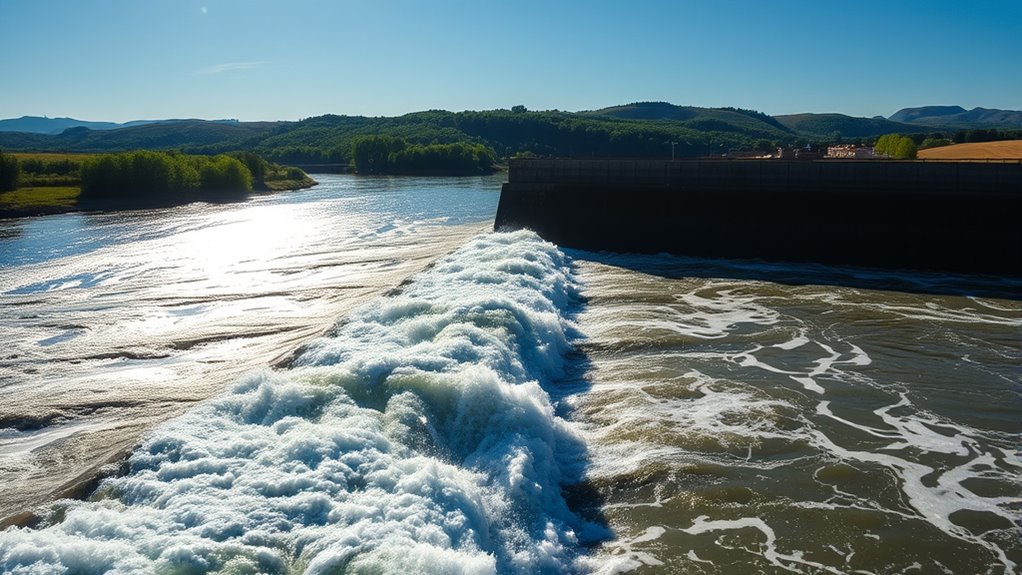
Understanding how weir length influences hydraulic balance is essential for effective water management. When designing or evaluating a weir, one of your primary concerns should be how the length impacts flow measurement and the overall structural stability of the structure. The length of a weir determines how water flows over it, which in turn affects the accuracy of flow measurement devices placed downstream. Longer weirs tend to create a more controlled and predictable flow pattern, making it easier to obtain precise flow readings. Accurate flow measurement is critical for managing water resources, especially in applications like irrigation, hydropower, or flood control. If the weir is too short, the flow might become turbulent or unpredictable, leading to unreliable data and potential miscalculations in water allocation.
Moreover, the length of the weir plays a crucial role in ensuring structural stability. A longer weir distributes the hydraulic forces more evenly along its length, reducing the stress concentrated at any one point. This distribution helps prevent structural failure and prolongs the lifespan of the weir. Conversely, a shorter weir can experience higher localized forces, which might compromise its stability over time, especially during high-flow events. When choosing the appropriate weir length, you need to think about the expected flow rates, as higher flows generate greater forces that a shorter weir might not withstand.
Beyond flow measurement and stability, the weir’s length also influences sediment transport and debris accumulation. Longer weirs can facilitate smoother flow, reducing the chances of debris clogging or sediment buildup that could obstruct water passage. However, excessively long weirs may require more materials and increased construction costs, so striking a balance is essential. You should evaluate the specific conditions of your site—such as flow variability, sediment load, and structural support capabilities—to determine an ideal weir length. Additionally, considering vetted materials can help enhance the durability and performance of the weir over time.
Top picks for "weir length hydraulic"
Open Amazon search results for this keyword.
As an affiliate, we earn on qualifying purchases.
Frequently Asked Questions
How Does Weir Length Impact Water Flow Rate?
You’ll find that increasing weir length improves flow rate control by allowing a more gradual water passage, reducing sudden surges. Optimizing weir length guarantees hydraulic balance, helping to maintain a steady flow rate. If the weir is too short, flow fluctuations may occur; if too long, it might restrict water unnecessarily. Proper weir length optimization is essential for achieving efficient water flow management and preventing issues like erosion or flooding.
What Are Common Materials Used for Weirs?
You’ll find that common materials used for weirs include concrete, steel, and plastics, each chosen for their flow measurement capabilities and structural durability. Concrete offers strength and longevity, ideal for large-scale installations. Steel provides durability and ease of installation in various conditions. Plastics are lightweight and resistant to corrosion, making them suitable for specific environments. Selecting the right material guarantees accurate flow measurement and long-lasting performance in your water management system.
How Is Hydraulic Balance Maintained During Floods?
Imagine you’re managing floodwaters, and suddenly, hydraulic control kicks in. You maintain hydraulic balance by designing weirs that adapt to rising water levels, making certain they don’t overflow or cause structural issues. During floods, spillways and adjustable gates work together to divert excess flow, preventing downstream flooding. This smart flood management technique keeps water levels steady, protecting communities and infrastructure, and shows how thoughtful engineering ensures safety during unpredictable weather events.
Can Weir Design Prevent Sediment Buildup?
Yes, you can design a weir to prevent sediment buildup by incorporating features for sediment control and erosion prevention. Using adjustable weirs or installing sediment traps helps manage sediment flow, reducing accumulation. Properly shaped spillways and roughened surfaces also slow water movement, encouraging sediment to settle before reaching the main structure. These strategies keep the weir functioning effectively and minimize maintenance caused by sediment buildup.
What Are the Environmental Impacts of Weir Construction?
You might notice that weir construction can cause ecosystem disruption, affect fish migration, and alter natural water flow. These impacts can harm local habitats, reduce biodiversity, and change sediment transport. You should consider these environmental effects when planning and designing weirs, ensuring that you implement measures like fish ladders or bypass channels. By doing so, you help protect aquatic life and maintain the ecological balance essential for a healthy, sustainable environment.
Conclusion
Understanding weir length and hydraulic balance helps you design better spillways and manage water flow effectively. When you balance these factors, you ensure safe and efficient operations—just like the engineers of old who built grand aqueducts. Remember, a well-chosen weir length keeps your system steady and reliable, preventing floods or shortages. So, embrace these principles, and you’ll be mastering water control like a modern-day Roman, ensuring your waterways stand the test of time.