
TL;DR

Get garden gear delivered free with Prime
- Fast, free delivery on millions of items
- Prime Video, Amazon Music and more included
- Member-only deals all year
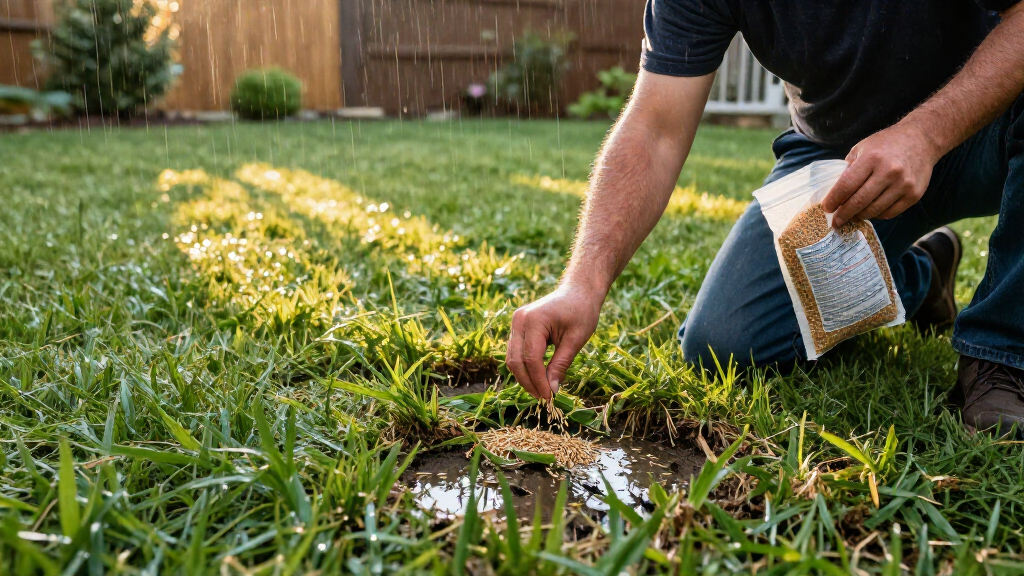
Heavy rain does not automatically ruin newly sown grass seed: it can still germinate if the ground is moist but not waterlogged. Standing water can deprive seed of oxygen or cause it to rot, while runoff can leave seed clumped or washed away. Once the ground is workable, redistribute seed, aerate waterlogged areas lightly, or apply a thin protective layer of topsoil or compost.
Grass seed can still grow after heavy rain, but its prospects depend on whether water drains away or remains pooled on the surface, according to lawn-care experts cited by Ideal Home. The report recommends checking for washed-out seed and waterlogging, then taking steps to restore coverage once the ground is workable.
Moist soil supports germination, but saturated ground can hinder it. Guy Jenkins, consumer manager at Johnson’s Lawn Seed, told Ideal Home that seed will grow in many cases, while warning that completely saturated or waterlogged conditions affect germination. Jonathan Davis, a lawn-care expert at Lawnsmith, said seed should germinate normally when rain has drained or soaked in and the soil remains moist rather than waterlogged.
Standing water creates two main risks: seed left in pooled water can rot or be deprived of oxygen, Davis said, and heavy rain can move seed into clumps or wash it away. The result may be uneven coverage, with thick growth in some spots and bare soil in others. The report does not claim that all seed exposed to heavy rain will fail.
Three remedies are suggested. When the ground is workable, rake displaced seed across bare areas. Aerate waterlogged spots lightly to help water drain, taking care not to disturb seed or stress existing grass. A thin layer of topsoil or compost can help hold seed in place; a light natural covering may also limit washout and deter birds. Jenkins said germination typically begins within seven to 21 days; if the lawn remains noticeably patchy after that period, he advises overseeding affected areas.
Rain Damage Can Leave Patchy Lawns
The condition of the soil, not rainfall alone, is the key indicator for gardeners deciding whether to wait or intervene. If water drains away, newly sown seed may still take. If it sits on the surface or carries seed into piles, a lawn can develop unevenly and may need repairs after the initial germination window.
The recommendations also point to a timing constraint: wait until the ground is workable before raking or reseeding. Working saturated soil can disturb seed and the existing lawn. Checking the affected area and responding selectively may help avoid unnecessary reseeding, while the suggested seven-to-21-day period offers a reference point for judging whether bare patches persist.
Products Worth Considering

Shark Rotator Lift-Away Vacuum with DuoClean PowerFins (LA555) – Dark Grey

Dyson Ball Animal 3 Corded Upright Vacuum

Bose TV Speaker (2nd Gen) Compact Soundbar with Bluetooth and HDMI
As an affiliate, we earn on qualifying purchases.
How Heavy Rain Affects New Seed
The Ideal Home report addresses grass seed sown before stormy autumn weather. Autumn is described in the report as a favorable time to sow, but the guidance stresses that adequate moisture is different from waterlogging. Seed needs moisture to germinate; persistent surface water can interfere with that process.
The advice distinguishes between rain that has soaked into or drained from the ground and water that remains pooled. It also separates two possible outcomes: seed may fail where it sits in standing water, or it may survive but be displaced, leading to uneven growth. These conditions determine whether the appropriate response is to wait, redistribute seed, improve drainage, or overseed later.
Seed Survival Depends on Drainage
The report gives no way to determine seed survival from rainfall alone. It does not specify how much rain, how long water must pool, or what soil conditions will cause a particular patch to fail. Outcomes depend on whether the water drains, whether seed has moved, and how saturated the ground remains.
It is also not possible to know immediately whether an apparently bare spot will germinate later. The report cites a typical seven-to-21-day germination window, but does not provide a guarantee for every grass variety or lawn. The extent of any damage, and whether reseeding will be needed, remains specific to each lawn.
Check Growth Before Overseeding
First check for standing water, bare patches and clumps of displaced seed. Let the soil become workable before raking or carrying out light aeration. If seed has shifted, redistribute it over affected areas; consider a thin covering of topsoil or compost to help hold it in place.
Allow time for germination, which Jenkins says typically takes seven to 21 days. If the lawn is still noticeably patchy after that period, overseed the affected areas. The report offers no specific forecast for individual lawns, so gardeners will need to judge progress by drainage and visible growth.
Key Questions
Will grass seed grow after heavy rain?
It can. According to lawn-care experts quoted by Ideal Home, seed may germinate if rain drains away and the soil remains moist rather than waterlogged. Seed sitting in standing water may rot or lack oxygen.
How long should I wait to see grass seed germinate?
Guy Jenkins of Johnson’s Lawn Seed says germination typically starts within seven to 21 days. The timing is a guide, not a guarantee for every lawn or seed.
What should I do if heavy rain washed seed into clumps?
Wait until the ground is workable, then rake seed from clumped areas across nearby bare spots. If the lawn remains noticeably patchy after the usual germination window, overseed the affected areas.
Should I aerate a waterlogged lawn with new seed?
The report recommends light aeration in waterlogged areas to help water drain, using a garden fork or aerator. Keep the work light so it does not disturb the seed or stress the existing lawn.
Can I cover grass seed after heavy rain?
A thin layer of topsoil or compost can help hold seed in place and support drainage, according to Lawnsmith expert Jonathan Davis. The report also suggests a light natural covering to reduce washout and bird access.
Source: idealhome.co.uk