
TL;DR
A Gardening Know How report recommends sharpening and inspecting common garden tools before winter storage, covering pruners, loppers, hedge shears and lawn mower blades. It stresses matching the blade’s original bevel and taking safety precautions, especially when removing and sharpening a mower blade.
Gardening Know How has published a late-fall guide to sharpening pruners, loppers, hedge shears and lawn mower blades before putting them away for winter. The report says sharpening and inspecting the tools now can help gardeners start spring with cutting edges ready for use, while giving them time to spot damage that may need repair or replacement.

Get garden gear delivered free with Prime
- Fast, free delivery on millions of items
- Prime Video, Amazon Music and more included
- Member-only deals all year
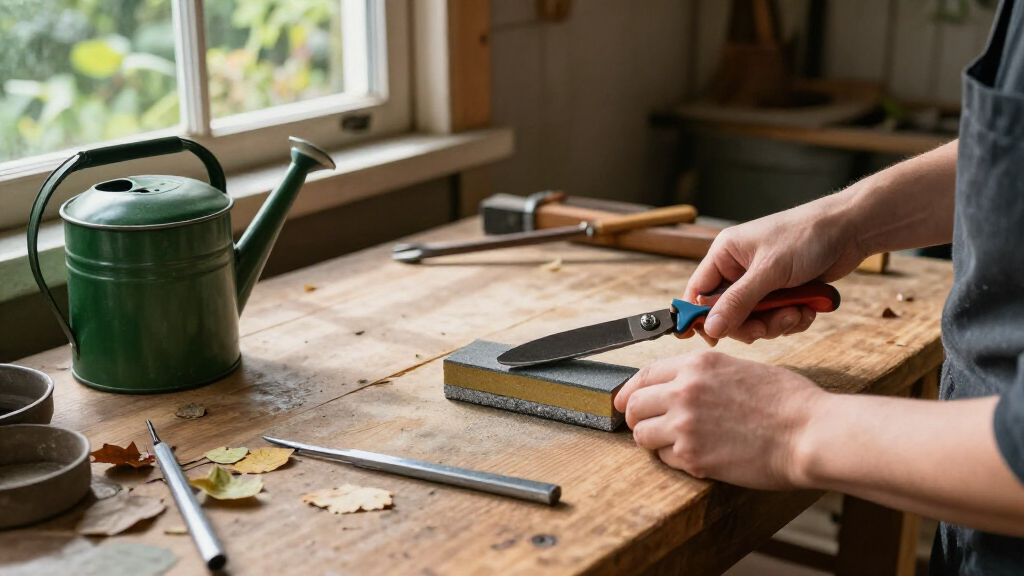
For bypass pruners, the guide recommends filing the beveled cutting edge at its original angle and keeping the opposite, flat side flat. A light pass on the flat side can remove the burr created during sharpening. With anvil pruners, both beveled sides of the cutting blade need attention so the edge meets the anvil evenly. The report suggests using a diamond sharpener or small file, with a coarser surface for nicks and a finer one for touch-ups.
Before sharpening loppers, remove sap and grit with soapy water or turpentine and a wire brush, then check for chips, flat spots and poor alignment. The sharpening approach is similar to that for pruners: work along the bevel at the original angle, then remove the burr. The guide says a badly damaged or cracked blade may be better replaced than ground down extensively.
For hedge shears, secure one blade at a time in a bench vise and file from pivot to tip along the bevel. Check how the blades meet after sharpening; a gap at the tips can signal a bent blade. A loose pivot can be tightened, while a binding pivot may need slight adjustment. For mower blades, the guide says to disconnect the power source, remove the blade, wear cut-resistant gloves and eye protection, and secure the blade before filing. Sharpen only the outer three to four inches of each cutting edge, then check the blade’s balance.
Why Sharpen Before Winter Storage
Late-fall maintenance can reduce the chance that gardeners discover dull edges, loose hardware or rust only when spring work is due. The report says sharper blades make cleaner cuts, while sharp hoes and spades take less effort to push through soil. These are practical benefits rather than measured results from a new study; the article presents them as reasons to make tool care part of seasonal storage.
Inspection also gives owners a chance to identify damage before it worsens. That matters for tools such as loppers, where a deep chip or crack may call for a replacement blade rather than more filing. With mower blades, checking balance after sharpening can help avoid vibration when the blade spins.
Products Worth Considering

Dyson Ball Animal 2 Total Clean Upright Vacuum Cleaner, Blue

Philips Hue Bridge Pro Starter Kit with 4 A19 E26 Color Smart Bulbs

Sonos Era 100 SL Wireless Speakers, Black, Pack of 2
As an affiliate, we earn on qualifying purchases.
Four Blades, Different Checks
The report focuses on routine garden-tool maintenance after beds have been cleared and before equipment is stored. Its instructions distinguish among blade designs: bypass pruners have one beveled cutting face and one flat face, while anvil pruners have bevels on both sides of the cutting blade. Hedge shears require longer, supported strokes, and mower blades must be removed and balanced after sharpening.
The mower section includes a specific safety step: disconnect the machine before removing its blade. For a gas mower, the guide says to pull the spark-plug wire; for a cordless mower, remove the battery; and for an electric mower, unplug it. It also advises tipping the mower carefully to avoid oil spills. The source does not provide a publication date in the supplied material, so the guidance is presented as seasonal advice rather than a dated announcement.
“Sharp edges result in cleaner cuts that plants can heal more quickly.”
— Gardening Know How report
Damage That May Need Replacement
The guide does not specify a universal standard for how sharp a blade should be, nor does it give a threshold for when a tool must be replaced. It says deep chips and cracked lopper blades can be difficult to repair and that manufacturer replacement blades may be preferable, but the condition of each tool will vary. It also notes that mower blades need balancing but does not provide a model-specific procedure for every mower.
The source offers general instructions, not a substitute for a mower’s owner manual or a tool manufacturer’s repair guidance. Gardeners should check their equipment’s instructions where removal, reassembly or adjustment procedures differ.
Inspect, Sharpen and Store
The guide’s recommended next step is to clean and inspect each tool, sharpen the appropriate cutting surfaces, and address loose pivots or damaged parts before storage. For mower blades, owners should disconnect power, remove and sharpen the blade safely, and confirm it balances before reinstalling it according to the mower’s instructions.
After that maintenance, tools can be stored until spring. The report does not announce a follow-up test or a scheduled update; its practical advice is to finish repairs during the late-fall window rather than waiting until the tools are needed again.
Key Questions
Which side of bypass pruners should be sharpened?
Sharpen the beveled cutting side at its original angle. Keep the flat side flat, using one light pass only to remove the burr, according to the report.
Can badly chipped loppers be sharpened?
Small nicks can be filed out, but the guide says deep chips and cracked blades can be harder to repair. It recommends considering a manufacturer replacement blade rather than removing too much metal.
What safety steps apply to sharpening a mower blade?
Disconnect the mower from its power source before starting, remove the blade, and wear cut-resistant gloves and safety glasses. Secure the blade before sharpening, and follow the mower maker’s instructions for removal and reinstallation.
How much of a mower blade should be sharpened?
The report says to sharpen the outer three to four inches of each cutting edge, then check that the blade is balanced before putting it back on the mower.
Source: gardeningknowhow.com