
TL;DR

Get garden gear delivered free with Prime
- Fast, free delivery on millions of items
- Prime Video, Amazon Music and more included
- Member-only deals all year
A Homes & Gardens report describes a DIY fall porch display that uses a hollowed pumpkin as a planter for chrysanthemums and other seasonal flowers. The method calls for drainage holes and potting soil; the pumpkin may later be composted, though its lifespan and the plants’ watering needs depend on conditions.
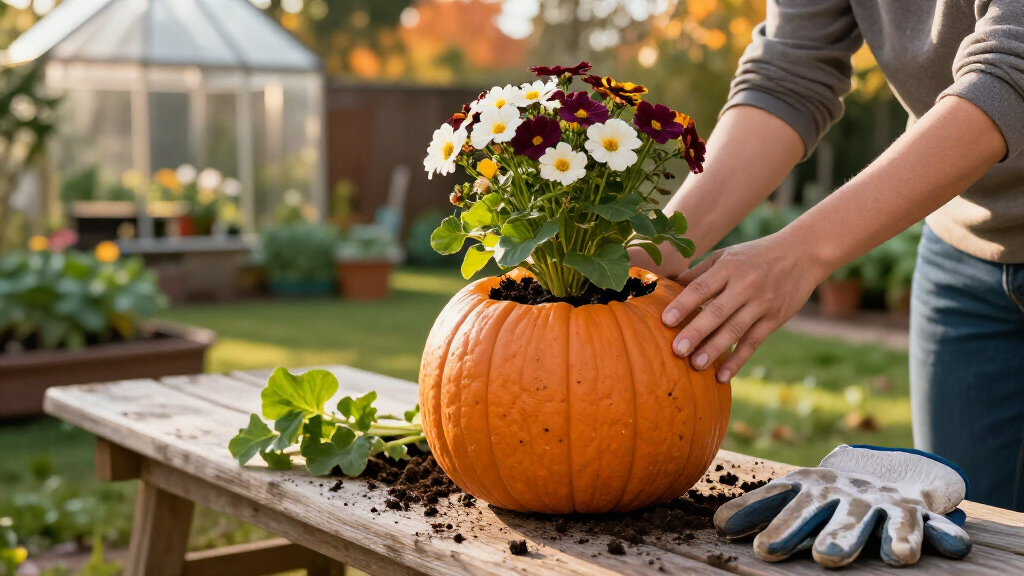
Homes & Gardens has highlighted a DIY pumpkin planter as a fall porch display, using a hollowed carving pumpkin to hold chrysanthemums or other seasonal flowers. The idea offers a way to combine autumn decoration with container planting, but the report’s moisture and plant-care suggestions depend on drainage, weather and the condition of the pumpkin.
The method described in the report is straightforward: cut a lid in a pumpkin, scoop out the pulp and seeds, make one to three drainage holes in the base, then add potting soil and plants. The holes matter because excess water can collect in the pumpkin and leave roots in soggy soil. The report recommends choosing a pumpkin large and deep enough for the selected plants, rather than treating every pumpkin as a suitable planter.
The writer says the project took about 20 minutes and cost less than $5 in her own experience. She planted red chrysanthemums and placed the finished pumpkin by her front door. Those figures are personal estimates, not a standard cost or time guarantee; prices, materials and preparation can vary.
For a fuller display, the report suggests grouping pumpkin planters with decorative pumpkins or combining plants of different heights. It names mums, celosia and marigolds as possible choices, with taller plants placed behind shorter ones. The report also says the pumpkin can be composted after the display comes down, turning it into organic matter if it is suitable for the household’s composting arrangements.
A Seasonal Display With a Second Use
The idea makes a familiar fall decoration serve as a temporary planting vessel, giving readers a DIY alternative to a conventional pot for a porch arrangement. It may appeal to people who want seasonal flowers without buying a planter intended to be reused year after year. The pumpkin’s eventual composting also offers a possible end use beyond decoration, although the report does not compare its environmental impact with other containers.
The planting advice has practical limits. Pumpkin flesh can retain moisture, but that does not establish how often a particular arrangement should be watered or how long it will remain healthy. Drainage is necessary, and gardeners still need to check soil moisture and plant condition rather than assume rainfall or the pumpkin will provide enough water. The pumpkin itself is perishable, so the display should be treated as seasonal rather than permanent.
hollowed pumpkin planter for fall flowers
As an affiliate, we earn on qualifying purchases.
As an affiliate, we earn on qualifying purchases.
How the Pumpkin Planter Works
The report presents the project as a variation on carving a pumpkin: instead of using it only as a lantern, the hollowed shell holds soil and flowers. The top is cut at an angle so it can be lifted, and the inside is scraped before planting. The report suggests setting up on a work surface because carving and scooping can be messy; seeds and pulp can be collected separately.
Once the pumpkin is prepared, the plants are positioned in potting soil and secured with additional soil. The article’s writer used red chrysanthemums, while suggesting mixed plantings for a more layered look. It also mentions commercially made pumpkin-shaped planters for anyone seeking a similar appearance in a more durable vessel. The source does not provide comparative tests of those products or of how long a fresh pumpkin planter lasts.
““This is one of the quickest and easiest DIYs I’ve done.””
— Homes & Gardens report author
Lifespan and Watering Depend on Conditions
The report does not state how long a pumpkin planter remains intact, how its lifespan changes in different weather, or which pumpkin varieties last longest. It also provides no controlled comparison showing whether pumpkin flesh improves plant hydration. Its suggestion that rainfall may reduce the need for watering is not a substitute for checking the soil and the needs of each plant.
The article does not specify a universal pumpkin size, soil depth or plant combination. Those choices depend on root space and the plants selected. It also does not establish whether every local compost service accepts pumpkin waste, so disposal options may vary.
Check the Planter as It Weathers
People trying the project can follow the reported steps while checking that the pumpkin is large enough for the plants and that water can drain from its base. After planting, monitor soil moisture and plant health, and inspect the pumpkin as it sits outdoors. The source offers no fixed care schedule or expected lifespan, so those details should be judged from local weather and the condition of the display.
When the seasonal arrangement is taken down, the pumpkin may be composted where local facilities or home composting practices allow. The report gives no further follow-up data on the durability or performance of the DIY planter.
Key Questions
How do you make a pumpkin planter?
Cut and lift a lid, scoop out the pulp, make one to three drainage holes in the bottom, then add potting soil and plants. Choose a pumpkin with enough room for the plants’ roots.
Which flowers does the report suggest?
The writer used red chrysanthemums. The report also names celosia and marigolds as options for a mixed fall display.
Does a pumpkin planter need drainage holes?
Yes. The report recommends drainage holes so excess water can escape rather than leave plants sitting in soggy soil, which can contribute to root rot.
How long will a pumpkin planter last?
The source does not give a lifespan. A fresh pumpkin is perishable, and durability will depend on its condition and outdoor conditions.
Can the pumpkin be composted afterward?
The report says the pumpkin can be composted after the display comes down. Whether it can go in a particular compost system depends on local rules and that system’s requirements.
Source: rss
Fall Picks
fall essentials
As an affiliate, we earn on qualifying purchases.