TL;DR
An Amateur Gardening report published on Nov. 11, 2026, outlines how to build a spring bulb lasagne in a large, well-drained container. Its recipe layers late-flowering tulips beneath mid-season bulbs such as daffodils and hyacinths, with early crocuses or snowdrops near the top.
Amateur Gardening published a guide on Nov. 11, 2026, explaining how to plant a spring bulb lasagne in a container for flowers at different points from late winter through spring. The method uses a large pot with good drainage and layers bulbs by flowering time, placing later-flowering varieties lower down and earlier flowers nearer the surface.

Get garden gear delivered free with Prime
- Fast, free delivery on millions of items
- Prime Video, Amazon Music and more included
- Member-only deals all year
The report recommends a container at least 30 centimetres wide and deep, with drainage holes. It calls for peat-free compost mixed with a couple of handfuls of grit, and crocks or gravel at the bottom of the pot to help water drain away. The guide warns that bulbs may rot if they sit in wet compost during a rainy winter.
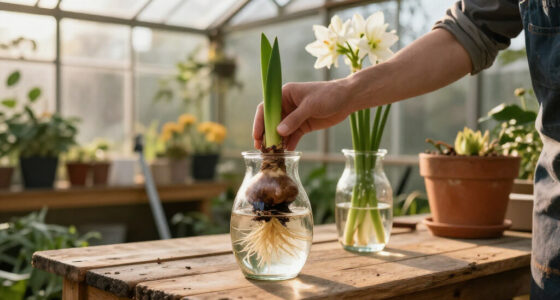
For the lowest layer, the article suggests large, late-flowering tulips, with ‘Queen of the Night’ and ‘Orange Brilliant’ given as examples. Add about 10 centimetres of compost to the prepared pot, position bulbs pointy-end up and roughly a bulb’s width apart, then cover them with around 5 centimetres of compost.
The middle layer can include daffodils, hyacinths or alliums, followed by more compost. Smaller, early-flowering bulbs such as crocuses, snowdrops or Iris reticulata go near the top. The report also suggests planting winter pansies on the surface for colour before the bulbs flower. Its colour suggestions range from contrasting orange and purple to softer pastel combinations.
A Longer Display From One Pot
The layered approach is intended to make limited space work harder: one container can produce successive waves of flowers instead of a single brief flush. That can suit gardeners with a patio, balcony or small garden who want spring colour without planting separate beds for each flowering period.
The method depends on selecting bulbs with different flowering times and putting them at suitable depths. The article presents the sequence as a way to bridge late winter, mid-season and late spring; the actual timing and display will depend on the bulbs chosen and growing conditions. Its practical emphasis on drainage also addresses a common risk for bulbs kept in containers through wet winter weather.
Products Worth Considering

Levoit Vital 100S-P Air Purifier with Washable Pre-Filter

TCL 55 T7 Series 4K 120Hz QLED Smart Google TV (55T7)

eufy C28 Robot Vacuum and Mop with 15,000 Pa Suction
As an affiliate, we earn on qualifying purchases.
How the Layers Are Ordered
A bulb lasagne is a container planting arrangement, not a separate type of bulb. The name describes the stacked layers of bulbs and compost. In the report’s sequence, later-flowering, larger bulbs sit at the bottom, mid-season varieties occupy the middle, and small early-flowering bulbs are planted closer to the top.
Amateur Gardening’s article is by Helen Cross, a journalist, author and presenter who writes for gardening publications, according to the report. It is a practical planting guide rather than a report of a trial or a guarantee that every container will flower on the same schedule.
“A spring bulb lasagne is the ultimate gardening shortcut to ensure a spectacular, continuous display of spring color.”
— Amateur Gardening
Flowering Dates Will Vary
The report gives no controlled test results or guarantee of when particular bulbs will bloom. Flowering dates and the length of the display are not specified for individual varieties, and the article does not quantify how weather, local climate, container placement or cultivar choice might change the sequence. It also does not provide a complete bulb count or exact planting depth for each variety; its layer measurements are general guidance.
The article describes the method as a route to a continuous display, but that outcome is an aim rather than a confirmed result for every pot. Readers will need to follow the bulb packaging and adapt the planting to their container and conditions.
Prepare the Pot for Planting
The immediate steps in the guide are to choose a container with drainage, add crocks or gravel, prepare peat-free compost with grit, and select a mix of early-, mid- and late-season bulbs. Planting then proceeds from the latest bloomers at the bottom to the earliest at the top, with compost between layers. Winter pansies are optional surface plants for colour while the bulbs develop.
The report does not set out a follow-up schedule or give a specific date by which readers should plant. Gardeners should check the instructions supplied with their bulbs and account for local conditions; the timing of the resulting display will only become clear as the plants grow.
Key Questions
What does a spring bulb lasagne mean?
It is a container planting method that layers bulbs at different depths according to their flowering times, so flowers are intended to appear in succession.
What bulbs does the guide recommend?
The article suggests late-flowering tulips at the bottom; daffodils, hyacinths or alliums in the middle; and early bulbs such as crocuses, snowdrops or Iris reticulata near the top.
What kind of pot is needed?
Amateur Gardening recommends a container at least 30 centimetres wide and deep, with good drainage. The guide also calls for crocks or gravel at the base to help prevent waterlogged compost.
Can I add flowers before the bulbs emerge?
Yes. The report suggests planting winter pansies on the compost surface for colour before the bulbs begin flowering. This is optional, and the article leaves the choice of colours to the gardener.
Will every pot flower continuously from late winter to spring?
The guide describes successive flowering as the aim, but it does not guarantee a continuous display. Timing can vary, and the report does not provide results from a trial or account for every growing condition.
Source: amateurgardening.com