TL;DR

Get garden gear delivered free with Prime
- Fast, free delivery on millions of items
- Prime Video, Amazon Music and more included
- Member-only deals all year
Homes & Gardens has published a set of quick garden-preparation steps for storms, including moving or grouping pots, putting away loose items, securing greenhouse and shed doors, and staking tall plants. The advice is practical preparation, not a guarantee against damage; the report does not specify a particular storm or provide a forecast.
Homes & Gardens has published a checklist of quick jobs to help gardeners prepare for strong winds and heavy rain, focusing on loose objects, vulnerable pots, outbuildings and tall plants. The report says these precautions can reduce the risk of garden items being blown around or damaged, though it does not identify a particular approaching storm or promise that the steps will prevent damage.
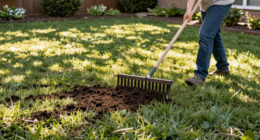
The guidance starts with a quick scan of the garden for items that could move in high winds, much like these fall garden jobs. The report recommends bringing small pots indoors, into a shed, garage, greenhouse or porch. Larger containers can be grouped against a wall for shelter, while hanging baskets should be taken down and placed on the ground.
Loose objects—including ornaments, cushions, rugs, tools, parasols, children’s toys and lightweight furniture—should be stored inside or in a secure garden storage box. Where heavier furniture cannot be moved, Homes & Gardens advises attaching it firmly to a secure point with strong ropes. It also recommends taking down outdoor lighting that could be blown loose and broken.
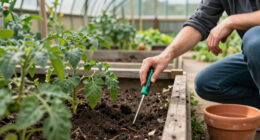
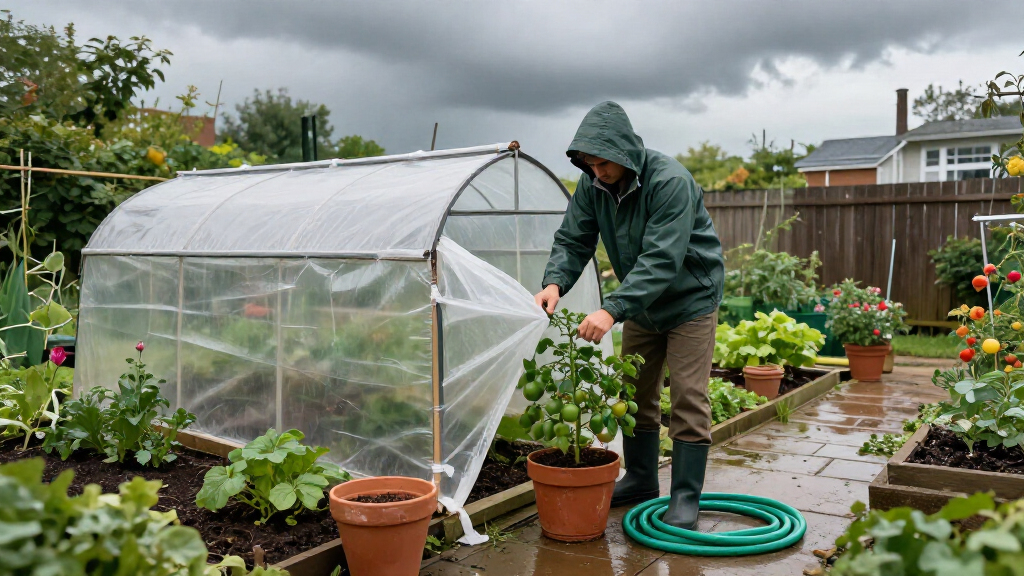
Gardeners are advised to close and secure greenhouse doors and windows, check panes for looseness, and use replacement clips or heavy-duty tape where needed. Shed doors and windows should also be shut; the report suggests propping a shed door closed with bricks or timber if it has no lock, and securing loose roofing felt. For tall plants in beds, it recommends stakes and soft, flexible ties, placed at intervals of about 8 to 12 inches up the stem. That spacing is guidance from the report, not a guarantee against breakage.
Reducing Wind Hazards Around the Home
Garden objects lifted by strong winds can become hazards to people, buildings and nearby property. Bringing in lightweight items and securing heavier ones addresses a risk that can be reduced quickly, even when there is limited time before poor weather arrives. Securing greenhouse panes and shed doors also helps limit the chance of openings, loose parts or debris during gusts.
The plant advice has a separate purpose: supporting tall stems may reduce the chance of them snapping, while moving containers can help prevent pots from toppling. These measures are preventive steps, not a substitute for local weather alerts or official safety instructions. The source gives no quantified estimate of how much damage the jobs prevent.
heavy duty garden storage box waterproof outdoor
As an affiliate, we earn on qualifying purchases.
As an affiliate, we earn on qualifying purchases.
The Checklist Covers Four Quick Tasks
The source frames the work as a response to limited warning time, rather than a detailed storm-preparation plan. Its central approach is to identify what could be blown around, what might be damaged, and which plants or structures need support. The listed tasks cover containers, loose garden belongings, greenhouses and sheds, and upright plants.
It also mentions checking trees before winter for broken branches or other problems that could cause limbs to fall, especially where trees overhang homes, gardens, driveways or walkways. That inspection is useful background but may require more than a five-minute job; the report does not give instructions for pruning or handling hazardous branches.
“The best way to prepare your yard for a storm is securing anything loose that can blow around, keeping buildings safe, and protecting any vulnerable plants.”
— Homes & Gardens report
No Storm or Damage Estimate Is Named
The supplied report does not give a publication date, name a storm, or specify a location or forecast. It also provides no measurements of wind strength, rainfall, or the amount of time each task takes, despite presenting the steps as quick jobs. Its recommendations should not be read as a promise that a garden or structure will withstand severe weather.
The source does not say whether any particular garden has been damaged, nor does it provide official emergency guidance. The condition of individual trees, sheds, greenhouses and plants varies, so the checklist cannot establish whether a specific structure is safe. Readers should follow local weather and emergency advice when a storm is forecast.
Check Forecasts and Secure the Yard
The report offers no scheduled follow-up or storm-specific update. For gardeners using the checklist, the immediate next step is to check local forecasts and warnings, then secure movable items and inspect doors, windows and vulnerable plants while it is safe to work outdoors. If conditions have already become dangerous, outdoor work should wait until it is safe and local authorities’ instructions should take priority.
Tree problems or damage to structures may need attention beyond these quick tasks. The source recommends identifying potential tree hazards but does not set out how to assess or repair them. Any follow-up should reflect the condition of the property and applicable local guidance.
Key Questions
What should I move first before a storm?
Start with lightweight items that could blow away, such as cushions, tools, toys, rugs and ornaments. Move small pots indoors, take down hanging baskets and store outdoor lighting where possible.
How should I protect large garden pots?
The report recommends grouping larger pots against a wall to shelter them from wind and reduce the chance of tipping. It does not give a pot-size or wind-speed threshold for this advice.
How can I support tall plants?
Use a bamboo cane, wooden stake or metal pole, and attach stems with soft, flexible ties. Homes & Gardens suggests placing ties about 8 to 12 inches apart up the stem.
What should I check on a greenhouse or shed?
Close and secure doors and windows, check greenhouse panes and clips, and secure loose roofing felt. For a shed without a lock, the report suggests propping the door shut with bricks or timber.
Do these steps guarantee storm protection?
No. The report presents them as ways to reduce the risk of damage, not as a guarantee. Check local weather alerts and follow official safety instructions.
Source: rss
Fall Picks
fall essentials
As an affiliate, we earn on qualifying purchases.