
TL;DR
Gardening Know How says cold frames generally offer better overnight protection during hard freezes because they sit on soil that stores daytime heat. Mini greenhouses provide more vertical growing space and shelter from wind and rain, but thin covers can lose heat quickly. The better choice depends on local winter conditions, available space and the plants being protected.
Cold frames generally hold warmth better overnight than mini greenhouses during a hard freeze, while mini greenhouses offer more growing space in a small footprint, according to a comparison by Gardening Know How. The choice matters to gardeners trying to protect plants through winter: performance depends on local temperatures, whether the structure sits on soil, and what kinds of plants it needs to shelter.

Get garden gear delivered free with Prime
- Fast, free delivery on millions of items
- Prime Video, Amazon Music and more included
- Member-only deals all year
A mini greenhouse is typically a tall, narrow frame with several wire-mesh shelves and a clear cover that opens at the front. Some models use rigid polycarbonate panels instead. Its shelves can hold seed trays, cuttings, herbs and pots in a compact area, making it useful on a balcony or in a small garden. The report cautions that flexible covers can wear out, may be difficult to replace and can be vulnerable to wind unless the structure is placed in a sheltered location.
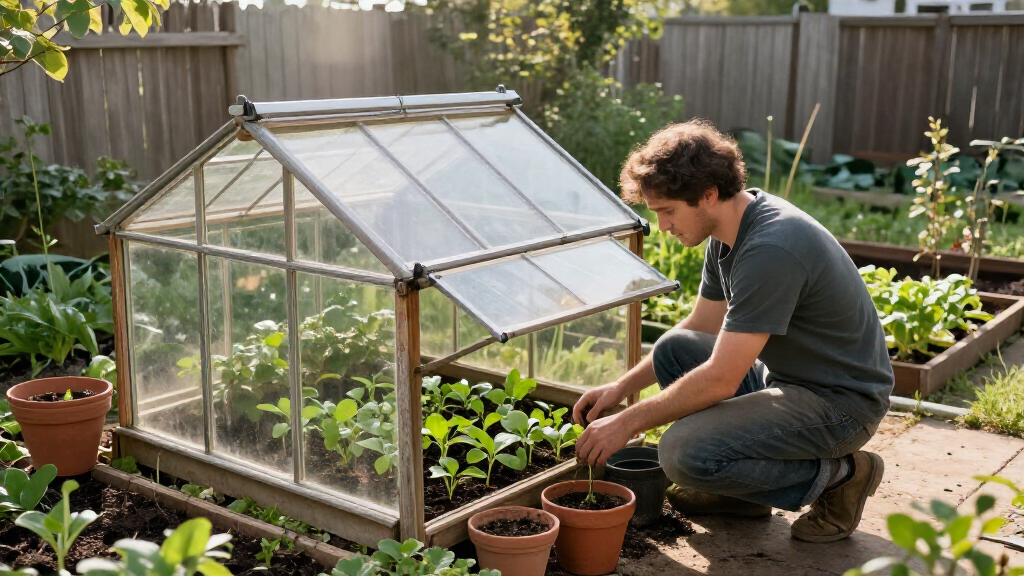
A cold frame is a low, bottomless box set directly on the ground, with a transparent hinged lid. Its footprint is less space-efficient vertically and it generally holds only one layer of pots or low-growing plants. But contact with the soil is an advantage on cold nights: the ground absorbs heat from the sun during the day and releases some of it after the lid is closed. Gardening Know How says plants may fare better in a cold frame than a mini greenhouse on a harsh night around 20°F (-7°C).
The report recommends airing either structure when sunlight raises interior temperatures. For a cold frame, it says to prop the lid open a few inches on sunny days when temperatures rise above 40°F (4°C), then close it by late afternoon. A mini greenhouse also needs ventilation because it can heat up during the day. Its thin sides, however, may allow heat to escape quickly after sunset, and gaps around zippers or seams can admit cold air.
Match Winter Shelter to Plant Needs
The comparison matters because daytime warmth does not guarantee overnight protection. Gardeners choosing a structure for a balcony, patio or small yard need to weigh space against insulation, and a plant’s tolerance for cold against the likely severity of local winter weather. The article contrasts mild conditions in Georgia with colder Minnesota winters as examples of why the same setup may not work equally well everywhere.
For winter greens such as lettuce, spinach and kale, a cold frame can extend slow growth into early winter, according to the report. Low perennials, young transplants and plants susceptible to winter rain collecting around their crowns may also benefit. A mini greenhouse is better suited to stacking trays and containers, and can shield hardy potted plants from wind and rain. Neither structure is presented as a guarantee against every freeze; gardeners need to select plants and protection according to their conditions.
Cost and durability also affect the decision. The report describes mini greenhouses as an affordable way to gain shelf space, but says their covers can be a weak point. Cold frames can cost more unless built at home, but a sturdy frame with a rigid lid may last for years. These trade-offs make the purchase a question of more than initial price.
Products Worth Considering

Sonos Era 100 SL Compact Microphone-Free Speaker, Black

Dyson V15 Detect Cordless Vacuum Cleaner, Yellow/Nickel

Hisense 75-Inch E6SR Series Hi-QLED 4K UHD Smart Roku TV (2026 Model)
As an affiliate, we earn on qualifying purchases.
How the Two Structures Differ
The report describes mini greenhouse frames commonly made of light steel, with two to four tiers beneath a PVC or polyethylene cover; other versions use rigid polycarbonate. The front cover typically unzips and rolls up for ventilation. Some designs can be stored when not needed, and removable shelves may let the structure serve other growing purposes.
Cold frames are commonly built from wood, aluminum or brick, with a glass or polycarbonate lid that can be propped open. Gardening Know How says wood insulates better than metal in harsher climates, while aluminum does not rot and may be easier to move. It advises looking for a stable frame and a lid that can be held at more than one height. Automatic venting, which opens the lid as the interior warms, is an option for people away during the day.
For mini greenhouses, the report says rigid polycarbonate panels cost more but retain heat better than a flexible cover. If choosing a lower-cost cover, it recommends polyethylene—preferably reinforced—rather than PVC, noting that polyethylene stays flexible in freezing temperatures. These are recommendations from the article, not independent product testing presented in the supplied material.
“Plants will usually come through a harsh 20°F (-7°C) night better in a cold frame than a mini greenhouse.”
— Gardening Know How
Limits of the Winter Comparison
The supplied report does not give test methods, product-by-product temperature readings or a date for the comparison. Its estimate about performance around 20°F (-7°C) is not accompanied in the supplied material by details about how long the freeze lasts, the specific structures tested or the plants involved. Results will vary with wind exposure, sunlight, soil moisture, construction and the temperature outside.
It is also unclear how much protection any particular model provides during prolonged severe cold. The article cautions against relying on thin plastic in a hard freeze, but does not set out a universal minimum temperature or a guarantee for specific plant species. The source material ends partway through its discussion of polyethylene covers, so it does not provide the complete explanation of their long-term performance.
Check Local Conditions Before Buying
Gardeners can use the comparison to shortlist a structure, then check typical winter lows, wind exposure and the needs of the plants they intend to keep outside. A cold frame is the stronger candidate where overnight heat retention and ground-level growing matter; a mini greenhouse may make more sense where vertical space and protection from rain and wind are the priorities.
Before purchase, inspect how firmly a frame stands, how the lid or door opens for ventilation, and whether replacement covers or panels are available. For a cold frame, compare materials and consider adjustable or automatic venting. For a mini greenhouse, weigh rigid panels against the price and durability of a flexible cover. The report’s practical advice is to ventilate in warm sun and close a cold frame before evening; the best final choice remains dependent on local weather and the plants being sheltered.
Key Questions
Which structure is better during a hard freeze?
Gardening Know How says a cold frame may keep plants warmer overnight because its base is open to soil, which stores heat during the day. The outcome depends on the structure, weather and plants.
Which option provides more growing space?
A mini greenhouse provides more space vertically through multiple shelves, making it useful for trays, cuttings and pots in a small footprint. A cold frame is low and generally holds one layer.
Should a cold frame be left closed on sunny days?
No. The report recommends propping the lid open a few inches on sunny days when temperatures rise above 40°F (4°C), then closing it by late afternoon to retain warmth overnight.
What cover should I look for on a mini greenhouse?
The report says polycarbonate panels retain heat better than flexible covers. For a lower-cost flexible cover, it recommends polyethylene, preferably reinforced, rather than PVC.
Will either structure protect every plant through winter?
The supplied report does not promise protection for every plant or every freeze. Local minimum temperatures, wind, sunlight, construction and each plant’s cold tolerance all affect results.
Source: gardeningknowhow.com