
TL;DR
Gardening Know How recommends disconnecting hoses and attachments, shutting off and draining standard outdoor faucet lines where possible, and adding an insulated cover before a hard freeze. A cover is backup protection, and frost-free faucets can still be vulnerable if a hose is left attached or the fixture is incorrectly installed.
Gardening Know How has published seasonal advice for winterizing outdoor faucets: disconnect hoses and attachments, shut off and drain the line when the home has a suitable indoor valve, and add an insulated cover before freezing weather. The steps are intended to reduce the risk of frozen pipes and damage that may remain hidden until the water is turned back on.

Get garden gear delivered free with Prime
- Fast, free delivery on millions of items
- Prime Video, Amazon Music and more included
- Member-only deals all year
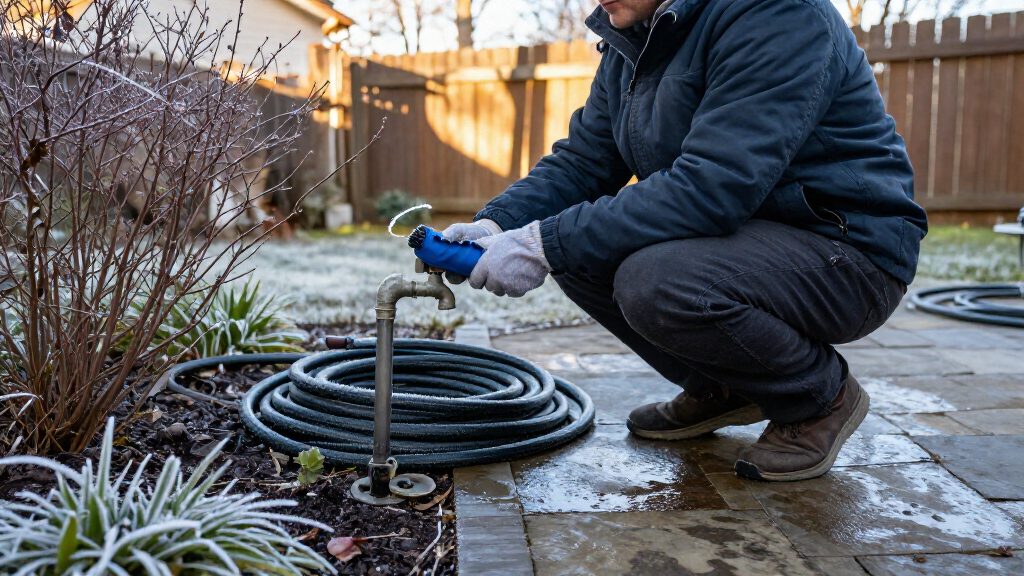
The report says to start by removing every hose, splitter, timer and quick-connect fitting. Water trapped in an attachment can prevent a faucet from draining, including a frost-free model. It also recommends draining hoses before storing them out of the weather.
For a standard faucet with a dedicated indoor shutoff, the report advises closing that valve, then opening the outdoor faucet to release remaining water. Some shutoff valves have a bleeder cap; the report says to leave the faucet open, place a bucket beneath the cap and loosen it slowly. It cautions readers not to operate an unfamiliar, unlabeled valve because it may control another part of the home’s water supply.
An insulated cover can provide additional protection, but it does not replace removing hoses or draining a line where required. The cover should sit snugly against the wall and be checked after windy weather. The report says homeowners should follow the faucet or valve manufacturer’s instructions, since guidance on whether to leave a faucet open can vary.
How Frozen Faucet Lines Cause Damage
Water that freezes expands, and a pipe can split when water is trapped in the faucet or line. The report warns that a crack may be inside the wall, where it is not visible from outdoors. A leak may only become apparent after the supply is turned back on, potentially causing water damage as well as a plumbing repair.
That makes the work more than a matter of protecting an exposed spigot. Removing attachments and draining the line, when appropriate, addresses water that could otherwise remain trapped. The report describes the task as a short fall chore, but does not provide independent cost data to quantify the likely repair bill or guarantee that these steps will prevent all freeze damage.
Products Worth Considering

Dyson V8 Plus Cordless Stick Vacuum

Sony BRAVIA 6 77-Inch OLED 4K HDR Smart Google TV with Gemini (K-77A60)

Roborock Q10 S5+ Robot Vacuum and Mop with Self-Emptying Station, 10,000 Pa Suction
As an affiliate, we earn on qualifying purchases.
Frost-Free Faucets Still Need Care
A frost-free faucet uses a long stem that places its shutoff point farther inside the home, where temperatures are generally warmer. When the faucet is closed, water is meant to drain from the stem through the spout. According to the report, that depends on the faucet being installed with a slight downward slope toward the outside.
A hose left attached can block drainage, and damage, a level installation or a pipe routed through an unheated crawl space can also leave a frost-free faucet at risk. The report says correctly installed units generally do not require the same supply shutoff and draining procedure as standard faucets, but advises following the manufacturer’s instructions for the specific fixture.
““Outdoor faucet winterization is mostly about getting water out and keeping it from getting trapped again.””
— Gardening Know How report
Which Faucets Need a Shutoff
The report does not identify a single procedure that applies to every home. Whether the indoor supply should be shut off and drained depends on the faucet design, installation and available valves. It also notes that some valve makers advise closing an outdoor faucet for winter while others may give different instructions. Homeowners should check the product guidance; if the valve or plumbing arrangement is unclear, the report does not recommend guessing at an unlabeled shutoff.
The report provides no measured estimate of how often these steps prevent damage or how much a typical repair costs. Its headline’s reference to a five-minute job and savings of thousands is not supported in the supplied material by timing or repair-cost data.
Prepare Before Freezing Nights
Homeowners can check the forecast and complete the applicable steps before the first hard freeze, ideally alongside other seasonal outdoor-water tasks. After installing a cover, they can check that it remains snug after windy nights. If an outdoor faucet has already frozen, the report advises against using a torch or other intense heat source because framing and insulation may be behind the wall; it suggests using a hair dryer slowly on the faucet and nearby wall instead.
When the water is turned back on after winter, homeowners should check the faucet and nearby interior plumbing for leaks. The report does not specify a particular spring inspection schedule. If a leak or suspected pipe damage is found, a qualified plumber can assess the line.
Key Questions
What is the first step in winterizing an outdoor faucet?
Disconnect the hose and all attachments, including splitters, timers and quick-connect fittings. Trapped water can keep the faucet from draining.
Should every outdoor faucet’s water supply be shut off?
No single method fits every fixture. The report recommends shutting off and draining a standard faucet when it has a suitable indoor valve, while correctly installed frost-free faucets may not need that procedure. Follow the manufacturer’s instructions.
Does a faucet cover prevent freezing by itself?
No. The report describes an insulated cover as extra protection, not a replacement for removing hoses or draining the line when required.
What should I do if an outdoor faucet is frozen?
Do not use a torch or another intense heat source, the report says. It suggests applying a hair dryer slowly to the faucet and nearby wall, while keeping the electrical cord away from water.
Source: gardeningknowhow.com