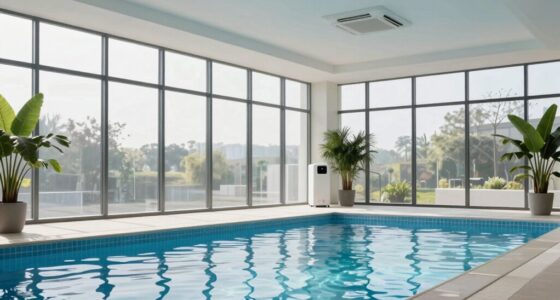
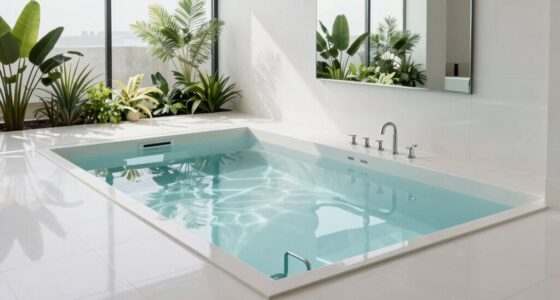
Maintaining proper water chemistry is key to keeping your small exercise pool safe, clear, and inviting. Keep the pH balanced between 7.2 and 7.6 to prevent skin irritation and equipment damage, and regularly test your sanitizer levels, aiming for 1-3 ppm of chlorine or bromine. Consistent testing and adjustments guarantee your water stays balanced and clean. If you want to learn more about managing your pool’s chemistry effectively, stay with us for helpful tips.
Key Takeaways
- Maintain pH levels between 7.2 and 7.6 to ensure water safety, clarity, and sanitizer effectiveness.
- Regularly test sanitizer levels (chlorine or bromine) to keep them within 1-3 ppm for optimal disinfection.
- Use reliable test kits or strips to monitor water chemistry at least twice weekly, adjusting chemicals as needed.
- Balance pH and sanitizer levels to prevent cloudy water, algae growth, skin irritation, and equipment damage.
- Promptly address issues like cloudiness, odors, or irritation through proper chemical adjustments and maintenance.
Maintaining proper water chemistry is essential for keeping your small exercise pool safe, clean, and inviting. One of the most critical aspects of water chemistry is ensuring the pH balance stays within the ideal range. When your pool’s pH is too low, the water becomes acidic, which can cause skin irritation and damage to pool components. Conversely, if the pH is too high, the water turns alkaline, leading to cloudy water, scale buildup, and reduced effectiveness of sanitizers. The ideal pH range for a small exercise pool is typically between 7.2 and 7.6. Regular testing with a reliable test kit helps you monitor these levels and make necessary adjustments. Adjusting pH is straightforward—adding pH increasers or decreasers will help you maintain a balanced environment, ensuring your pool remains comfortable and safe for exercise. Properly balanced water chemistry also helps prevent the buildup of algae and bacteria, prolonging the lifespan of your pool equipment.
Equally important is maintaining proper sanitizer levels. Sanitizers, such as chlorine or bromine, are your primary defense against bacteria, algae, and other harmful contaminants. Without adequate sanitizer levels, your pool can quickly become a breeding ground for germs, posing health risks. You should aim for sanitizer levels that are strong enough to disinfect effectively but not so high that they cause skin or eye irritation. Typically, chlorine levels should be kept between 1 and 3 parts per million (ppm). Monitoring sanitizer levels regularly ensures you can add more disinfectant when needed, especially after heavy use or environmental disturbances like rain or debris entering the pool. Some small exercise pools might use alternative sanitizers, but the principle remains the same—consistent monitoring and adjustment are key.
Balancing pH and sanitizer levels work hand-in-hand to create a safe swimming environment. When pH is properly maintained, sanitizers work more efficiently, reducing the amount needed to keep the water clean. Conversely, unbalanced water chemistry can lead to sanitizer inefficiency, requiring more chemicals and increasing costs. You should test your water at least twice a week during regular use, and more frequently if you notice cloudiness, foul odors, or skin irritation. Remember, quick adjustments are better than letting imbalances persist. Use test strips or digital testers for accuracy, and always follow the manufacturer’s instructions when adding chemicals. Keeping your small exercise pool’s water chemistry balanced not only protects your health but also prolongs the life of your pool equipment and enhances your overall swimming experience. Regular maintenance and awareness of water chemistry help ensure a safe and enjoyable fitness environment.
As an affiliate, we earn on qualifying purchases.
Frequently Asked Questions
How Often Should I Test My Small Pool’s Water Chemistry?
You should test your small pool’s water chemistry at least 2-3 times a week to maintain proper balance. Regular pool water testing helps you stay on top of pH, chlorine levels, and other chemicals. Follow a consistent chemical maintenance schedule, adjusting chemicals as needed to prevent algae growth and ensure safe, clear water. Consistent testing keeps your pool inviting and safe for every swim.
What Are the Best Chemical Products for Small Pools?
Choosing the best chemicals for your small pool depends on pool chemical compatibility and your preference for natural sanitation options. You’ll want to evaluate chlorine or bromine for reliable sanitation, or explore mineral-based sanitizers for a natural route. Look for products that are safe, effective, and compatible with your pool’s materials. Always follow label instructions, and test your water regularly to keep your pool safe, clean, and sparkling.
How Can I Prevent Algae Growth in My Exercise Pool?
To prevent algae growth in your exercise pool, you should focus on algae prevention strategies like maintaining proper water circulation and filtration. Regularly run your pump to keep water moving, which discourages algae buildup. Additionally, use algaecide treatments as needed and keep your pH levels balanced. Consistent cleaning and monitoring will help guarantee your pool stays clear and algae-free, making your workouts more enjoyable.
What Are Safe Ph Levels for Small Pools?
You should keep your small pool’s pH level between 7.2 and 7.8 for safe, comfortable swimming. To maintain this, regularly perform pH adjustment using pH increasers or decreasers as needed. Always use a pool sanitizer to keep the water clean and prevent bacteria growth. Testing your water weekly guarantees your pH stays balanced, making it safe and enjoyable for everyone.
How Do I Balance Calcium Hardness in My Pool?
Did you know that improper calcium hardness levels cause 85% of pool equipment failures? To balance calcium hardness, regularly test your water and aim for 200-400 ppm. If levels are too high, calcium scaling can occur, damaging your pool. If too low, calcium depletion risks corrosion. Add calcium increasers or reducers as needed, and maintain consistent testing to prevent issues and keep your pool crystal clear.
Conclusion
Remember, a well-balanced pool makes for a happy swimmer. Keep the water’s pH, chlorine levels, and alkalinity in check, and you’ll enjoy safe, clear water every time. Regular testing and maintenance are key—don’t let small issues turn into big problems. As the saying goes, “An ounce of prevention is worth a pound of cure.” Stay proactive, and your small exercise pool will stay inviting and sparkling for all your workouts.