To build stronger, more efficient strokes, focus on combining interval and technique drills that target key movements. Incorporate short, high-intensity sets like 25s and 50s to improve speed and rhythm, while drills such as body dolphin or single-arm butterfly help refine your technique. These exercises strengthen your kick, arm recovery, and body position, making each stroke more effective. Keep practicing consistently to see improvements, and you’ll discover even more ways to enhance your swimming strength.
Key Takeaways
- Incorporate short, high-intensity sets like 25s and 50s to build speed and maintain stroke integrity.
- Use technique drills such as body dolphin and single-arm butterfly to refine movement efficiency.
- Focus on glide, kick timing, and stroke rate consistency to enhance propulsion and control.
- Combine interval training with drills to develop rhythm, endurance, and energy-efficient stroke execution.
- Break down strokes into components and practice them repeatedly to fix inefficiencies and strengthen overall technique.
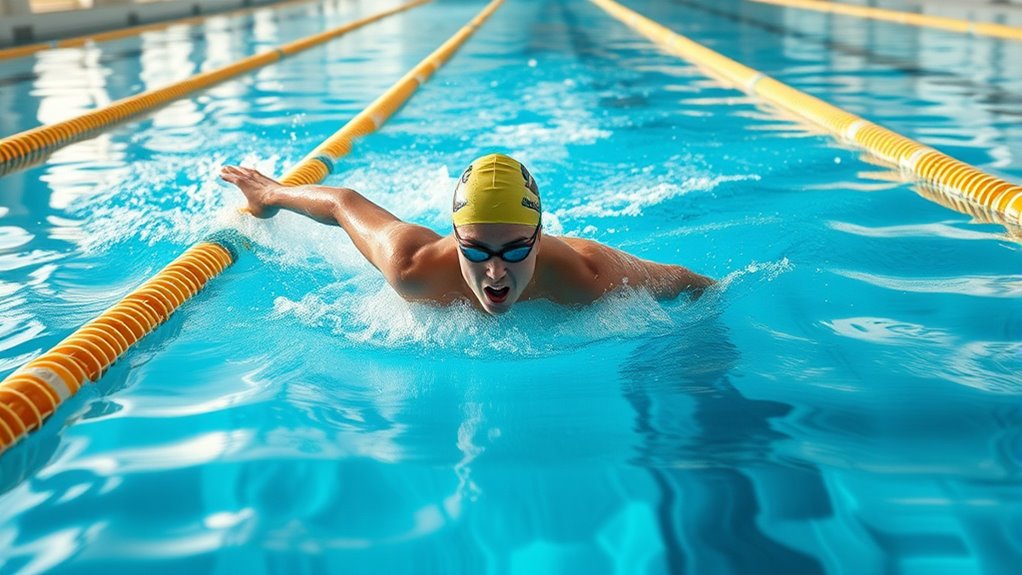
To improve your swimming strokes, incorporating interval and technique drills into your training routine is essential. These drills help you refine your movements, build endurance, and develop better control over your strokes. When focusing on breaststroke efficiency, drills that emphasize glide time, stroke rate, and proper kick timing are particularly effective. By breaking down the stroke into its key components, you can identify and correct inefficiencies that may be slowing you down. Practicing drills like pull-outs, where you focus on maximizing glide and reducing unnecessary arm movement, helps improve your overall propulsion and streamline your body. Additionally, incorporating short, high-intensity intervals allows you to push your limits while maintaining precise technique, ensuring that you don’t sacrifice form for speed. Consistent practice is key to making meaningful progress in your technique and endurance.
Similarly, working on your butterfly rhythm requires targeted drills to develop a smooth, continuous motion. Butterfly is a demanding stroke that relies on a consistent rhythm and timing between arm pulls, kicks, and breathing. Interval training with focused sets, like timed 25s or 50s, can help you maintain a steady rhythm, preventing fatigue from disrupting your flow. Drills such as the “body dolphin” or “single-arm butterfly” are excellent for isolating specific movements, allowing you to refine your timing and coordination. By practicing these drills regularly, you’ll develop a natural, fluid butterfly rhythm, making your stroke more efficient and less energy-consuming.
Incorporating technique drills into your routine isn’t just about adding variety—it’s about making every stroke count. For breaststroke, focus on drills that encourage a strong kick, optimal arm recovery, and a streamlined glide. For butterfly, emphasize rhythm and body undulation, ensuring your movements are synchronized and powerful. When you combine these drills with interval training, you train your body to sustain high-quality strokes under pressure. This combination enhances your ability to maintain efficiency over longer distances, whether you’re racing or training for overall fitness.
Frequently Asked Questions
How Often Should I Perform Interval and Technique Drills Weekly?
You should perform interval and technique drills 2 to 3 times weekly for ideal training frequency. This schedule allows you to improve your strokes without overtraining, giving your muscles time to recover. Incorporate these drills into your regular workout routine, ideally spacing them out to maintain consistency and avoid fatigue. Adjust the frequency based on your progress and overall training goals to guarantee steady improvement and best scheduling.
Can Beginners Benefit From Advanced Stroke Drills?
Yes, beginners can benefit from advanced stroke drills, but with caution. These drills help with stroke refinement and can address beginner challenges like poor form or inefficient movement. It’s important to start slowly and focus on proper technique, gradually increasing difficulty. Incorporating advanced drills thoughtfully accelerates progress, but always listen to your body and guarantee your foundation is solid before pushing into more complex exercises.
What Equipment Is Necessary for Effective Drill Sessions?
Like a toolbox for a craftsman, the right equipment makes your drills more effective. You’ll need swimming paddles to enhance your stroke feel and kickboards to focus on your kick technique. These tools help isolate specific movements, improving strength and efficiency. Keep your gear simple but purposeful, ensuring you can stay focused on your form and progress, making each session more productive and rewarding.
How Do I Measure Progress in My Stroke Improvement?
You can measure your stroke improvement by tracking your stroke consistency during practice and races. Focus on maintaining steady technique, which indicates progress. Conduct regular technique analysis by recording your swims and reviewing them for form and efficiency improvements. Keep a journal to note changes and set measurable goals. As your consistency improves and your technique becomes more refined, you’ll see clear signs of your progression in the water.
Are There Specific Drills for Improving Endurance or Speed?
You can improve endurance and speed by focusing on drills that optimize your stroke rate and breathing patterns. Incorporate interval training with varying intensities, such as swimming at a higher stroke rate for short bursts, then easing into recovery. Practice rhythmic breathing to enhance oxygen intake, allowing you to maintain a faster pace longer. These targeted drills build stamina and efficiency, helping you swim faster and stronger over time.
Conclusion
By regularly practicing these interval and technique drills, you’ll carve out powerful strokes like a sculptor chiseling marble. Imagine the water parting smoothly beneath your confident strokes, your muscles working in perfect harmony. With each session, you’ll feel your strength grow, your confidence rise. Keep pushing yourself, and soon, your swimming will glide through the water effortlessly, like a sleek boat slicing through calm seas. The finish line is closer than you think—just keep moving forward.