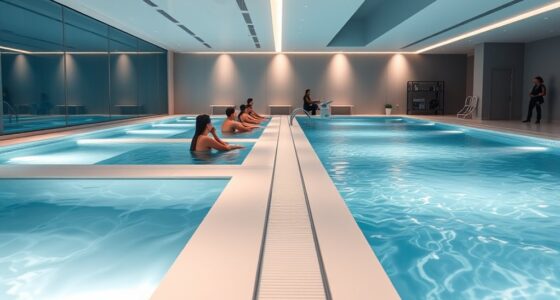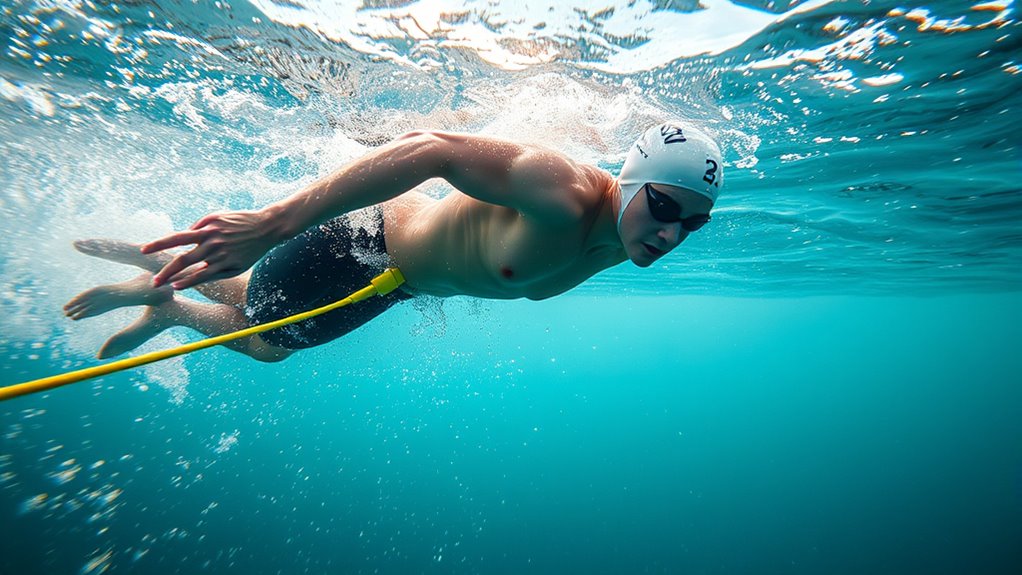

If you train with a swim tether, you’ll focus on improving technique, breathing control, and building endurance in a stationary environment that simulates resistance. Using a current challenges you with dynamic water flow, boosting stamina, adaptability, and muscle engagement in a more open-water setting. Each method targets different skills—tether emphasizing precision, current emphasizing resilience. Keep exploring to discover how combining both can optimize your swim performance and conditioning approach.
Key Takeaways
- Tether training focuses on steady effort and technique refinement in a stationary environment, while current training simulates dynamic resistance and adaptability.
- Tether promotes deliberate breathing and consistent pacing; current training challenges swimmers with variable resistance and quick breath adjustments.
- Tether allows high-repetition drills for endurance and stroke mechanics; current enhances stamina through real-world resistance scenarios.
- Tether emphasizes body position and form; current improves ability to conserve energy and adjust pace under changing water resistance.
- Combining both methods offers comprehensive training: tether develops breathing control and technique; current boosts stamina and adaptability.
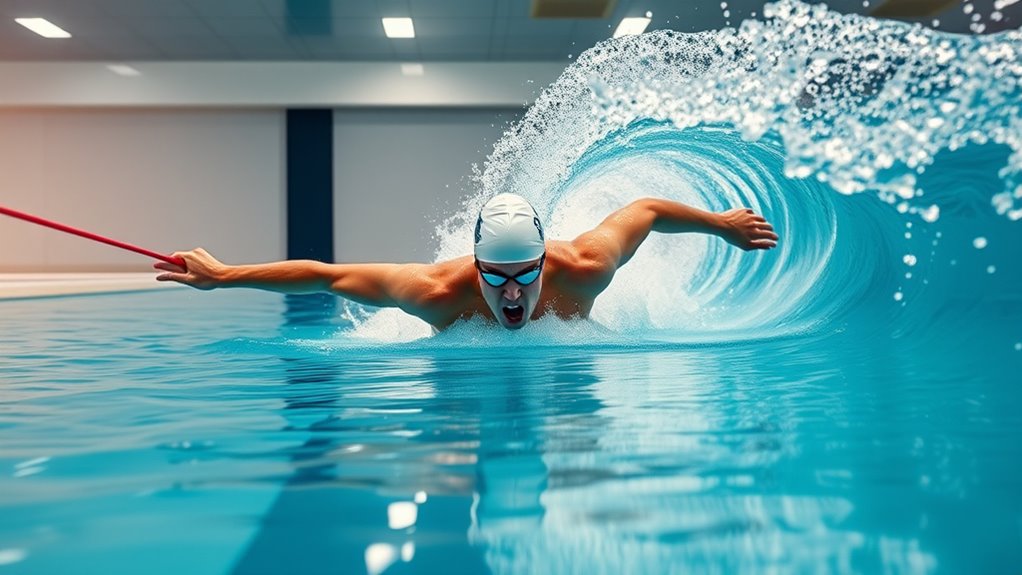
When it comes to improving your swimming, understanding the differences between training with a tether and training against a current is vital. Both methods offer unique benefits, but they challenge your body in different ways, influencing your breathing techniques and endurance building strategies.
Training with a tether involves anchoring yourself to a fixed point, such as a pool wall or a specialized device. This setup allows you to focus on stroke mechanics, body position, and breathing without the added variable of water resistance changing constantly. As you swim against the tether, you’ll notice that your breathing patterns become more deliberate. Because you’re fundamentally staying in one spot, you can concentrate on controlling your breath, practicing rhythmic inhales and exhales, and maintaining a steady pace. This helps you develop better breathing techniques, which are vital for efficient oxygen intake during longer swims. Additionally, tether training is excellent for endurance building because it allows you to perform high-repetition drills without the worry of drifting or losing form. You can sustain a consistent effort, pushing your cardiovascular system gradually while fine-tuning your technique. Incorporating focused breathing control during tether workouts can further enhance your respiratory efficiency and overall swimming performance.
Tether training enhances breathing control and endurance with focused, steady drills in a controlled environment.
In contrast, training against a current—whether created by a resistance device, a water treadmill, or natural water flow—poses a different set of challenges. When you’re swimming against a current, the water constantly pushes back, requiring you to adapt your strokes and breathing patterns on the fly. This dynamic environment forces you to improve your breathing techniques because you need to coordinate your breath with the changing resistance. You learn to inhale quickly when the water is less resistant and exhale smoothly during more strenuous segments. The constant resistance also enhances endurance building by engaging more muscle groups and increasing your overall workload. Over time, swimming against a current can boost your stamina more effectively than tether training, as it mimics open-water conditions more closely. You learn to conserve energy, adjust your pace, and maintain form under varying resistance levels, which translates well to real-world swimming scenarios.
Ultimately, both tether and current training methods complement each other. Tether workouts allow you to refine your breathing and build foundational endurance in a controlled environment. Meanwhile, current training pushes your limits, helping you adapt to different water conditions and improve overall stamina. Combining these approaches provides a well-rounded training program that enhances your breathing techniques and endurance, making you a more efficient and resilient swimmer.

Hikeen Swimming Training Belt 4M Swimming Tether Swim in Place Harness Stationary Aquatic Resistance Belt
Designed for stationary swimming in home & lap pools with adjustable bungee cord for resistance training
As an affiliate, we earn on qualifying purchases.
As an affiliate, we earn on qualifying purchases.
Frequently Asked Questions
Can Swim Tethers Improve Open Water Navigation Skills?
Using a swim tether can improve your open water navigation skills by enhancing your awareness of body position and movement in water. Tether training benefits include better stroke technique and increased confidence in open water conditions. While it doesn’t directly simulate open water navigation, it helps you develop essential skills like maintaining direction, pacing, and spatial orientation, making it a valuable tool for building navigation proficiency in open water environments.
Which Training Method Is Better for Injury Prevention?
Choosing the right training method can substantially reduce your injury risk. You might picture yourself gliding smoothly, but inconsistent training can lead to strain or overuse injuries. A method that promotes training consistency, like using a swim tether, helps you build strength gradually and maintain proper technique, minimizing injury risks. Don’t gamble with your safety—prioritize consistent, controlled training to stay injury-free and improve your performance steadily.
How Does Water Temperature Affect Tether and Current Training?
Water temperature plays a vital role in your tether and current training. Warmer water helps you relax muscles, reducing injury risk and promoting better training adaptation. Cooler water, however, can increase muscle stiffness and fatigue, making workouts more challenging. Adjusting water temperature guarantees ideal conditions for your training goals, enabling you to build strength and endurance safely. Always monitor water temperature to maximize benefits and prevent discomfort or injury during your sessions.
Are There Age Restrictions for Using Swim Tethers or Currents?
Age restrictions for using swim tethers or currents depend on equipment safety and individual maturity. Generally, children under 8 should be supervised closely and may need adult approval or guidance to guarantee safe use. Older kids and adults can typically use this equipment safely, but it’s essential to follow manufacturer guidelines and supervise younger users. Always prioritize safety and consult with a trainer or expert if unsure about age restrictions.
What Equipment Safety Precautions Are Recommended for Each Method?
Imagine you’re a modern-day swimmer channeling a bit of the past. For safety, regularly inspect your equipment for wear and tear, ensuring secure attachments and functioning parts. Follow emergency procedures diligently, like knowing how to quickly detach from the tether or stop the current. Maintain all gear properly to prevent accidents, and stay alert during training. These precautions help you stay safe and maximize your workout with either swim tether or current training.

3 Ways to Use Swim Tether Stationary Swimming Training Belt,Swim Equipment Kit,Swim Belt for Adults,Swimming Resistance Belt,Ankle Bands,Parachute,Swim Trainer,Bungee Cords, Static Harness
Our swimming tether trainer kit includes, bungee rope, waist teather training, static strap , storage bag, we include…
As an affiliate, we earn on qualifying purchases.
As an affiliate, we earn on qualifying purchases.
Conclusion
By understanding the differences between swim tether and current training, you can tailor your workouts to match your goals. Some believe that swim tethering builds strength through controlled resistance, while others argue that current training more closely mimics real swimming conditions. While both methods offer benefits, combining them might give you the best of both worlds. Ultimately, experimenting with each will help you discover which method pushes you closer to your personal performance goals.
Hikeen Swimming Training Belt 4M Swimming Tether Swim in Place Harness Stationary Aquatic Resistance Belt
Designed for stationary swimming in home & lap pools with adjustable bungee cord for resistance training
As an affiliate, we earn on qualifying purchases.
As an affiliate, we earn on qualifying purchases.
Hikeen Swimming Training Belt 4M Swimming Tether Swim in Place Harness Stationary Aquatic Resistance Belt
Designed for stationary swimming in home & lap pools with adjustable bungee cord for resistance training
As an affiliate, we earn on qualifying purchases.
As an affiliate, we earn on qualifying purchases.