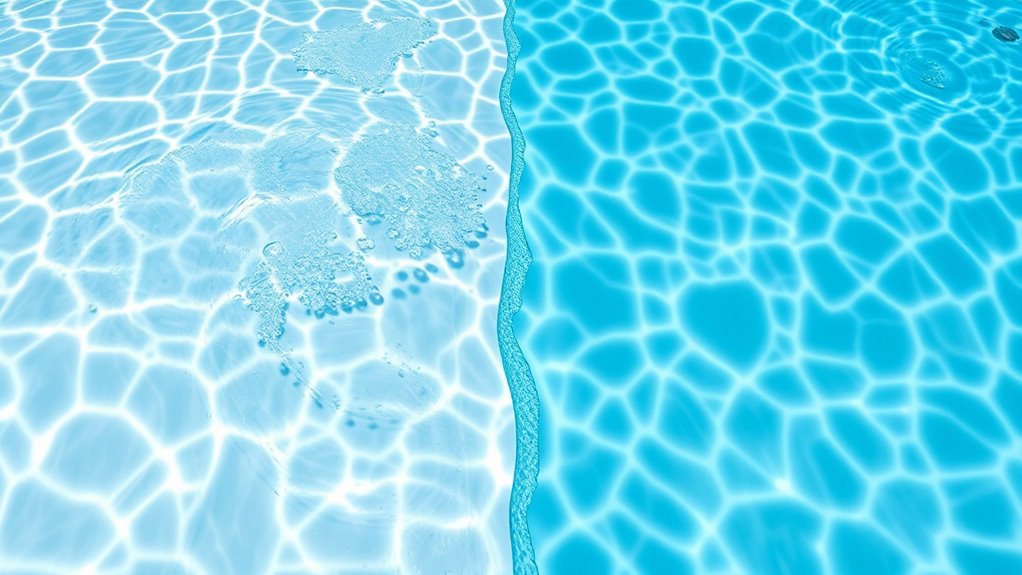

If you’re choosing between saltwater and chlorine for your exercise pool, consider how each affects maintenance and comfort. Saltwater pools generate chlorine automatically, offering softer water and less irritation, while chlorine pools give you more control but require regular chemical adjustments. Saltwater pools tend to need less hand-on maintenance, but you must monitor salt levels to prevent corrosion. To weigh the benefits for your routine and preferences, explore more details below.
Key Takeaways
- Saltwater pools generate chlorine automatically, reducing manual chemical addition, while chlorine pools require frequent chemical adjustments.
- Saltwater pools typically have a softer water feel and are gentler on skin compared to traditional chlorine pools.
- Both systems require regular testing and balancing of water chemistry to ensure safe, comfortable exercise conditions.
- Saltwater pools may experience equipment corrosion if salt levels are not properly maintained, necessitating diligent monitoring.
- The choice depends on maintenance preferences: saltwater pools offer convenience, whereas chlorine pools offer precise sanitizer control.
When it comes to maintaining a clean and safe pool, choosing between saltwater and chlorine systems can seem overwhelming. Both options require regular pool maintenance to ensure water stays healthy and inviting, but they handle water chemistry differently. Chlorine pools rely on adding liquid or granulated chlorine directly to the water, which actively kills bacteria and keeps algae at bay. Saltwater pools, on the other hand, generate chlorine through an electrolysis process that converts salt into disinfectant. This difference influences how you manage water chemistry and how often you need to test and adjust your pool’s chemicals.
Maintaining a pool requires balancing water chemistry, whether using saltwater or chlorine systems.
In terms of water chemistry, maintaining the right pH, alkalinity, and sanitizer levels is critical regardless of your system choice. Chlorine pools are straightforward; you add chlorine to keep the water sanitized, but you must monitor pH levels carefully because chlorine can cause pH to fluctuate. If the pH gets too high or too low, it can lead to issues like cloudy water, scaling, or irritation. With a saltwater system, the generator produces chlorine on-site, which tends to stabilize sanitizer levels. However, salt levels themselves need to be kept within a specific range, usually around 2700 to 3400 parts per million, and this requires periodic testing. High salt levels can affect water chemistry and lead to corrosion of pool equipment if not properly managed.
Both systems demand diligent pool maintenance, but saltwater pools often require less frequent chemical adjustments since the generator continuously produces chlorine. Still, you’ll need to regularly test water chemistry to balance pH, alkalinity, and salt content. Failure to do so can cause problems like skin or eye irritation, cloudy water, or equipment damage. Saltwater pools tend to have a softer feel and are gentler on the skin, but they may require more attention to salt levels and equipment corrosion. Chlorine pools might need more frequent chemical additions, but they give you more direct control over sanitizer levels. Additionally, some homeowners prefer low maintenance requirements of saltwater systems, which can be a significant convenience.
Ultimately, your choice depends on your willingness to perform routine water chemistry tests and adjustments. If you prefer a system that produces chlorine automatically and offers a softer feel, a saltwater pool might be the better fit. If you want more precise control and are comfortable with regular chemical additions, a traditional chlorine pool could be ideal. Either way, consistent pool maintenance is key to ensuring your water remains safe, balanced, and enjoyable for exercise.
Top picks for "saltwater chlorine exercise"
Open Amazon search results for this keyword.
As an affiliate, we earn on qualifying purchases.
Frequently Asked Questions
How Does Saltwater Affect Pool Equipment Longevity?
Saltwater can positively impact your pool equipment lifespan by reducing corrosion effects compared to traditional chlorine. Since saltwater pools use lower chlorine levels, your equipment faces less chemical stress, which helps prevent rust and deterioration. However, you should still regularly maintain your system, as salt can cause some corrosion over time. Overall, with proper care, saltwater can extend equipment longevity and keep your pool running smoothly.
Are Saltwater Pools More Environmentally Friendly Than Chlorine Pools?
Saltwater pools are generally more eco-friendly than chlorine pools because they promote sustainable practices and reduce chemical runoff. They often use less harsh chemicals, benefiting your health and the environment. Plus, saltwater systems tend to be more energy-efficient, lowering your overall energy consumption. By choosing a saltwater pool, you support eco-friendly practices and enjoy a more sustainable swimming experience while minimizing environmental impact.
What Are the Maintenance Costs Differences Between Saltwater and Chlorine Pools?
They say “an ounce of prevention is worth a pound of cure,” and that applies to pool maintenance costs. Saltwater pools typically have lower ongoing expenses because they require less frequent chemical balancing and fewer chlorine purchases. Chlorine pools need regular chemical adjustments and more chemical purchases, raising costs over time. However, initial setup for saltwater pools can be higher. Consider your long-term budget and convenience when choosing the right system.
Can Saltwater Pools Cause Skin or Eye Irritation?
Saltwater pools can cause skin sensitivity and eye discomfort in some people, especially if your skin or eyes are more sensitive to salt or the pH levels aren’t balanced. You might notice irritation or dryness after swimming. To reduce these effects, make certain the pool’s chemistry is well-maintained, and rinse off after swimming. Using goggles and moisturizing your skin can also help minimize irritation and eye discomfort.
How Do Salt Levels Impact Pool Water Chemistry Over Time?
Ever wondered how salt levels shape your pool’s health? When salt levels fluctuate, your water chemistry can become unstable, leading to issues like cloudy water or corrosion. Maintaining consistent salt levels helps guarantee water chemistry stability, so your pool stays clear, balanced, and inviting. Regular testing and proper salt addition prevent imbalances, keeping your exercise pool ready for use and protecting your equipment over time.
Conclusion
Choosing between saltwater and chlorine pools ultimately depends on what matters most to you. While saltwater feels gentler on your skin and eyes, some worry about the initial cost and maintenance. But imagine enjoying a more soothing, less harsh swimming experience—it’s worth considering. Don’t let fears hold you back from creating your perfect oasis. Plunge in with confidence, knowing you’re making a choice that enhances your comfort and joy every time you swim.