
To enjoy year-round comfort, you can choose electric pool heaters for quick, easy heating or opt for solar systems to save energy and lower bills. Heat pumps provide efficient warmth in all seasons, while chillers help cool your pool during hot months. Insulation and covers retain heat and reduce costs. Exploring these options will help you find the perfect system for persistent, relaxing swim conditions—so keep going to learn more.
Key Takeaways
- Electric pool heaters provide quick, energy-efficient heating suitable for continuous use and easy maintenance.
- Solar heating options utilize sunlight, offering eco-friendly, cost-effective warmth with minimal operating costs.
- Heat pumps use ambient air to heat the pool, ideal for year-round comfort with low energy consumption.
- Chillers and cooling systems quickly reduce water temperature for summer cooling and extended swimming seasons.
- Insulation and covers help retain heat, reduce evaporation, and maintain consistent water temperatures efficiently.
Electric Pool Heaters: Efficient and Easy to Use
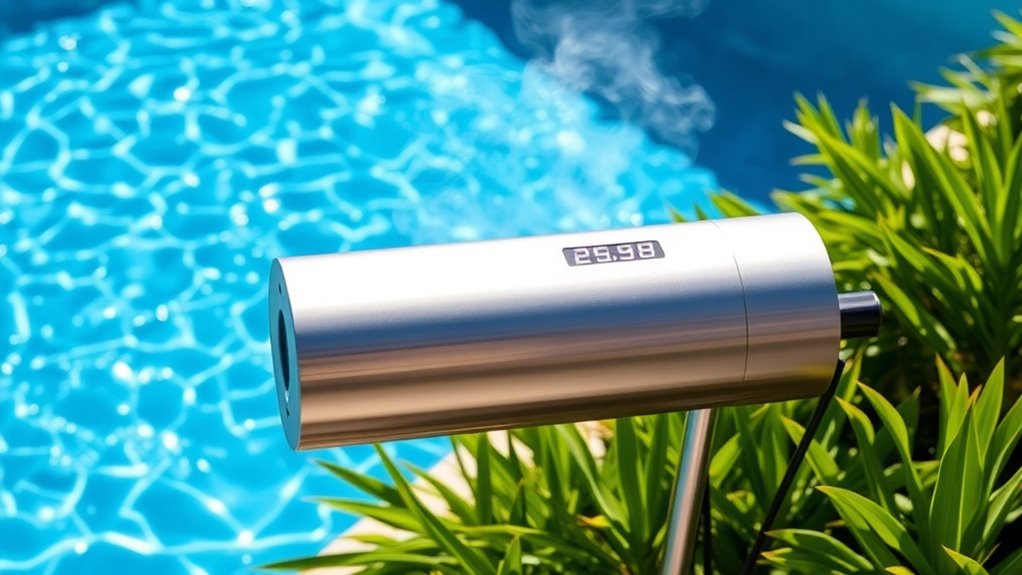
Electric pool heaters are a popular choice for many homeowners because they offer a straightforward and energy-efficient way to heat your pool. They’re easy to install and maintain, making them ideal for various pool sizes and setups. You simply plug in the heater, set your desired temperature, and let it do the work. Electric heaters heat water quickly, so you won’t have to wait long to enjoy your pool. They’re also more compact than gas or solar options, fitting easily into tight spaces. Plus, they provide consistent temperature control, ensuring your pool stays comfortable. With their quiet operation and low upfront costs, electric pool heaters are an accessible solution for year-round swimming. They’re reliable, user-friendly, and perfect for maintaining ideal water temperatures effortlessly. Additionally, security considerations are important when installing any outdoor equipment, including pool heaters, to protect against theft or vandalism.
Solar Heating Solutions: Eco-Friendly Warmth for Your Pool
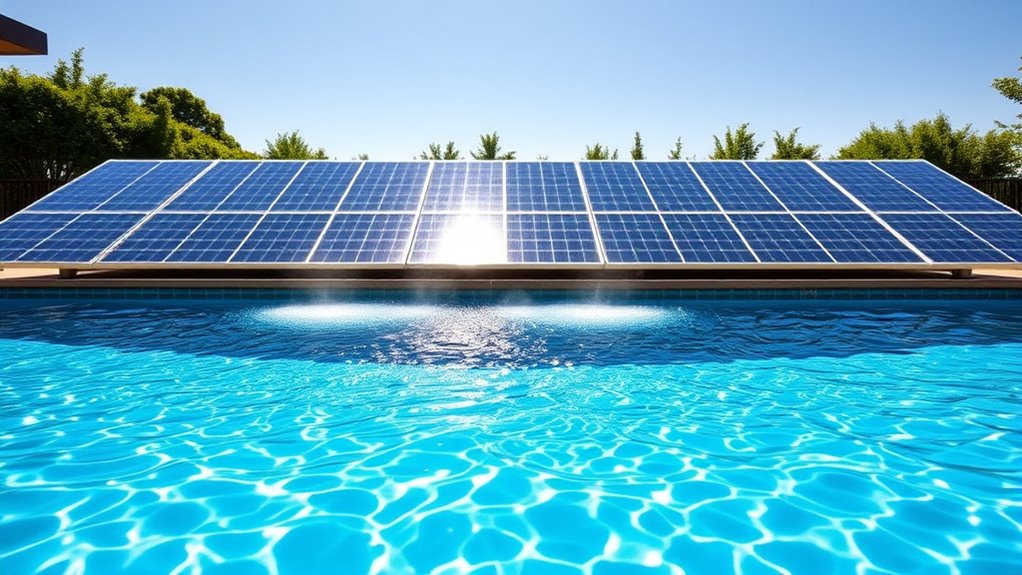
Solar heating solutions harness the power of the sun to warm your pool in an eco-friendly way. They use solar collectors to capture sunlight, converting it into heat that warms your water naturally. This method reduces energy bills and your carbon footprint, making it a sustainable choice. Installation is straightforward, with options for roof-mounted panels or ground setups. Maintenance is minimal, mainly cleaning the collectors periodically. To help you compare, here’s a quick overview: Maximize Space and Organization
| Feature | Benefits | Considerations |
|---|---|---|
| Cost | Low operating costs | Initial investment can be high |
| Efficiency | Works well in sunny conditions | Less effective on cloudy days |
| Environmental Impact | Zero emissions and renewable energy | Dependent on sunlight availability |
| Installation | Flexible options for different setups | May require roof modifications |
Solar heating offers an eco-friendly, cost-effective way to extend your swimming season.
Heat Pumps: Energy-Saving Heating for All Seasons
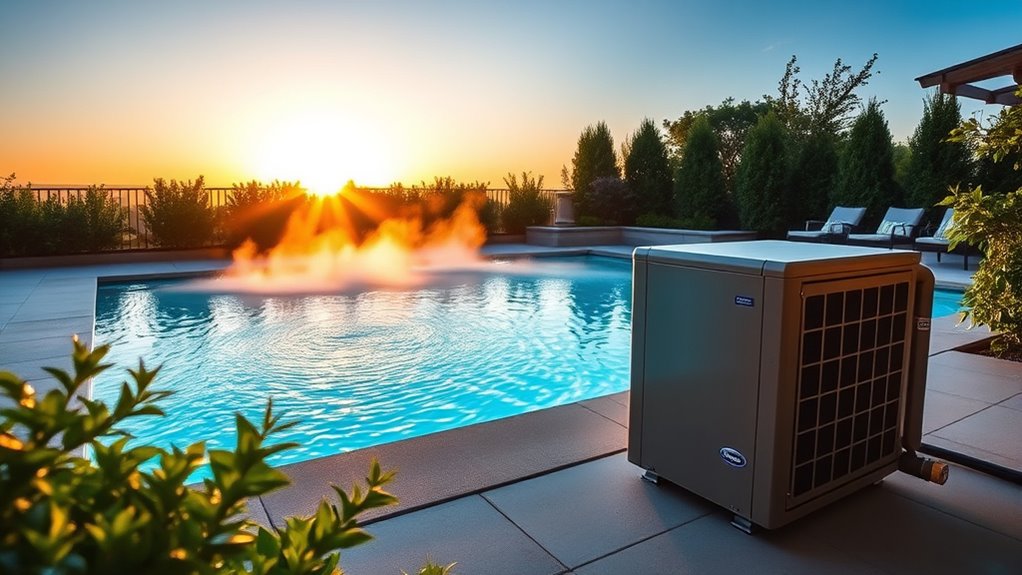
Heat pumps are an efficient way to warm your pool year-round by using ambient air to generate heat. They extract warmth from the air outside, even in cooler temperatures, and transfer it to your pool water. This process consumes less energy than traditional electric or gas heaters, making them a cost-effective choice for continuous use. Modern heat pumps operate quietly and quickly, providing consistent warmth without high energy bills. They are easy to install and require minimal maintenance, making them suitable for all seasons. Plus, they’re environmentally friendly, reducing your carbon footprint. As they are a popular energy-efficient option, many pool owners are choosing heat pumps for sustainable and reliable heating. Whether it’s winter or shoulder seasons, a heat pump ensures your pool stays comfortably heated without the expense or environmental impact of other heating options.
Chillers and Cooling Systems: Keeping Your Pool Refreshing in Summer
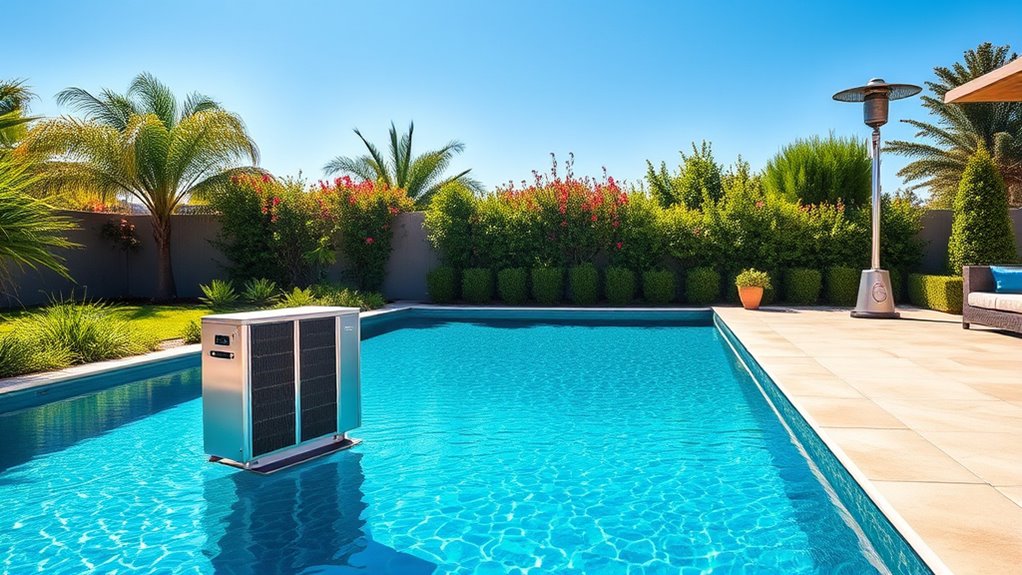
During the hot summer months, keeping your pool cool and inviting is essential for comfortable swimming. Chillers and cooling systems are effective tools to maintain a revitalizing temperature. They work by removing heat from the water, ensuring a pleasant experience even when outdoor temperatures soar. Here are three key benefits:
- Rapid temperature reduction to keep water inviting
- Precise control for consistent comfort
- Energy-efficient options tailored for your pool size
These systems can be integrated with existing pool equipment, making installation straightforward. They’re perfect for those who want to extend their swimming season or enjoy summer swims without the heat. By choosing the right chiller, you ensure your pool remains a cool oasis, no matter how high the mercury rises. Understanding the importance of temperature regulation can help you choose the most effective cooling solution for your needs.
Insulation and Cover Options: Maintaining Temperature and Reducing Costs
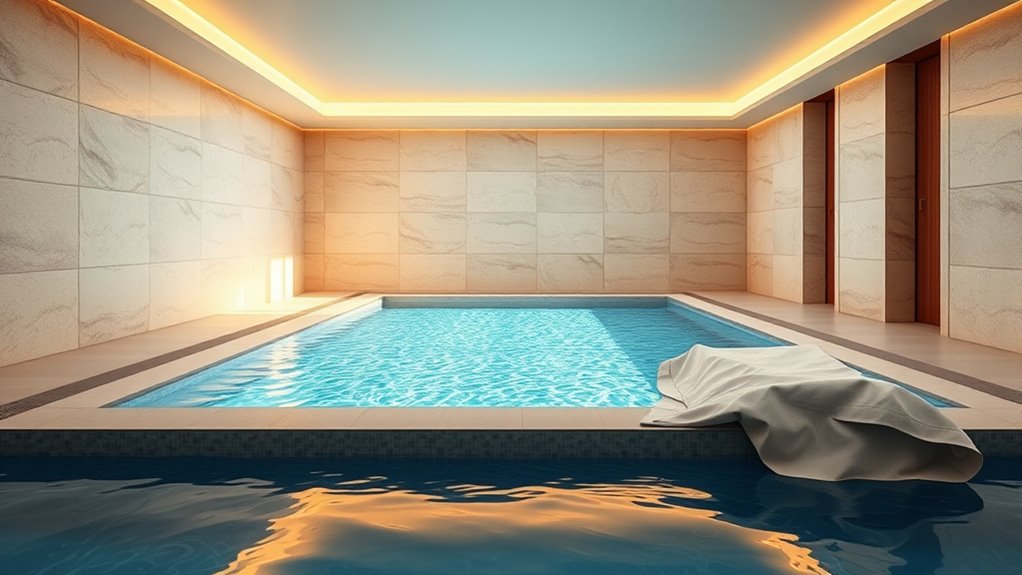
Insulation and cover options are essential tools for maintaining your pool’s temperature and cutting down on energy costs. Proper insulation keeps heat trapped, so you use less energy to keep your pool comfortable year-round. Covers, especially thermal ones, reduce heat loss and evaporation, saving you money and effort. Imagine stepping into a warm, inviting pool anytime you want, without the high bills. The right cover also protects your pool from debris and dirt, making maintenance easier. Additionally, selecting dog breeds with friendly and adaptable traits can enhance your overall poolside experience.
Frequently Asked Questions
What Are the Initial Costs of Each Pool Heating Option?
You’ll find that initial costs for pool heating options vary. Electric heat pumps typically start around $3,000 to $5,000, offering energy efficiency. Gas heaters can cost between $2,000 and $4,500, providing quick heating but higher operational costs. Solar heaters may require an upfront investment of $3,000 to $6,000, depending on size and installation. Consider your budget and climate when choosing the best option for your pool’s year-round comfort.
How Long Does It Take to Heat or Cool My Pool?
You can expect your pool to heat or cool within a few hours to a day, depending on the system and pool size. While some might worry about slow adjustments, modern heat pumps and solar systems offer rapid response times, often heating or cooling your pool overnight. Proper insulation and system size also play vital roles, ensuring you enjoy comfortable water temperatures whenever you want without lengthy waits.
Are There Any Environmental Impacts Associated With These Systems?
Yes, there are environmental impacts to take into account. Heating and cooling systems use energy, often from fossil fuels, which can contribute to carbon emissions. However, by choosing energy-efficient models or renewable energy sources, you can reduce your environmental footprint. Proper maintenance also guarantees peak performance, minimizing waste and energy use. Being mindful of your system’s efficiency helps you enjoy year-round comfort while protecting the environment.
Which System Is Best for Small or Large Pools?
You might think bigger pools need bigger systems, but that’s not always true. For small pools, a compact heat pump or a small solar heater works perfectly, saving energy and space. Large pools, however, benefit from powerful geothermal or gas systems that efficiently handle higher volumes without skyrocketing costs. So, don’t assume size dictates the solution—you’ll want a system tailored to your pool’s specific needs for ideal comfort and efficiency.
What Maintenance Is Required for Each Heating and Cooling Method?
You’ll need to regularly clean filters and inspect components for all systems. For electric heat pumps, keep the air intake clear and check refrigerant levels annually. Gas heaters require annual inspections for gas connections and pilot lights. Solar systems need debris removal from panels and periodic fluid checks. Maintain consistent schedules for draining and flushing if applicable, and always follow manufacturer instructions to guarantee efficient operation and longevity of your heating and cooling system.
Conclusion
With the right heating and cooling options, you can enjoy your pool year-round without breaking the bank. Whether you choose electric heaters, solar solutions, or heat pumps, each option offers its own benefits for comfort and efficiency. Remember, “An ounce of prevention is worth a pound of cure”—so investing in insulation and covers helps maintain your pool’s temperature and saves money. Stay prepared, and your pool will always be ready for enjoyment!