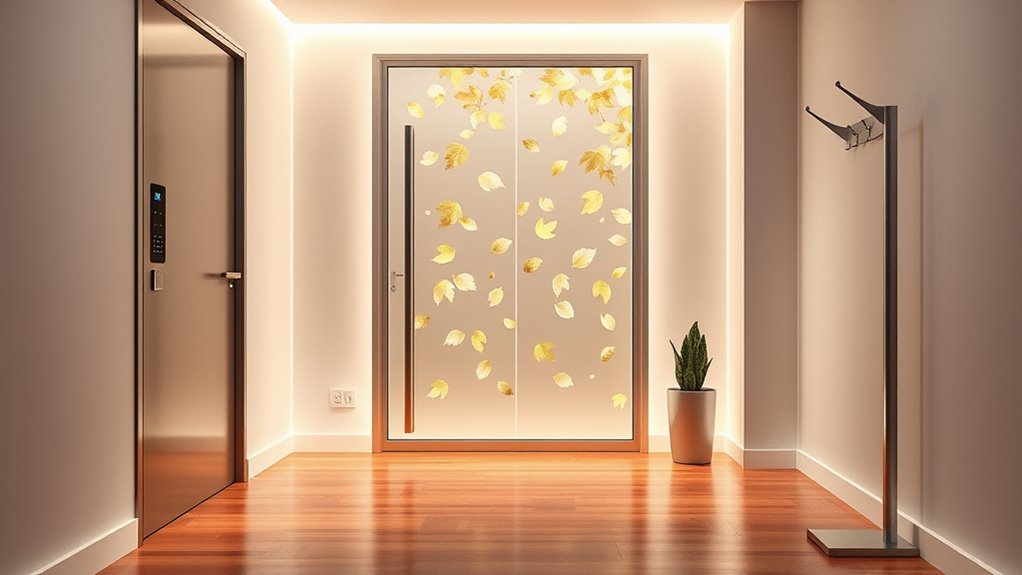

To build a smart entryway with motion scenes, you should start by carefully placing sensors outside your door and along pathways, ensuring they detect movement reliably without false triggers. Automate your lighting to activate at different intensities and customize scenes for various times of day or moods. Incorporate automation sequences that coordinate lights, door locks, and other devices for a smooth, high-tech homecoming. Keep exploring to learn how to perfect your setup and create an inviting, secure entrance.
Key Takeaways
- Strategically position motion sensors outside the door and along pathways to ensure reliable detection and minimize false triggers.
- Customize lighting scenes to create different moods, such as warm glow for evenings or bright lights for mornings.
- Automate lights to activate at varying intensities based on time or activity, enhancing energy efficiency and comfort.
- Integrate sensor triggers with automation sequences like unlocking doors and activating pathway lights for a seamless entry.
- Proper sensor placement and scene customization create a responsive, high-tech entryway that enhances safety, aesthetics, and user experience.
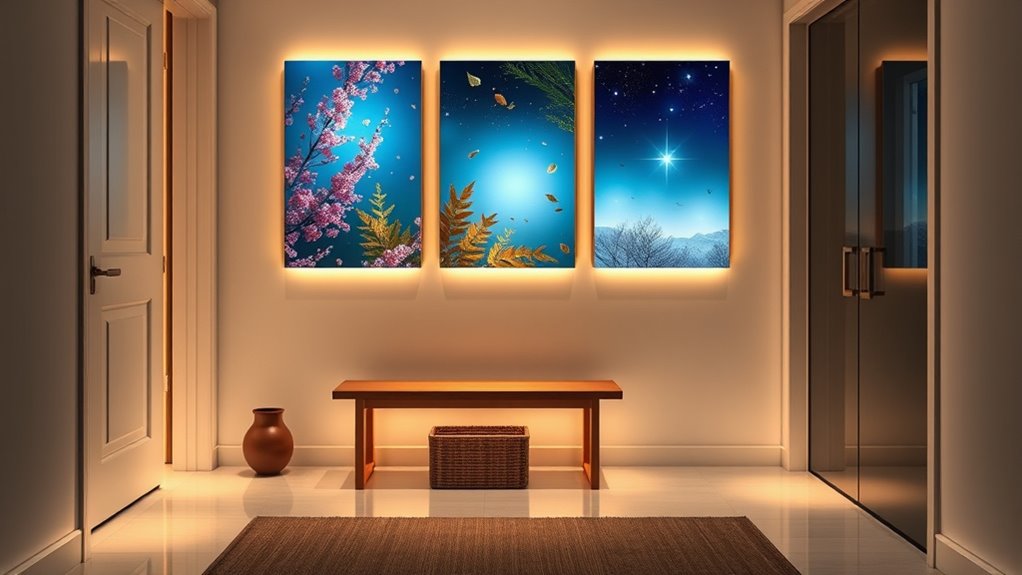
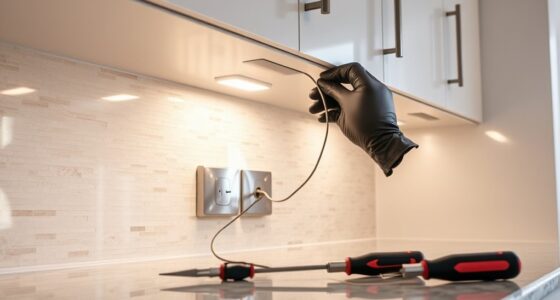
Creating a smart entryway with motion scenes transforms how you experience your home’s entrance. When you step toward your door, the environment responds seamlessly, making your arrival more welcoming and convenient. To achieve this, sensor placement is vital. You want motion sensors positioned strategically—just outside your door, along the pathway, and near any key areas you want illuminated. Proper sensor placement ensures that your smart system detects your presence reliably without false triggers. For example, installing sensors at a slight height and angle can prevent pets or passing cars from activating the scene, focusing only on your approach.
Strategic sensor placement ensures reliable detection and a seamless, welcoming entry experience.
Once sensors are in place, lighting automation takes center stage. When motion sensors detect your movement, your smart lighting system kicks in, illuminating the entryway exactly when you need it. You can customize these lighting scenes to suit different moods or times of day, such as a warm, inviting glow during evenings or bright, clear light for early mornings. The beauty of lighting automation lies in its ability to adapt to your habits; you can program lights to turn on gradually as you approach, creating a welcoming ambiance that feels effortless. This not only enhances safety by eliminating dark spots but also adds a touch of elegance to your home’s entrance.
With the right sensor placement, you also gain control over how your lighting reacts to various situations. For instance, you might set your system so that lights turn on at a lower intensity during late-night visits, conserving energy while still providing adequate illumination. During the daytime, sensors might be deactivated or set to minimal sensitivity, preventing unnecessary activations. The flexibility in configuring these parameters allows you to optimize both comfort and efficiency, making your entryway smarter and more responsive.
Furthermore, integrating sensors with your lighting automation can lead to more sophisticated scenes. Imagine arriving home when it’s dark outside, and the sensors detect your presence, triggering a sequence that opens your smart door lock, turns on pathway lights, and activates porch lanterns—all synchronized through your automation system. This creates a smooth, cinematic entrance that feels high-tech yet intuitive.
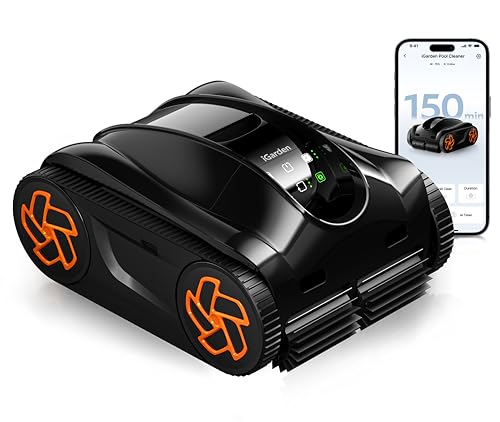
iGarden Robotic Pool Cleaner K Series, Cordless Pool Vacuum Robot for Inground & Above Ground Pools, Smart Navigation, Touchscreen, Self-Parking, Cleans Floor, Wall & Waterline, 150 Min
Robust Cleaning Capability: Engineered with a turbine-grade impeller, an optimized flow system, and 3 brushless motors, the cordless...
As an affiliate, we earn on qualifying purchases.
Frequently Asked Questions
What Are the Costs Involved in Installing Motion Scene Entryways?
The costs for installing motion scene entryways vary based on your budget considerations and the complexity of the installation process. You can expect to spend from a few hundred dollars for basic setups to several thousand for advanced systems with custom features. Keep in mind that professional installation may add to the expense, but it guarantees proper setup. Budgeting carefully helps you choose the right system without overspending.
How Secure Are Smart Entryway Systems With Motion Scenes?
Smart entryway systems with motion scenes are generally secure, but you should be aware of privacy concerns and false alarms. They use encryption to protect your data, making unauthorized access difficult. However, false alarms can occur if sensors misinterpret movement, so proper calibration and notifications help. Overall, with careful setup, these systems provide enhanced security while balancing privacy and minimizing false alarms.
Can I Customize Motion Scenes for Different Times of Day?
Sure, you can customize motion scenes for different times of day—because who wouldn’t want their entryway to reflect their mood, right? With custom scene scheduling, you set personalized lighting and actions for morning, afternoon, or evening. It’s like giving your entryway a personality that changes with your schedule. So, yes, you can easily tailor your smart entryway to match your daily routine and make coming home even more inviting.
What Maintenance Is Required for Smart Entryway Motion Sensors?
You need to regularly check your smart entryway motion sensors for proper operation. Calibrate the sensors as needed to guarantee accurate detection, especially after any updates or if notifications become inconsistent. Keep an eye on the battery levels, replacing batteries promptly to avoid false triggers or missed motion detection. Regular maintenance keeps your sensors functioning at their best, providing reliable security and seamless automation for your entryway.
Are There Compatibility Issues With Existing Home Automation Systems?
Sure, compatibility challenges and integration limitations can sometimes turn your smart entryway dreams into a frustrating puzzle. You might find your motion sensors refuse to play nice with older systems or different brands, making integration a headache. But don’t worry—most modern devices now prioritize interoperability. Just double-check your existing home automation setup and pick sensors that boast compatibility, so your smart entryway seamlessly becomes the tech oasis you envisioned.

(2026 Upgrade) WYBOT C1 Cordless Robotic Pool Vacuum for Inground Pools, Above Ground Pool Cleaner 4-in-1 Wall & Waterline Cleaning Up to 1,614sq.ft, 150mins Smart Navigation, App Support
Powerful Suction with Dual Brushes: Built with an upgraded independent water pump motor delivering up to 3,038 GPH...
As an affiliate, we earn on qualifying purchases.
Conclusion
By creating a smart entryway with motion scenes, you’re not just enhancing your home’s convenience—you’re making life easier and more welcoming. With thoughtful automation, every arrival feels special, and security improves effortlessly. Remember, a house is made a home through the little touches that show you care. As the saying goes, “The best time to plant a tree was 20 years ago. The second best time is now.” Start your smart upgrade today and enjoy the benefits tomorrow.

(2026 Upgraded) WYBOT C2 Cordless Robotic Pool Cleaner, Dual Filtration, Wall Climbing & Waterline Cleaning, App Scheduling, Smart Navigation, Pool Vacuum for Inground/Above Ground Pools-2152 Sq.ft
Dual Filtration System Captures Fine Debris: Featuring dual-layer filtration (180μm + 10μm), the pool cleaner robot efficiently traps...
As an affiliate, we earn on qualifying purchases.

iGarden Robotic Pool Cleaner K Series, Cordless Pool Vacuum Robot for Inground & Above Ground Pools, Smart Navigation, Touchscreen, Self-Parking, Cleans Floor, Wall & Waterline, 220 Min
Robust Cleaning Capability: Engineered with a turbine-grade impeller, an optimized flow system, and 3 brushless motors, the cordless...
As an affiliate, we earn on qualifying purchases.