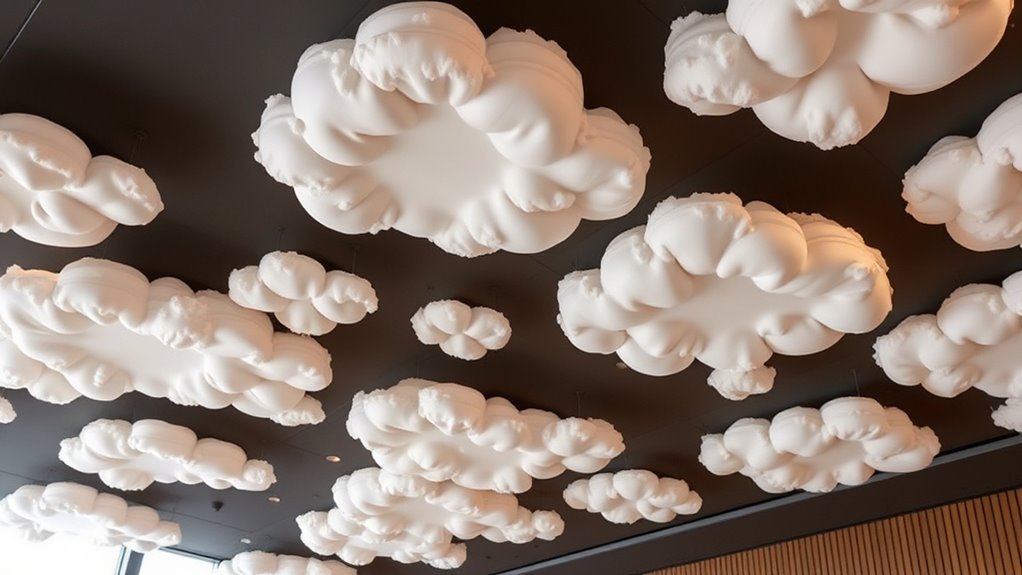
To improve acoustics with ceiling cloud panels, you should select the right material and plan proper installation. Choose panels made of fiberglass, mineral fiber, or fabric to absorb sound effectively and match your space’s aesthetic. Securely mount the panels with appropriate hardware, ensuring they’re level and stable. Proper placement and choice of durable materials will enhance both sound quality and visual appeal. Keep exploring to discover trusted tips for a professional and sound-friendly setup.
Key Takeaways
- Choose fiberglass or mineral fiber panels for high sound absorption and durability.
- Properly measure and mark panel placement to ensure symmetry and optimal acoustic performance.
- Use appropriate suspension hardware and work with a partner for secure, level installation.
- Consider panel size and spacing to maximize noise reduction and visual appeal.
- Select materials resistant to humidity and mold for long-lasting, effective acoustic treatment.

Ceiling cloud panels are a versatile solution for enhancing both the aesthetics and functionality of interior spaces. When you’re considering adding these panels, it’s crucial to understand some key installation tips to ensure a smooth setup and long-lasting results. First, assess your ceiling structure carefully. Whether you’re working with a dropped ceiling or a solid surface, you’ll want to confirm that the mounting points are secure and capable of supporting the weight of your panels. Use appropriate anchors or suspension systems designed for the material of your ceiling. Mark your layout precisely before installing to maintain symmetry and avoid misalignment, which can detract from the overall look and acoustic performance. When suspending the panels, consider the height and spacing carefully; these factors influence both sound absorption and visual appeal. It’s wise to work with a partner, especially for larger panels, to handle the weight and position them accurately. Using a level during installation helps keep everything aligned, preventing uneven gaps or sagging over time.
Material comparisons play a significant role in choosing the right ceiling cloud panels for your space. You’ll find options like fiberglass, mineral fiber, foam, and fabric-covered panels, each with distinct advantages. Fiberglass panels are highly effective at sound absorption and are great for spaces needing significant noise reduction, but they can be more fragile and require careful handling. Mineral fiber panels offer similar acoustic benefits but tend to be more durable and resistant to mold and moisture, making them suitable for humid environments. Foam panels are lightweight and easy to install, often providing decent sound control, but they may not have the same aesthetic appeal or durability as other materials. Fabric-covered panels allow for customization in color and texture, giving your space a polished look while also providing good acoustic performance. When comparing materials, consider factors like fire resistance, maintenance needs, and how well they blend with your interior design.
Ultimately, the choice of material affects not only how your ceiling cloud panels look but also how they perform acoustically and withstand the environment. Installation tips, such as measuring carefully and using the right suspension hardware, ensure your panels stay securely in place and function as intended. By understanding the differences in materials, you can select panels that match your aesthetic preferences and acoustic needs. This combination of proper installation and informed material choice helps you create a space that looks professional, sounds better, and feels more comfortable. Ceiling cloud panels are a smart investment in improving interior acoustics, and with the right approach, you’ll enjoy a more functional and visually appealing environment.
Frequently Asked Questions
How Do Ceiling Cloud Panels Impact Indoor Air Quality?
Ceiling cloud panels can positively impact your indoor air quality by promoting better air circulation, which helps prevent stagnant air and reduces dust buildup. They also aid in mold prevention by reducing moisture accumulation in the ceiling space, creating a healthier environment. Properly installed and maintained, these panels contribute to cleaner, fresher air, making your indoor space more comfortable and safe for everyone.
Are Ceiling Cloud Panels Suitable for High-Humidity Environments?
You’ll find that ceiling cloud panels are generally not ideal for high-humidity environments unless they’re specifically designed for it. Look for panels with humidity resistance and durable materials, like treated metal or special composites, to prevent warping, mold, or deterioration. Choosing panels with these features guarantees longevity and maintains their acoustic performance, even in challenging conditions. Always check product specifications to confirm they’re suitable for high-moisture spaces before installation.
What Maintenance Is Required for Ceiling Cloud Acoustic Panels?
Did you know proper maintenance can extend the life of your ceiling cloud panels by up to 30%? You should clean them every 6-12 months with a soft, damp cloth to remove dust and prevent buildup. Regular cleaning reduces the need for damage repair, which can be costly. Avoid harsh chemicals, and inspect panels periodically for any signs of damage, repairing promptly to keep your acoustic environment ideal.
Can Ceiling Cloud Panels Be Customized in Shape and Color?
Yes, ceiling cloud panels can be tailored in shape and color to match your interior design. You can choose from various custom shapes, such as circular, rectangular, or unique geometric designs, to fit your space perfectly. Color options are extensive, allowing you to select hues that complement your decor. This customization ensures your acoustic panels not only improve sound quality but also enhance the aesthetic appeal of your environment.
How Do Ceiling Cloud Panels Compare to Wall Acoustic Treatments?
You’ll find ceiling cloud panels outperform wall treatments like a superhero soaring through a crowded room. They offer unmatched installation versatility, allowing you to hang them in various configurations to suit your space. Plus, their sleek design integration elevates aesthetics without cluttering your environment. Compared to wall treatments, ceiling clouds efficiently manage sound from above, creating a more immersive acoustic experience and making your space feel like a concert hall rather than a noisy room.
Conclusion
Installing ceiling cloud panels is like giving your space a breath of fresh air, instantly improving sound quality and reducing noise distractions. They’re easy to set up and blend seamlessly with your decor, making your environment more comfortable and productive. Don’t wait to enhance your space—think of ceiling clouds as the secret ingredient to better acoustics. Once in place, you’ll wonder how you ever worked without them, transforming your room into a haven of clarity and calm.