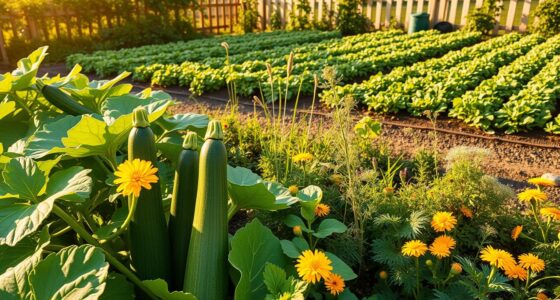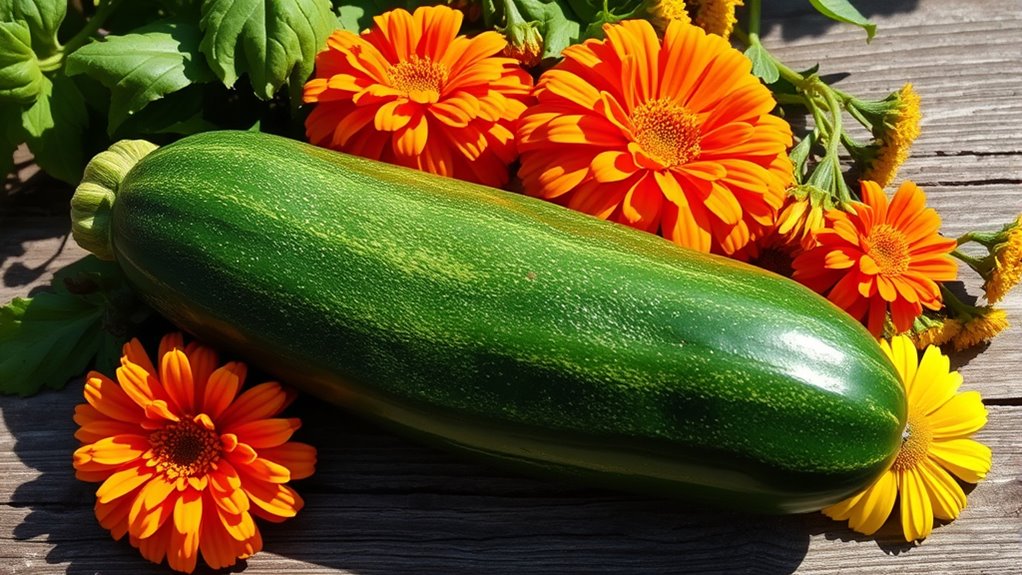

Planting zucchini alongside nasturtiums and calendula adds vibrant color and edible beauty to your garden. Nasturtiums repel pests while offering spicy petals for salads, and calendula provides sunny blossoms that enhance dishes. These flowers support plant health, attract beneficial insects, and make your garden more attractive. Plus, both blooms are easy to grow and harvest. Curiosity about optimizing your garden’s looks and flavors will grow as you explore more about these colorful companions.
Key Takeaways
- Plant nasturtiums and calendula alongside zucchini for vibrant visual appeal and edible, flavorful garnishes.
- Nasturtiums deter pests like aphids, protecting zucchini plants naturally.
- Calendula adds nutritional and decorative value, enhancing zucchini dishes and garden aesthetics.
- Both flowers are easy to grow and bloom throughout the season, supporting continuous harvests.
- Incorporating these blooms creates a lively, functional garden environment with pest control and culinary benefits.
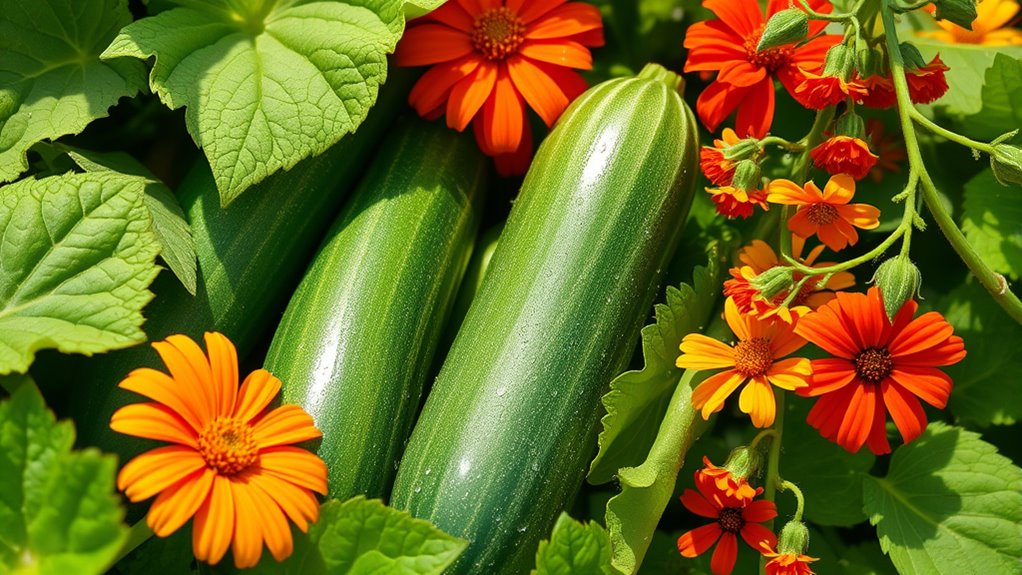
If you’re looking to elevate your garden’s flavor and visual appeal, try combining zucchini with vibrant nasturtiums and cheerful calendula. These flower pairings not only add stunning color to your vegetable patch but also bring a unique flavor profile to your dishes. Nasturtiums, with their bright orange, red, and yellow blooms, are a fantastic choice as edible garnish ideas. Their peppery taste complements zucchini’s mild flavor, making them a perfect edible garnish idea that elevates salads, grilled vegetables, and even pasta dishes. Calendula, often called “pot marigold,” offers cheerful yellow and orange blossoms that double as edible accents, adding both visual charm and subtle flavor to your meals.
Plantting these flowers alongside your zucchini plants creates a natural, eye-catching display that’s as functional as it is beautiful. As these flowers bloom, you can harvest them for culinary use, making your garden work double duty. Nasturtiums and calendula are known for their ease of growth and resilience, so they’re ideal for gardeners looking to boost their garden’s aesthetic and culinary versatility. Plus, their vibrant colors contrast beautifully with the lush green of zucchini leaves, giving your garden a lively, inviting look.
Planting these flowers with zucchini boosts beauty and culinary versatility effortlessly.
Incorporating these flowers into your vegetable patch also offers practical benefits. Nasturtiums act as natural pest repellents, deterring aphids and whiteflies, which helps protect your zucchini plants. Calendula, meanwhile, has anti-inflammatory properties and can be used in homemade skincare products, adding a gentle, functional element to your gardening efforts. When it comes to flower pairings, mixing these blooms with zucchini isn’t just visually appealing — it’s a strategic move to promote healthier plants and more diverse harvests.
When it’s time to harvest, don’t forget that both nasturtiums and calendula can be used directly in your cooking. Sprinkle nasturtium petals over salads for a spicy kick, or add calendula petals to soups and stews for a subtle floral note. These edible garnish ideas help you make the most of your garden’s bounty, turning simple vegetables into vibrant, flavorful dishes. Using flowers as garnishes isn’t just about aesthetics; it’s also about enhancing taste and adding a touch of elegance to everyday meals.
Top picks for "zucchini nasturtium calendula"
Open Amazon search results for this keyword.
As an affiliate, we earn on qualifying purchases.
Frequently Asked Questions
Can I Substitute Nasturtiums With Other Edible Flowers?
Yes, you can substitute nasturtiums with other edible flowers. Edible flower alternatives include pansies, violets, or marigolds, which add color and flavor to your dish. For nasturtium substitution options, consider these flowers for their peppery or sweet notes. Just make certain the flowers are organic, pesticide-free, and safe for consumption. Always verify their edibility before adding them to your recipe to enjoy a vibrant, flavorful dish.
How Long Does It Take for Zucchini to Mature?
Your zucchini will grow faster than a rocket, typically taking about 45 to 55 days from planting to harvest. During the growth stages, you’ll notice it starts as seedlings, then develops leaves, and finally produces flowers before maturing fruit. Keep an eye on the harvesting timeline; zucchinis are best picked when they’re small and tender, usually around 6 to 8 inches long. Patience pays off for delicious, fresh zucchinis!
Are There Any Health Benefits From Calendula in Cooking?
Yes, calendula offers health benefits through its medicinal properties and culinary uses. When you include calendula in cooking, you can enjoy its anti-inflammatory and antioxidant effects. Its edible petals add a subtle, peppery flavor to salads, soups, or teas, making your dishes both flavorful and nutritious. Incorporating calendula not only enhances your meals but also supports your overall health with its natural medicinal properties.
What Are the Best Growing Conditions for Nasturtiums?
Imagine vibrant nasturtiums climbing enthusiastically toward the sun’s warm embrace. You should plant them in well-draining soil with a pH of 6.1 to 7.8, ensuring they thrive. They love full sunlight, so place them where they’ll receive at least six hours of direct light daily. Keep the soil moist but not soggy, and your nasturtiums will flourish, bursting with colorful blooms and lively energy.
Can This Dish Be Served Cold or Only Warm?
You can serve this dish both cold and warm, depending on your serving options and temperature preferences. If you prefer a invigorating, chilled salad, let it cool in the fridge before serving. For a warm, comforting dish, reheat gently. Serving it cold enhances the fresh flavors of nasturtiums and calendula, while warming brings out the zucchini’s tenderness. Choose the temperature that best suits your mood and occasion.
Conclusion
As you plate this dish, the vibrant nasturtiums and calendula bloom like tiny suns against the tender zucchini. Their bright petals contrast with the humble green, turning simplicity into a celebration of color and flavor. You’re not just serving a meal; you’re creating a garden on a plate. Let these bold blooms remind you that beauty and nourishment can coexist, transforming everyday ingredients into something truly extraordinary.