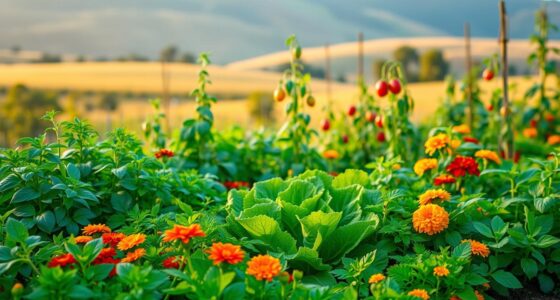
Planting tomatoes and basil together boosts flavor and space efficiency in your garden. Basil’s scent helps mask tomato aromas, reducing pests naturally and promoting healthier plants. Both thrive in similar conditions and sharing a space allows you to maximize limited garden areas, especially in containers or small beds. Plus, harvesting basil regularly keeps your plants happy and productive. Keep exploring to discover more tips on how this pairing can transform your gardening experience.
Key Takeaways
- Companion planting of tomatoes and basil enhances flavor and promotes healthier, more resilient plants.
- Basil’s scent masks tomato aroma, reducing pest attraction and improving overall plant health.
- Growing both in the same space maximizes garden efficiency, ideal for small yards or container gardens.
- Both plants prefer full sun and well-drained soil, simplifying care and maintenance routines.
- Regular basil harvesting encourages continuous growth, providing fresh herbs and better tomato yields.

Have you ever noticed how tomatoes and basil complement each other in both flavor and aroma? This pairing isn’t just about taste; it’s a smart gardening strategy that maximizes space and promotes healthier plants. When you plant basil alongside tomatoes, you’re engaging in companion planting—a technique that benefits both plants by enhancing growth and flavor. Basil’s scent can help mask the smell of tomatoes, which pests often find attractive, making your garden less appealing to common tomato pests like aphids and whiteflies. This natural pest control method reduces your reliance on chemical pesticides, creating a healthier environment for your plants and yourself.
Companion planting with basil and tomatoes isn’t just about pest control; it’s also about space efficiency. Instead of dedicating separate areas for each, you can grow them together in the same container or bed, saving valuable garden real estate. Basil’s compact growth habit means it won’t overshadow your tomatoes, and the two plants can thrive side by side. This pairing allows you to maximize your gardening space, especially if you have a small yard or limited balcony. You can plant basil around the base of tomato plants or even intersperse the two throughout your garden bed, maintaining a lush, productive garden without needing extra space.
Grow basil and tomatoes together to save space and create a thriving, productive garden.
Beyond space-saving benefits, basil also helps improve the overall health of your tomato plants. Its aromatic oils can suppress soil-borne diseases and deter certain pests, creating a more resilient growing environment. As basil grows, it releases compounds into the soil that can enhance nutrient uptake for your tomatoes, potentially leading to better fruit production and flavor. Additionally, understanding the long history of companion planting provides insight into traditional agricultural practices that optimize plant health and productivity. Plus, harvesting fresh basil leaves regularly encourages continuous growth, providing you with aromatic herbs that are perfect for cooking.
Another advantage of pairing these plants is the ease of care. Both basil and tomatoes prefer similar growing conditions—full sun, well-drained soil, and consistent watering—making them easy to manage together. When you plant them side by side, you don’t have to worry about differing needs, streamlining your gardening routine. This synergy makes it simpler to maintain healthy plants and ensures you get a plentiful harvest of ripe tomatoes and fragrant basil leaves.
In essence, growing tomatoes and basil together isn’t just about convenience; it’s about creating a mutually beneficial environment. Their natural compatibility enhances flavor, reduces pests, and makes efficient use of your garden space. Whether you’re a seasoned gardener or just starting out, this pairing offers a practical, flavorful, and space-smart approach to home gardening.
Frequently Asked Questions
What Are the Best Companion Plants for Tomatoes and Basil?
You should plant marigolds, carrots, and parsley alongside your tomatoes and basil for effective companion planting. These plants naturally repel pests and improve growth, making your garden more productive. When planning your garden, consider how these companions can maximize space and health. Incorporate them into your garden layout to create a thriving, pest-resistant environment that benefits all your plants, ensuring a flavorful and bountiful harvest.
How Do I Prevent Pests From Damaging Both Crops?
To prevent pests from damaging your crops, start by planting pest-resistant varieties. Use natural pest deterrents like neem oil, garlic spray, or companion plants such as marigolds to repel harmful insects. Regularly inspect your plants for early signs of pests and remove affected leaves. Maintaining good garden hygiene and encouraging beneficial insects like ladybugs can also help keep pests in check, ensuring healthy tomatoes and basil.
Can Tomatoes and Basil Be Grown Indoors Successfully?
Yes, you can grow tomatoes and basil indoors successfully. Make sure to provide plenty of indoor lighting, like grow lights or near a sunny window, to support healthy growth. Choose the right plant containers with good drainage to prevent overwatering. Regular watering and proper airflow keep pests at bay. With attention to light and container selection, you’ll enjoy fresh tomatoes and basil right in your home.
What Are the Ideal Watering Schedules for These Plants?
You should water your tomatoes and basil when the soil moisture feels dry about an inch below the surface. Typically, this means watering every 2-3 days, but it depends on your indoor environment. Keep an eye on soil moisture and avoid overwatering, which can cause root rot. Adjust your watering frequency based on humidity, temperature, and plant size, ensuring the soil stays consistently moist but not soggy.
How Do I Harvest and Store Tomatoes and Basil Properly?
They say “a stitch in time saves nine,” so timely harvests matter. For tomatoes, pick when they’re fully colored and slightly soft, then store at room temperature or in the fridge for longer freshness. Basil should be harvested in the morning, snipping just above a leaf set, then stored in a glass of water at room temperature, covered loosely with plastic. Proper timing and storage keep your flavors vibrant.
Conclusion
Growing tomatoes and basil together not only boosts flavor but also maximizes your space efficiently. Many gardeners believe that basil repels pests that target tomatoes, making them a natural partnership. While some argue this is just a myth, numerous studies show companion planting can improve plant health and yield. So, trust in their synergy—you’ll enjoy fresher, tastier produce and make the most of your garden space, proving that some traditional ideas are worth trying.