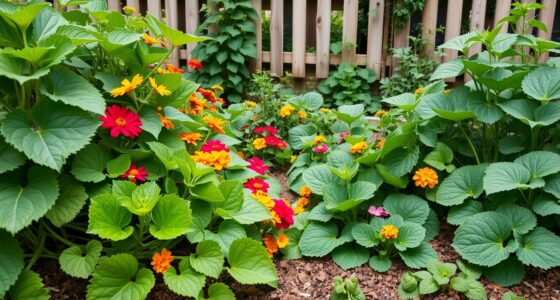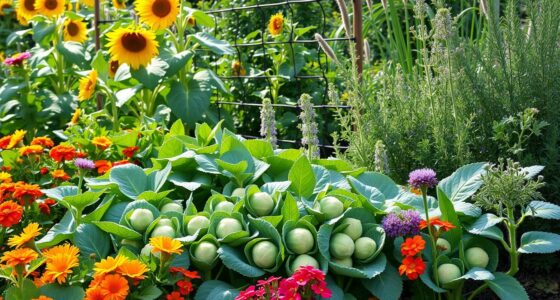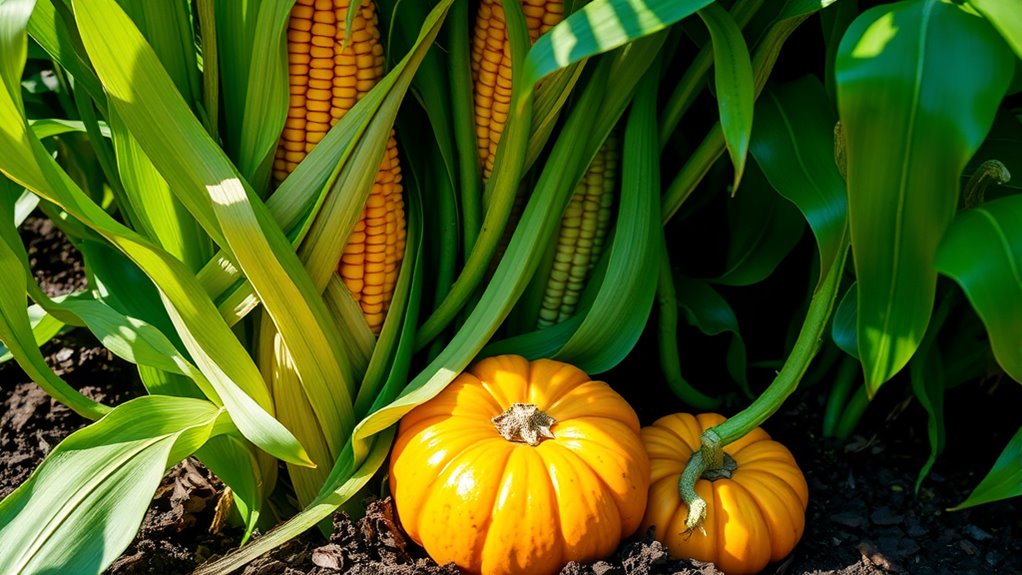

The Three Sisters—corn, beans, and squash—are a traditional Indigenous planting system that’s perfect for sustainable gardening. You plant beans to climb the corn stalks, which act as natural trellises, while squash spreads along the ground to block weeds and keep moisture in. This clever combination improves soil health and reduces the need for extra inputs. If you’re curious about how this ancient method supports resilient, eco-friendly farming, there’s more to discover below.
Key Takeaways
- The Three Sisters are a traditional Indigenous farming system combining corn, beans, and squash for mutual benefit.
- Corn provides a trellis for beans, which fix nitrogen into the soil, enhancing fertility.
- Squash spreads on the ground, suppressing weeds and retaining soil moisture.
- This companion planting improves land use, reduces external inputs, and supports sustainable agriculture.
- The system reflects Indigenous ecological knowledge and cultural heritage passed down through generations.
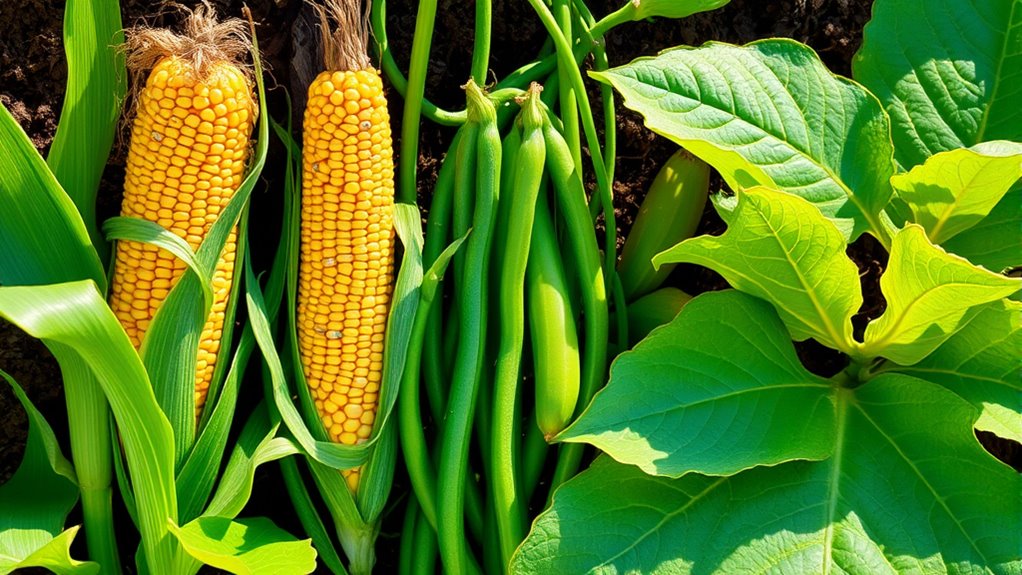
Have you ever wondered about the significance of the Three Sisters? These three crops—corn, beans, and squash—have been cultivated together for generations by Indigenous peoples, forming the backbone of their agriculture and culture. Their relationship isn’t just about growing food; it embodies a sophisticated form of companion planting that maximizes land use and sustains soil health. When you look at how they grow side by side, it’s clear that this method reflects a deep understanding of nature and ecology, passed down through centuries of indigenous agriculture practices.
Corn acts as a natural trellis for the beans, allowing the climbing plants to grow upward without needing additional support. As the beans ascend the corn stalks, they fix nitrogen into the soil, enriching it for the other crops. This symbiotic relationship is a key aspect of companion planting—each plant benefits from the presence of the others, creating a mutually supportive ecosystem. The squash, with its large leaves, spreads across the ground, providing a natural mulch that reduces weeds and retains moisture. Its prickly vines also deter pests, offering a form of natural pest control. Together, these crops create a sustainable, low-maintenance system that maximizes yields on limited land.
This trio of crops exemplifies indigenous agriculture’s ingenuity. It’s not just about planting food; it’s about creating a balanced system that sustains itself. The indigenous farmers understood how each plant contributed to the health of the whole, reducing the need for external inputs like fertilizers and pesticides. Their knowledge of crop relationships and soil health allowed them to cultivate the land effectively over generations. Today, many sustainable farming practices draw inspiration from this ancient wisdom, recognizing that diverse plantings often lead to healthier soils and more resilient harvests. Additionally, understanding specialized equipment like traditional tools and planting techniques can further enhance sustainable practices.

Fruivity 10 Heirloom Seeds Variety Pack – 3200+ Non-GMO Seeds for Planting Vegetables, Indoor Outdoor Garden Seed Starter Kit, Easter Unique Gift for Mother, Women, Mom, Friend, Her
🌱 10 VARIETIES & 3,200+ SEEDS – NON-GMO & HEIRLOOM: Get started with a bounty of over 3200…
As an affiliate, we earn on qualifying purchases.
As an affiliate, we earn on qualifying purchases.
Frequently Asked Questions
How Do the Three Sisters Affect Soil Health Over Time?
You’ll notice that planting these three crops together benefits soil health through soil enrichment and crop rotation. Beans fix nitrogen in the soil, boosting fertility, while corn and squash add organic matter that improves structure. Rotating them prevents soil depletion and reduces pests. Over time, this sustainable planting method maintains healthy soil, ensuring your garden stays productive without needing extra fertilizers.
Can the Three Sisters Be Grown Successfully Outside North America?
Yes, you can grow the Three Sisters outside North America by embracing indigenous farming methods and promoting crop diversity. You’ll need to adapt planting times, select suitable local varieties, and consider climate conditions. By mimicking traditional practices, you foster healthy soil and resilient plants. This approach helps you honor indigenous knowledge while diversifying your garden, creating a sustainable and productive system that thrives in various environments worldwide.
What Are the Traditional Harvesting Techniques for These Crops?
Traditional harvesting involves careful timing and Indigenous practices. You should pick corn when kernels are plump and milky, often by hand, and gently twist the ears off the stalks. For beans, harvest when pods are fully mature and dry, usually by snapping or cutting. Squash is best harvested when skins are hard and fruits are fully colored. Use traditional tools like knives or sickles, and handle crops gently to preserve quality.
How Do Pests Specifically Target Each of the Three Sisters?
You watch pests creep through your garden, each targeting a specific sister. Corn borers tunnel into the stalks, causing pest infestation and crop damage that weakens its tall stand. Beans fall prey to aphids, which sap their vigor and spread disease. Squash bugs latch onto leaves, causing wilting and decay. Each pest’s attack disrupts the balance, threatening your harvest and demanding vigilant care to keep your three sisters thriving.
Are There Modern Agricultural Methods That Mimic the Three Sisters’ System?
Yes, modern farmers mimic the three sisters’ system through intercropping benefits, planting crops like corn, beans, and squash together to boost yield and soil health. This sustainable farming approach reduces pests, conserves resources, and promotes biodiversity. By combining these crops, you can create a natural, mutually beneficial system that improves productivity and ecological balance, just like the traditional method, making your farm more resilient and environmentally friendly.

Native American Gardening: Buffalobird-Woman's Guide to Traditional Methods
As an affiliate, we earn on qualifying purchases.
As an affiliate, we earn on qualifying purchases.
Conclusion
As you walk through a garden of the Three Sisters, remember their timeless dance—corn reaching for the sky, beans climbing high, and squash hugging the ground. Together, they create a symphony of balance and abundance, a story written in green and gold. Just like these plants, your life thrives when you nurture harmony and cooperation. Embrace their lesson: unity isn’t just a goal; it’s the seed from which growth springs eternal.

Farmer’s Secret Soil Revitalizer (32oz) – Organic (OMRI Listed) Dirt Health Booster – Liquid Compost Soil Amendment – Activated Humic Acid – Great for Fall/Spring Application
Feed the soil not the plants – stimulate microbial activity in your soil and boost probability of success…
As an affiliate, we earn on qualifying purchases.
As an affiliate, we earn on qualifying purchases.

48×48 Cucumber Trellis for Raised Bed – U Shape Vegetable Garden Trellis for Climbing Plants Outdoor – Support for Cucumbers, Pea, Zucchini, Squash,Tomato, Green Bean, Vine, Watermelon, Melon, Pumpkin
Vegetable Trellis that Assembles in Minutes, No Tools or Frustration – Say goodbye to complicated setups. Our U-shape…
As an affiliate, we earn on qualifying purchases.
As an affiliate, we earn on qualifying purchases.