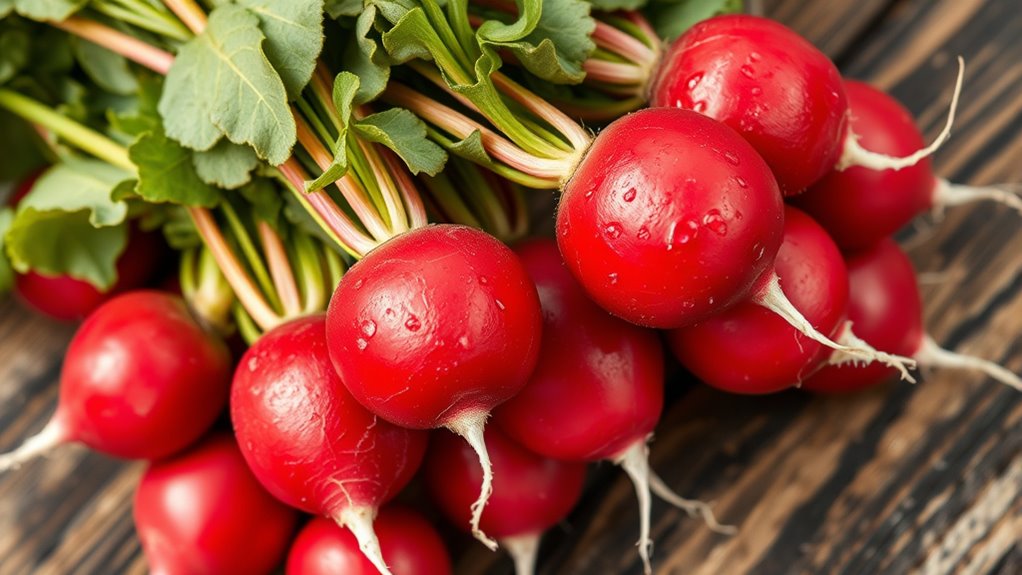

Radishes make great quick intercrops because they grow fast, maturing in just 3-4 weeks, allowing you to fill gaps between longer-season plants easily. To get the best results, prepare your soil well and sow seeds directly, spacing them properly. Keep the soil consistently moist and protect your crops from pests using barriers or natural methods. Want more tips on how to maximize your garden’s productivity with radishes? Keep exploring!
Key Takeaways
- Radishes mature quickly in 3-4 weeks, making them ideal for filling gaps between longer-season crops.
- They require minimal soil preparation and can be directly sown to quickly boost garden productivity.
- Radishes thrive with consistent watering and proper spacing, ensuring rapid and uniform growth.
- Using radishes as intercrops helps optimize space and light, maximizing overall garden yields.
- They serve as an effective, fast-growing crop to improve garden efficiency and early harvest returns.
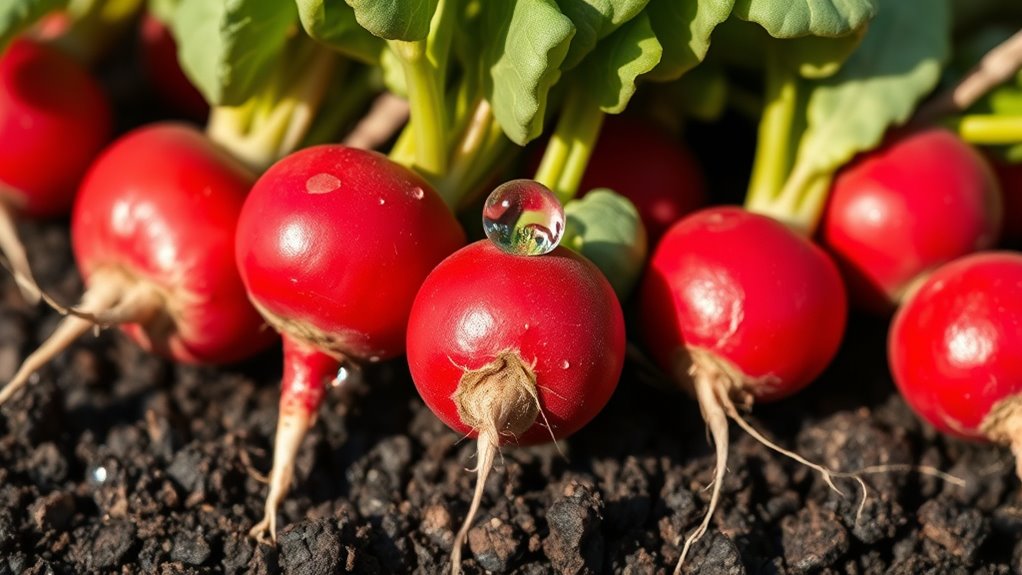
Have you ever considered using radishes as quick intercrops to maximize your garden’s productivity? If not, now’s the perfect time to add this versatile vegetable to your planting plan. Radishes are fast-growing, typically maturing within three to four weeks, making them ideal for filling gaps between longer-season crops. To set yourself up for success, focus on proper soil preparation. Loosen the soil to guarantee good drainage and aeration, and mix in organic matter like compost or aged manure to provide essential nutrients. Radishes thrive in loose, well-drained soil with a neutral pH, so taking the time to prepare your beds will promote healthy growth and uniform roots. Additionally, soil preparation helps prevent issues like root deformities and poor germination, guaranteeing you get the most out of your intercrop.
Prepare your beds with loose, well-drained soil and organic matter for healthy, uniform radish growth.
Once your soil is ready, planting radishes is straightforward. Sow seeds directly into the prepared bed, spacing them about one inch apart and a quarter inch deep. Cover lightly with soil and water gently to keep the soil consistently moist. Since radishes grow quickly, you’ll want to monitor moisture levels carefully, especially during hot, dry spells. Regular watering encourages uniform growth and prevents the roots from becoming woody or pithy.
In addition to soil preparation, pest management is a vital aspect of growing radishes successfully. Common pests like flea beetles, root maggots, and aphids can quickly damage your crop if left unchecked. To minimize pest problems, consider using row covers or physical barriers that prevent insects from reaching the plants. Keep your garden tidy by removing plant debris and weeds, which can harbor pests. Introducing helpful insects like ladybugs can also naturally reduce pest populations. If you notice pests, act promptly with organic treatments such as neem oil or insecticidal soap, avoiding harsh chemicals that could harm beneficial insects or soil health. Good pest management not only protects your radishes but also helps maintain overall garden balance, making it easier to grow healthy, pest-free crops. Also, understanding the soil conditions that favor radish growth can help you optimize your planting success.
Using radishes as quick intercrops offers a smart way to boost your garden’s productivity. By investing time in thorough soil preparation, you create an ideal environment for rapid growth. Pair this with vigilant pest management, and you’ll minimize problems that could hinder your harvest. Radishes are forgiving for beginners and efficient for experienced gardeners, giving you a quick return on your effort. So next time you plan your planting schedule, consider this fast-growing crop to fill in empty spaces, manage pests naturally, and get more from your garden in less time.
Frequently Asked Questions
Can Radishes Be Grown Successfully in Containers?
Yes, you can grow radishes successfully in containers. Container gardening provides a controlled environment that encourages healthy root development. Make sure your container is at least 4 inches deep and has good drainage. Use well-draining soil and space the seeds appropriately. Keep the soil moist and provide plenty of sunlight. Radishes grow quickly, so you’ll enjoy harvesting fresh, crunchy roots in just a few weeks.
What Pests Commonly Affect Radishes as Intercrops?
Ironically, your radishes might invite unwanted guests like flea beetles, aphids, or root maggots. To keep them at bay, practice pest management strategies such as introducing beneficial insects and using organic sprays. Remember, crop rotation is your secret weapon—changing planting spots each season helps prevent pest buildup. Stay vigilant, and your radishes will thrive, free from pesky invaders that love to crash the party.
How Do Soil Conditions Impact Radish Growth?
Soil conditions greatly impact radish growth. You want a soil with a pH between 6.0 and 7.0, which helps nutrients become accessible to the plants. Adequate moisture retention is also essential; if the soil dries out, radishes may become woody or crack. Ensuring well-drained, loamy soil with proper pH and moisture levels encourages healthy, fast-growing radishes, making your intercrops more successful.
Are There Companion Plants That Enhance Radish Growth?
Yes, you can enhance radish growth through companion planting. Plant carrots nearby to improve soil aeration, and beans to add nitrogen, which benefits radishes. Avoid planting them near cabbages or other brassicas, as they can hinder growth. These companion plants promote growth enhancement by balancing pests, improving soil health, and providing mutual benefits, helping your radishes grow stronger and tastier.
What Is the Ideal Harvest Time for Intercrop Radishes?
You should harvest intercrop radishes within their ideal harvest window, typically 3 to 4 weeks after planting, depending on the variety. Keep an eye on their maturity period; once the roots reach about 1 inch in diameter and have a firm texture, it’s time to harvest. Waiting too long can cause them to become woody or pithy, so monitor closely to guarantee fresh, crisp radishes.
Conclusion
You’ll be amazed to learn that radishes can mature in just about 25 to 30 days, making them one of the fastest intercrops around. By planting radishes between slower-growing crops, you can boost your garden’s productivity without extra space. Their quick turnaround means you’ll see results in less than a month, giving you more time to enjoy your harvest. So next time, consider radishes to maximize your garden’s potential and keep your planting schedule on track.