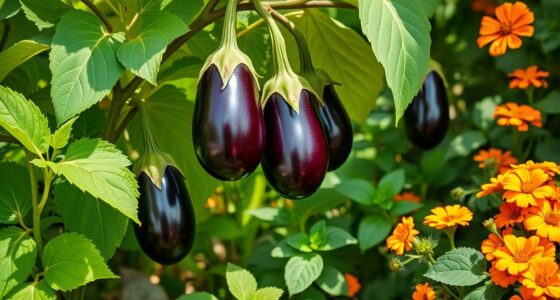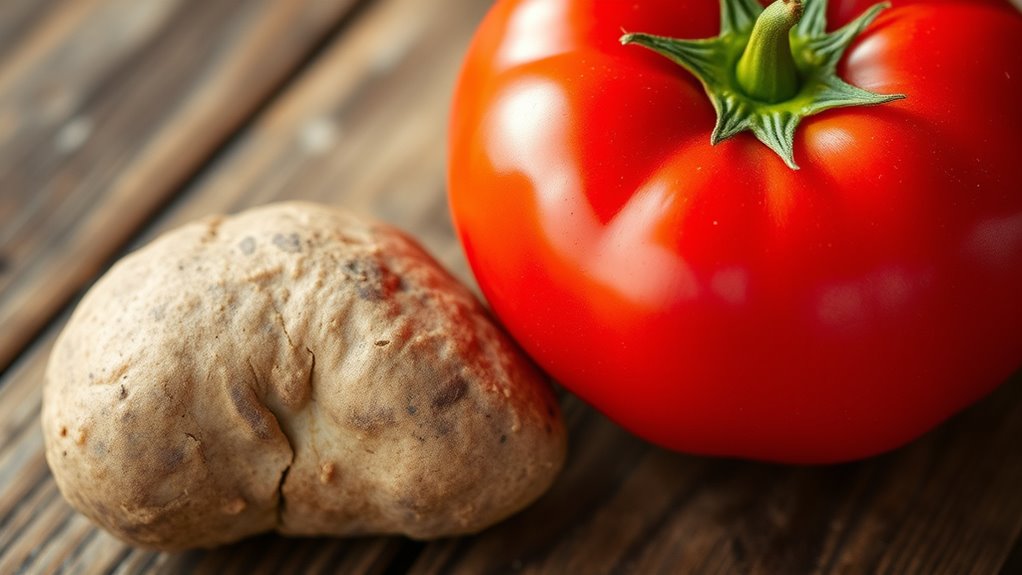

Keeping potatoes away from tomatoes is important because sharing space can lead to nutrient competition, weakening your plants and reducing yields. Additionally, both crops are susceptible to similar diseases, like late blight, which can spread easily when they’re too close. Proper separation helps prevent disease transmission and allows you to tailor soil care for each crop’s needs. If you want to learn more about why separation boosts plant health and harvests, stick around.
Key Takeaways
- Sharing space causes nutrient competition, weakening both plants and reducing crop yields.
- Potatoes and tomatoes are susceptible to common diseases like late blight, which can easily spread between them.
- Close proximity increases the risk of disease transmission, risking crop loss and spoilage.
- Separate planting allows for tailored soil amendments suited to each crop’s specific nutrient needs.
- Spatial separation helps prevent cross-contamination during storage and handling, maintaining healthier plants.
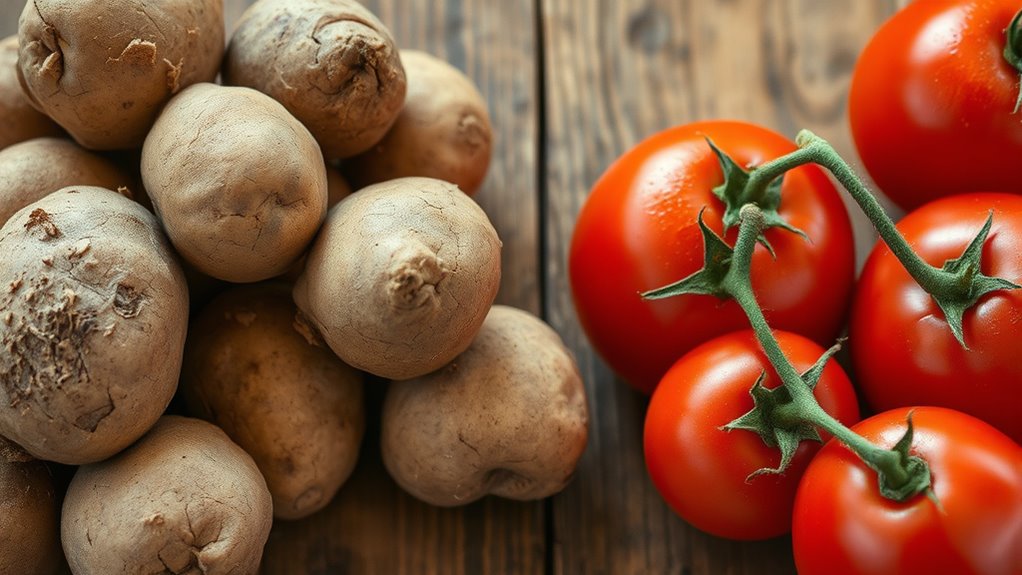
Have you ever wondered what makes potatoes and tomatoes such versatile and popular ingredients worldwide? Their widespread use isn’t just because they taste great; it’s also because they’re easy to grow, harvest, and incorporate into countless dishes. However, if you’re cultivating or handling these crops, you should be aware of a critical rule: keep potatoes away from tomatoes. This isn’t just about common gardening advice; it’s rooted in science and plant health. Mixing these two plants can lead to unintended consequences, especially concerning nutrient interactions and plant disease transmission.
Keeping potatoes and tomatoes apart protects plant health and maximizes crop yields.
When you plant potatoes and tomatoes close together or store them in the same area, you risk disrupting their nutrient interactions. Although both belong to the nightshade family, they have different nutrient needs. Potatoes thrive in slightly different soil conditions than tomatoes, and sharing space can cause nutrient competition. This competition can weaken the plants, stunt growth, or reduce crop yields. For example, potatoes need more potassium for tuber development, while tomatoes require higher levels of phosphorus and calcium for fruit production. If these nutrients aren’t supplied in balanced amounts, the plants may suffer deficiencies or become less nutritious. Keeping them separate allows you to tailor the soil amendments and fertilization to each crop’s specific needs, ensuring healthier plants and better harvests.
Another significant concern is plant disease transmission. Potatoes and tomatoes are susceptible to similar pathogens, especially fungi and viruses. When these plants are grown too close or stored together, diseases can easily jump from one to the other. For instance, late blight, a notorious fungal disease, affects both crops and can devastate entire fields if not managed properly. If a potato becomes infected, the spores can spread to nearby tomato plants, accelerating disease outbreaks. This risk is even higher during storage; keeping these crops together can facilitate the transfer of bacteria, viruses, or mold, leading to spoilage and crop loss. Preventing disease transmission requires proper crop rotation, spatial separation, and careful handling. By keeping potatoes and tomatoes apart, you reduce the chances of cross-contamination, helping maintain healthy plants and prolonging storage life.
Furthermore, understanding the nutrient needs of each crop can help optimize growth conditions and prevent deficiencies that weaken plants.
In essence, the reason you should keep potatoes away from tomatoes isn’t just about tradition or aesthetics; it’s about safeguarding your plants’ health and productivity. Proper spacing prevents nutrient imbalances that can weaken your crops and minimizes the risk of disease transmission that can wipe out your harvest. Understanding these scientific principles ensures you can grow both crops successfully, enjoying bountiful, healthy yields. So, when planning your garden or storage, remember that separating potatoes from tomatoes isn’t just good advice — it’s essential for maintaining their vitality and ensuring your efforts pay off.

Halatool 6 Pack Tomato Cages for Garden Plant Support, Adjustable Garden Stakes for Potted Plants, Tomato Trellis for Climbing Vegetables Flowers Fruits Cucumber Eggplant Pepper Cherry, 48 Inch
📦 𝐂𝐨𝐦𝐩𝐥𝐞𝐭𝐞 𝐏𝐚𝐜𝐤𝐚𝐠𝐞: tomato cage sets: stakes + connector + tubes + twist ties. Perfect to support your…
As an affiliate, we earn on qualifying purchases.
As an affiliate, we earn on qualifying purchases.
Frequently Asked Questions
Can Potatoes and Tomatoes Be Stored Together Safely?
You shouldn’t store potatoes and tomatoes together because soil contamination can transfer harmful bacteria between them. Additionally, storing them close attracts pests that target both, risking spoilage and health issues. Keep them separate in cool, dark places to prevent pest attraction and contamination. This way, you protect your food’s safety, extend their shelf life, and avoid potential cross-contamination from soil-borne pathogens.
Do All Potato and Tomato Varieties Pose the Same Risk?
Not all potato and tomato varieties pose the same risk, but plant compatibility matters. Some varieties contain higher levels of solanine, increasing cross contamination risk if stored together. You should be cautious, especially with green or sprouted potatoes, as they’re more toxic. To minimize health hazards, keep all potato varieties separate from tomatoes, regardless of type, and store them in cool, dark places. Proper separation decreases the chance of solanine transfer and ensures safety.
Are There Any Benefits to Planting Potatoes and Tomatoes Nearby?
Planting potatoes and tomatoes together can promote mutual growth and enhance pest resistance. You might find that their companion planting helps shield plants from common pests, creating a symbiotic situation. By pairing these plants, you could encourage healthier harvests and stronger plants overall. However, be cautious of shared vulnerabilities and monitor closely, as some pests or diseases may still spread. Proper planning guarantees you optimize the benefits of this beneficial pairing.
How Quickly Can Cross-Contamination Occur Between These Vegetables?
Cross-contamination speed between potatoes and tomatoes can happen surprisingly fast, sometimes within hours of contact or shared tools. The toxin transfer rate is low but possible if bacteria or toxins are present, especially through soil or contaminated surfaces. To minimize risks, avoid planting them close together, wash produce thoroughly, and use separate tools. This helps reduce the chances of toxin transfer and keeps your vegetables safe to eat.
Is Cooking Enough to Eliminate Potential Toxins From Mixed Produce?
Think of cooking as a shield, protecting you from unseen dangers. While thorough cooking can help with toxin elimination and improve cooking safety, it might not fully neutralize all toxins from mixed produce, especially if cross-contamination is involved. To stay safe, wash produce well and cook appropriately. Remember, a diligent approach reduces risks, ensuring you enjoy nutritious meals without worry about lingering toxins.

Gypsum Granules – Made in USA – Calcium Sulfate Dihydrate – Garden Soil Amendment Fertilizer for Lawns, Plants, Calcium & Sulfur Additive. Cures Blossom End Rot in Tomatoes & Peppers. OMRI Listed
OMRI Listed – Cz Gypsum Calcium Sulfate Dihydrate is an All-Natural mineral fertilizer listed by the Organic Materials…
As an affiliate, we earn on qualifying purchases.
As an affiliate, we earn on qualifying purchases.
Conclusion
So, keep potatoes and tomatoes apart like oil and water. Mixing them can turn a healthy meal into a health hazard, with solanine lurking like a hidden shadow. Think of it as avoiding a trap waiting to spring—it’s all about protecting yourself from unexpected harm. By storing them separately, you’re steering clear of trouble and keeping your kitchen safe. Remember, sometimes the simplest rules are the strongest shields. Stay vigilant and keep your produce safe!

Ortho MAX Garden Disease Control Concentrate For Insects, 16 oz.
Stops and prevents diseases, including rust, leaf spot, blight, powdery mildew, fruit rot and other plant diseases
As an affiliate, we earn on qualifying purchases.
As an affiliate, we earn on qualifying purchases.

GAOKASE 4 Pcs Stackable Wire Baskets for Pantry Organizers and Storage,Vegetable Fruit Basket for Countertop,Kitchen Storage Metal Baskets,Produce Potato Onion Storage Bin,Black
(MULTI-FUNCTIONAL STORAGE ARTIFACT): 4-pack wire storage baskets make messy spaces tidy in seconds! Perfect for a variety of…
As an affiliate, we earn on qualifying purchases.
As an affiliate, we earn on qualifying purchases.