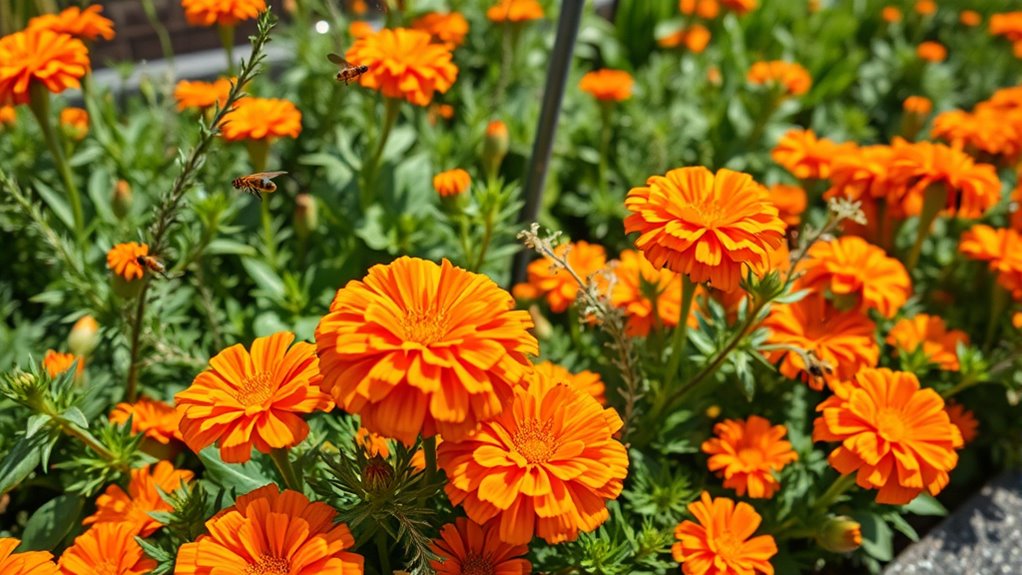

Using marigolds and other companion plants in your raised beds can naturally deter pests like nematodes, aphids, and whiteflies by emitting strong scents that confuse or repel insects. These plants not only protect your crops but also add vibrant color and improve garden health through beneficial insect attraction. Organizing your bed with strategic plant placement maximizes pest control and yields. Keep exploring to discover more ways to enhance your pest-resistant raised bed garden success.
Key Takeaways
- Marigolds emit scents that repel pests like nematodes, aphids, and whiteflies, protecting nearby crops naturally.
- Incorporating marigolds in raised beds enhances visual appeal while serving as effective pest barriers.
- Companion planting with marigolds and herbs like basil or garlic boosts pest resistance and promotes plant health.
- Raised beds allow precise placement of pest-repellent plants for targeted, efficient pest management.
- Using marigolds and companion plants reduces reliance on chemicals, supporting sustainable and eco-friendly gardening.
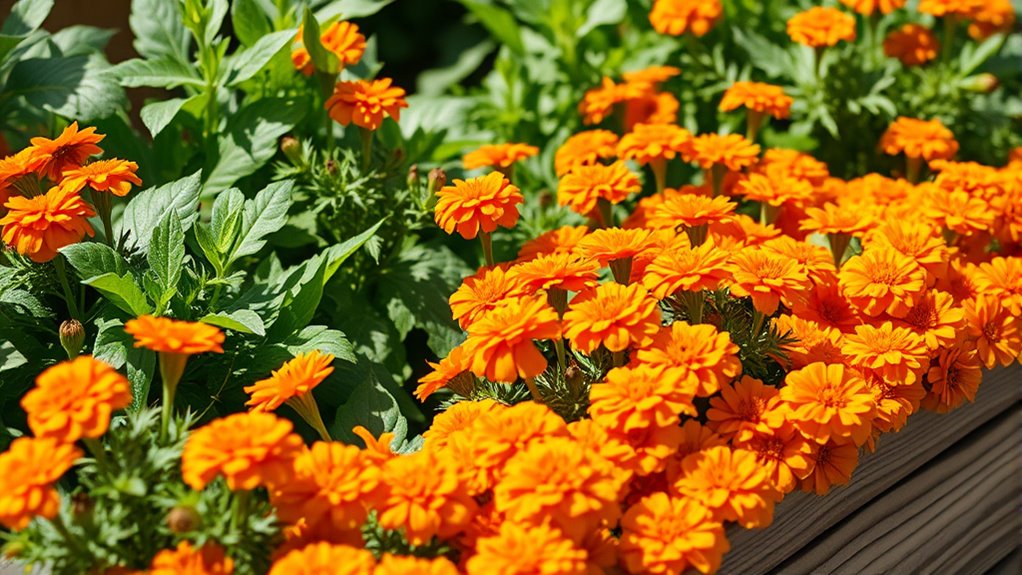
Ever wonder how to make gardening easier and more productive? One effective way is by using raised bed gardening techniques combined with smart companion planting. When you choose the right plants to grow together, you can naturally deter pests and reduce the need for chemical interventions. This strategy, known as companion planting, is a time-tested method that promotes healthier plants and higher yields. For example, planting marigolds alongside vegetables is a simple yet powerful way to keep pests at bay. Marigolds emit a strong scent that confuses or repels certain insects, making them excellent pest deterrents. When you incorporate marigolds into your raised beds, you’re not only adding vibrant color but also creating a natural barrier that protects your crops from common pests like nematodes, aphids, and whiteflies.
By understanding which plants work well together, you can design your raised beds to maximize pest control without relying on sprays or traps. Marigolds are just one part of a broader strategy. For instance, planting basil near tomatoes can help ward off tomato hornworms, while garlic can repel aphids and spider mites. These combinations turn your garden into a thriving ecosystem where beneficial insects and plants work harmoniously. It’s important to place pest-repellent plants strategically around your raised beds so their effects reach all your crops effectively. When you do this, you make pest management more efficient and less labor-intensive.
Strategically plant pest-repellent herbs to maximize natural pest control in your raised beds.
Additionally, companion planting enhances your garden’s resilience against pests by attracting beneficial insects such as ladybugs and parasitic wasps. These natural predators help control pest populations, reducing the need for chemical pesticides. Using proper pest management techniques can further improve your garden’s health and yield. By creating a diverse planting scheme, you foster an environment where pests are less likely to establish a foothold. Raised beds make this process easier because you can precisely arrange your companion plants, ensuring every part of your garden benefits from their pest-deterring properties. Plus, the vertical space and organized layout of raised beds make it simpler to monitor and manage your plants’ health.
Incorporating pest deterrents like marigolds into your raised bed system not only boosts your garden’s productivity but also promotes a healthier, more sustainable approach to gardening. It’s a straightforward, eco-friendly method that rewards you with fewer pests, healthier plants, and a more vibrant garden. By embracing companion planting, you turn your raised beds into a natural fortress against pests, making gardening more enjoyable and less stressful. In the long run, this approach saves you time and money while helping you grow thriving, pest-resistant plants that flourish throughout the season.
Top picks for "rais buddy marigold"
Open Amazon search results for this keyword.
As an affiliate, we earn on qualifying purchases.
Frequently Asked Questions
Can I Use Raised Bed Buddy With Organic Gardening Methods?
Yes, you can use Raised Bed Buddy with organic gardening methods. Since it promotes soil health and pest control naturally, it aligns with organic practices. Just make certain the product doesn’t contain synthetic chemicals and maintains organic certification standards. Using Raised Bed Buddy helps protect your plants without compromising soil health, supporting a sustainable, chemical-free garden. Always check labels to confirm it meets organic gardening requirements for safe, eco-friendly results.
How Often Should I Plant Marigolds for Pest Control?
Timing your planting schedule wisely can help keep pests at bay. During pest season, you should plant marigolds every 4 to 6 weeks for continuous protection. This steady approach guarantees your garden remains a welcoming haven for beneficial insects while discouraging unwanted visitors. Regular planting not only sustains the pest-repelling benefits but also enhances your garden’s health and vibrancy throughout the growing season.
Are There Specific Pest Types That Raised Bed Buddy Repels Best?
You’re wondering if certain pests are more effectively repelled by Raised Bed Buddy. It works best as a pest specific repellent for insects like nematodes and aphids, which damage your plants. Plus, it attracts beneficial insects that help control pests naturally. By planting marigolds and other companion plants, you enhance beneficial insect attraction while targeting specific pests, making your garden healthier and more resilient.
Can Raised Bed Buddy Be Used Alongside Chemical Pest Control?
You can use Raised Bed Buddy alongside chemical pest control, but you should consider chemical compatibility and application timing. Always check the labels for any warnings about mixing or timing restrictions. It’s best to apply chemical treatments first, then wait the recommended period before planting Raised Bed Buddy, to guarantee safety and effectiveness. This approach helps you maximize pest control without risking chemical interactions or harming beneficial plants.
What Other Companion Plants Work Well With Marigolds?
Imagine you’re back in the 18th century, planting by lantern light—today, you’re doing the same with companion planting. Marigolds work wonders as pest deterrents, but pairing them with basil, nasturtiums, or dill boosts their effect. These plants naturally repel pests, creating a healthier garden. Mixing companion plants helps keep pests at bay without chemicals, making your garden a thriving, pest-free haven.
Conclusion
By planting marigolds and companion plants, you’ll attract beneficial insects, deter pests, and promote healthy growth. You’ll create a thriving garden, a balanced ecosystem, and a pest-resistant space. You’ll enjoy vibrant blooms, bountiful harvests, and a peaceful garden. With Raised Bed Buddy, you’ll nurture your plants, protect your crops, and enjoy gardening with confidence. Embrace natural pest control, enhance your garden’s beauty, and reap the rewards of a flourishing, pest-free outdoor haven.