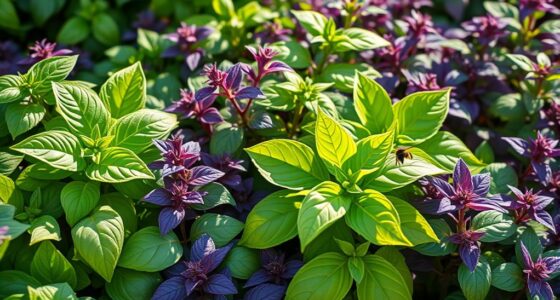
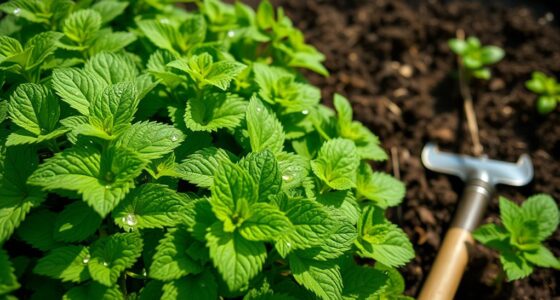
Flower bodyguards like nasturtiums and calendula help protect your garden by attracting beneficial insects and acting as natural pest barriers. Nasturtiums draw pests away from main crops and support pest control, while calendula repels certain beetles and nematodes. Together, they create a healthier, more balanced ecosystem that reduces the need for chemicals. Keep exploring to discover more ways these vibrant flowers can naturally defend your garden’s health.
Key Takeaways
- Nasturtiums and calendula act as natural pest deterrents, protecting vegetables and herbs through companion planting.
- These flowers attract beneficial insects like ladybugs and wasps that help control garden pests naturally.
- Nasturtiums draw pests away from main crops, while calendula repels nematodes and beetles, enhancing garden health.
- Strategic planting along borders or near vulnerable plants maximizes their protective benefits.
- Incorporating flower bodyguards reduces chemical use, promotes sustainability, and creates a vibrant, resilient garden ecosystem.

Imagine a world where delicate flowers not only brighten your garden but also serve as fierce protectors. You don’t have to choose between beauty and functionality when you incorporate flower bodyguards into your gardening strategy. By using companion planting with plants like nasturtiums and calendula, you harness nature’s own pest deterrents to shield your vegetables and herbs from unwanted invaders. These flowers act as natural barriers, drawing pests away from your main crops and reducing the need for chemical interventions. When you plant nasturtiums near your tomatoes or cucumbers, for example, they attract aphids and whiteflies, keeping these pests off your prized produce. The same goes for calendula, which repels nematodes and certain beetles, creating a protective barrier that benefits your entire garden ecosystem.
Plant nasturtiums and calendula as natural pest barriers to protect your garden effortlessly.
You’ll find that integrating these flowers as part of your companion planting approach is both simple and rewarding. Nasturtiums, with their bright, cheerful blooms and edible leaves, are especially effective because they lure pests away from more vulnerable plants. Their vibrant colors act as visual signals to pests, encouraging them to settle on the nasturtium leaves instead of your valuable crops. Similarly, calendula’s strong scent and vibrant orange or yellow flowers serve as natural pest deterrents, confusing or repelling insects that might otherwise cause damage. By strategically planting these flowers around your garden beds, you create a dynamic defense system that’s both attractive and functional.
Additionally, incorporating knowledge about garden ecosystems can help you design a more resilient and harmonious space. Not only do these flowers deter pests, but they also attract beneficial insects like ladybugs and predatory wasps that help control pest populations naturally. This dual role enhances your garden’s health and reduces the need for chemical sprays. Plus, both nasturtiums and calendula are hardy and easy to grow, making them perfect additions for gardeners seeking low-maintenance, eco-friendly solutions. Their presence encourages a balanced ecosystem, where pests are kept in check without harming beneficial insects or pollinators like bees.
As you plan your garden, think about placing these flower bodyguards at strategic points—near vulnerable crops or along garden borders. Their role as pest deterrents will be amplified when combined with other organic gardening practices. Over time, you’ll notice fewer pest problems, healthier plants, and a more vibrant, sustainable garden. These flowers aren’t just pretty faces; they’re active defenders, working tirelessly to keep your garden safe and thriving. With a little planning and a few strategic plantings, you’ll harness the power of nature’s own pest deterrents, turning your garden into a resilient, beautiful haven.
Top picks for "flower bodyguard nasturtium"
Open Amazon search results for this keyword.
As an affiliate, we earn on qualifying purchases.
Frequently Asked Questions
What Pests Do Nasturtiums Attract Away From Other Plants?
Nasturtiums attract pests like aphids and whiteflies away from your other plants, acting as natural pest repellents. Their bright flowers also boost pollinator attraction, which benefits overall plant health. By planting nasturtiums, you increase plant diversity in your garden, creating a more balanced ecosystem. This helps protect your valuable plants from common pests, making nasturtiums an excellent companion for maintaining a thriving, pest-resistant garden.
Can Calendula Be Used as a Natural Pesticide?
Imagine a garden where pests flee at the mere sight of a flower. Yes, calendula acts as a natural pesticide, serving as a pest repellent for many garden invaders. You can crush its petals to create a homemade remedy that deters aphids, beetles, and nematodes. Using calendula as a natural pesticide reduces chemical reliance, keeping your garden eco-friendly and healthy while protecting your plants effectively.
How Do Flower Bodyguards Benefit Vegetable Crops?
You benefit from flower bodyguards because they support pollination by attracting beneficial insects, which helps your vegetable crops produce more fruit. Additionally, these flowers enhance soil enrichment as they decompose, adding nutrients back into the Earth. By planting these natural protectors, you’re creating a healthier garden ecosystem, reducing pests naturally, and boosting your crops’ overall productivity. This simple strategy makes your garden more sustainable and productive.
Are There Any Companion Plants That Don’t Work Well With Nasturtiums?
Did you know that about 10% of companion plant pairings can lead to conflicts? When it comes to nasturtiums, some incompatible garden partners, like certain herbs such as mint, can hinder their growth or attract pests. Avoid planting nasturtiums near plants that have strong chemical signals or compete aggressively for nutrients. Recognizing companion plant conflicts helps you create a harmonious garden, ensuring all your plants thrive together.
What Climate Conditions Are Ideal for Growing Calendula Effectively?
You want to know the ideal climate for growing calendula effectively. You should aim for temperatures suitable between 60-70°F (15-21°C), as extreme heat can hinder growth. Make certain the soil requirements include well-draining soil rich in organic matter. Calendula thrives in full sun but can tolerate partial shade. Keep the climate consistent with moderate moisture levels, and avoid frost, which can damage the plants.
Conclusion
Now that you know how flowers like nasturtiums and calendula act as bodyguards, you’re ready to turn your garden into a vibrant fortress. Think of these blooms as colorful knights, shielding your plants from pests with their natural defenses. By inviting these floral protectors, you create a lively, protective barrier that’s as beautiful as it is effective. With a little planning, your garden will flourish, thriving under the watchful eyes of nature’s tiny guardians.