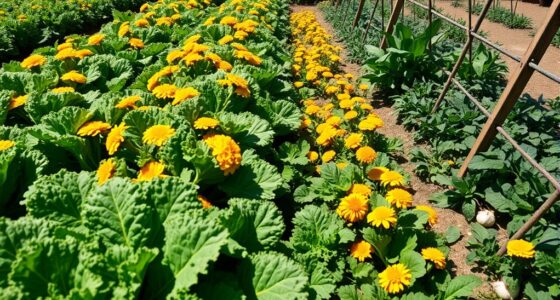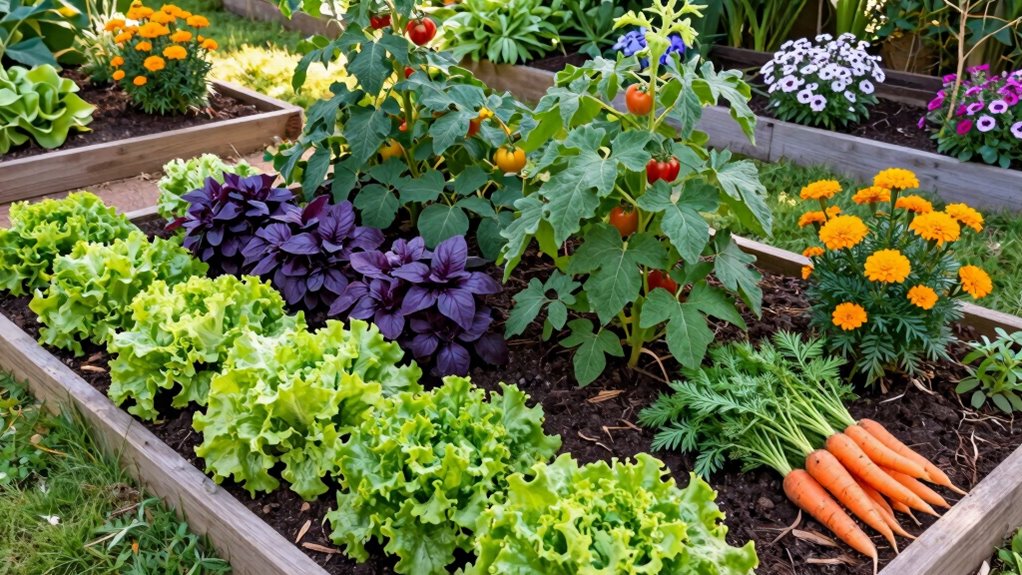

To design a companion planting layout for small gardens, start by selecting plant pairings that support each other, like basil with tomatoes or carrots with onions, and consider their growth habits. Use vertical space with trellises and plan for aesthetic and accessibility. Arrange taller plants at the back and compact herbs at the front to maximize space. Incorporate pest-repellent herbs and attract beneficial insects. For more tips on creating a thriving, resilient garden, explore further guidance here.

Get garden gear delivered free with Prime
- Fast, free delivery on millions of items
- Prime Video, Amazon Music and more included
- Member-only deals all year
Key Takeaways
- Plan plant pairings based on complementary growth habits, pest resistance, and soil enrichment to maximize space and health.
- Arrange plants vertically and in zones to optimize light exposure, accessibility, and visual appeal.
- Incorporate beneficial herbs and flowers to attract pollinators and naturally deter pests.
- Use succession planting and crop rotation to extend harvests and maintain soil fertility.
- Regularly monitor and adjust layout for seasonal changes and plant growth dynamics.
As an affiliate, we earn on qualifying purchases.
Understanding the Basics of Companion Planting in Small Gardens

Understanding the basics of companion planting is essential for making the most of your small garden space. You need to take into account pollination partners, as some plants attract bees and other pollinators that boost fruit and flower production. Pairing flowers like marigolds with vegetables can improve pollination rates naturally. Root compatibility also matters; plants with similar root depths or growth habits can share space without competing for nutrients. For example, shallow-rooted herbs won’t interfere with deeper-rooted vegetables. Properly selecting compatible plants encourages healthier growth and reduces pests. By understanding these principles, you optimize your garden’s productivity and create a balanced ecosystem. Additionally, considering the contrast ratio of your garden layout can help in planning shade and sunlight exposure for different plants. Recognizing the importance of plant compatibility can further enhance your garden’s overall health and yield. Paying attention to soil conditions and how they influence plant interactions can also be beneficial for a thriving small garden. A good understanding of plant relationships can help you make more informed decisions about which plants to group together. Incorporating crop rotation practices can also prevent soil depletion and reduce the risk of pests and diseases.
How to Choose the Best Companion Plants for Your Tiny Garden?

Choosing the best companion plants for your tiny garden involves considering how different plants interact to support each other’s growth. You want plants that enhance pollination strategies, attracting beneficial insects to boost fruit and flower production. For example, planting flowers like marigolds or bee balm nearby can draw pollinators to your vegetables. Additionally, select plants that enrich the soil naturally, such as legumes that fix nitrogen. These improve soil fertility over time, reducing your need for added fertilizers. Think about pairing plants that thrive together and support each other’s health—like basil with tomatoes or carrots with onions—while keeping soil enrichment and pollination strategies in mind. Incorporating biodiversity in your plant choices can also promote a more resilient garden ecosystem. This approach maximizes your garden’s productivity and health in limited space, especially when considering environmental considerations like sustainable practices and minimizing impact. Understanding soil health is crucial to creating a successful companion planting layout that sustains your garden’s vitality. Additionally, choosing plants with natural pest resistance can help reduce the need for chemical interventions and protect your garden’s overall balance.
Designing an Efficient Layout for Small Garden Spaces
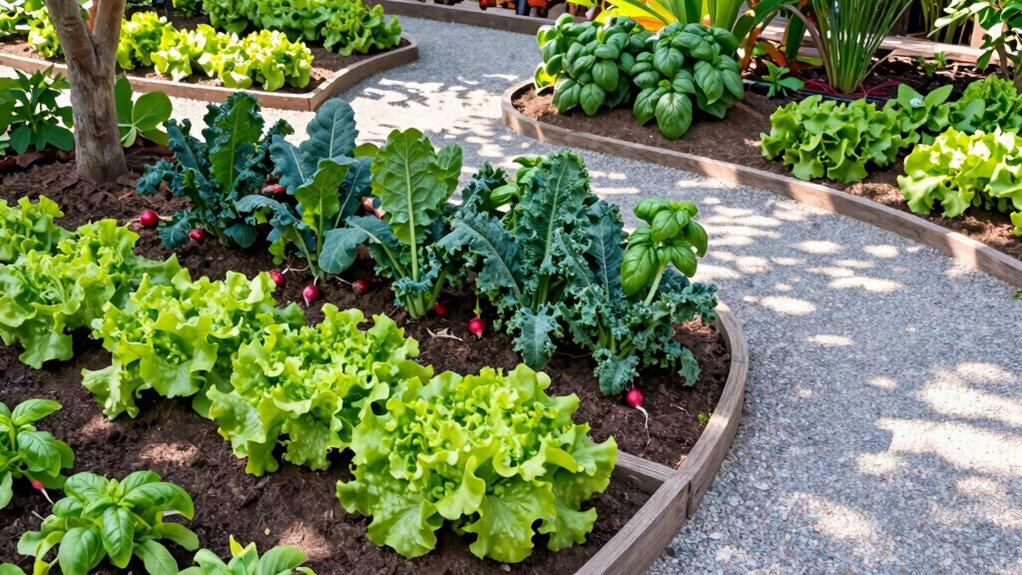
Designing an efficient layout for a small garden requires careful planning to maximize every inch of space. Start by prioritizing garden aesthetics and accessibility, arranging plants for visual harmony and ease of maintenance. Proper soil preparation is essential; enrich your soil beforehand to guarantee healthy growth. Use vertical space with trellises or hanging baskets to save ground area. The table below illustrates a simple layout approach:
| Zone 1 | Zone 2 |
|---|---|
| Tall plants at the back | Compact herbs at the front |
| Pathways for access | Mulched bed for moisture retention |
| Vertical structures | Interplanting for space efficiency |
| Focus on soil health | Maximize sunlight exposure |
This layout balances aesthetics and functionality, optimizing space while promoting healthy plant growth. Incorporating bank SWIFT/BIC codes can be useful for managing any financial transactions related to garden supplies or services. Additionally, understanding garden space optimization is crucial for making the most of limited areas. To enhance your layout, consider plant placement principles that help improve plant health and growth efficiency. Applying principles of minimalism can also streamline your garden design, emphasizing clarity and simplicity to create a peaceful outdoor space. Moreover, integrating eco-friendly practices can support sustainable gardening efforts and enhance environmental benefits.
Natural Pest Control and Flavor Boosting in Companion Planting
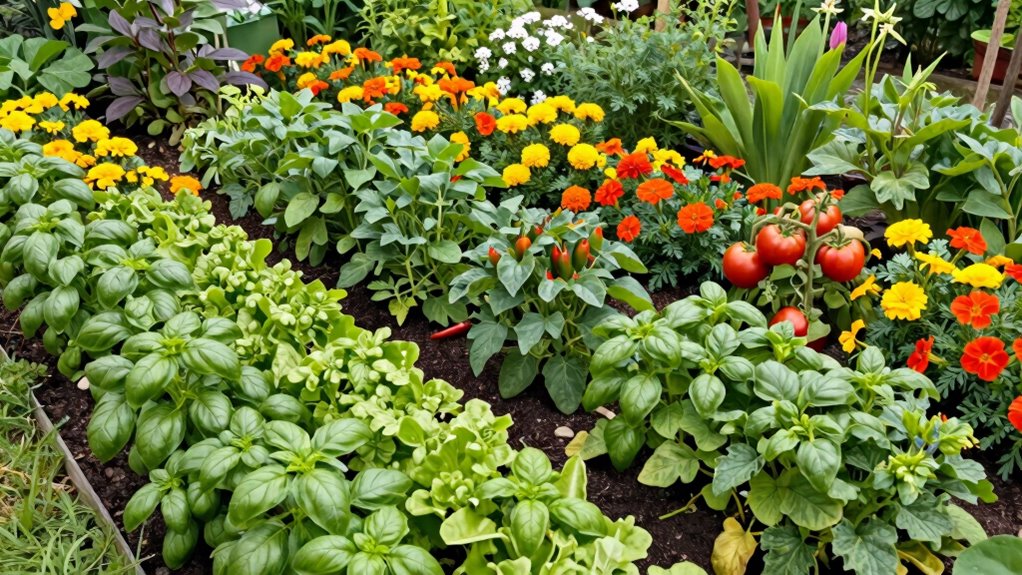
Incorporating natural pest control methods and flavor-enhancing companion plants can markedly boost your garden’s health and productivity. Using pest repellent herbs like basil, mint, or lavender deters pests naturally, reducing the need for chemical sprays. These herbs also attract beneficial insects that help keep pest populations in check. Pairing these with flavor-enhancing vegetables such as tomatoes, peppers, or carrots not only improves taste but promotes healthy growth. For example, planting marigolds near your vegetables can repel nematodes and aphids. By thoughtfully arranging pest repellent herbs around your vegetables, you create a protective barrier that minimizes pests and enhances flavor simultaneously. This approach keeps your garden organic, thriving, and full of vibrant, tasty produce. Additionally, incorporating bee-friendly plants like rosemary can support pollination and overall garden vitality. Furthermore, understanding the principles of Stoic wisdom can inspire patience and resilience as you nurture your garden through challenges, fostering a mindful and calm gardening experience. A balanced garden that considers ecological harmony encourages a sustainable and resilient environment for your plants to flourish.
To further optimize your garden, consider experimenting with different plant combinations to discover what works best in your specific environment and soil conditions.
Adjusting Your Garden Plan for Seasonal Changes and Ongoing Growth
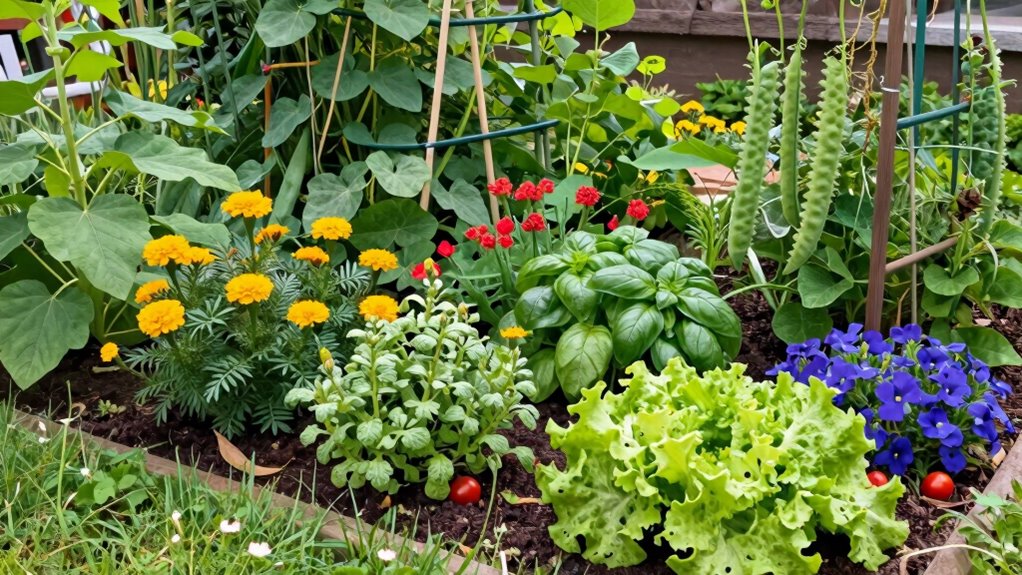
As seasons change, adjusting your garden plan guarantees your plants stay healthy and productive throughout the year. Implement seasonal crop rotations to prevent soil depletion and reduce pest buildup, ensuring your plants get the nutrients they need during each phase. During ongoing growth management, monitor plant development regularly to identify when to prune, support, or harvest. As temperatures fluctuate, consider switching out crops or varieties suited for the current season. Use succession planting to maximize space and extend harvests. Keep an eye on your garden’s progress, adjusting spacing and companion pairings as plants mature. Incorporating seasonal planning strategies can further optimize your garden’s resilience and productivity. Additionally, understanding plant health maintenance techniques can help you quickly address issues before they impact your crop yields. Exploring sound therapy techniques can also promote plant vitality and stress reduction, creating a more harmonious growing environment. These strategies help you maintain a dynamic, resilient garden that adapts seamlessly to seasonal shifts and continuous growth, keeping your small garden thriving year-round.
Frequently Asked Questions
How Do I Prevent Plants From Competing for Limited Resources?
To prevent plants from competing for limited resources, you should space them appropriately to reduce root competition and encourage healthy growth. Incorporate companion plants that share nutrients efficiently, like legumes fixing nitrogen for nearby vegetables. Use mulch to retain moisture and improve nutrient sharing. Regularly monitor and water your garden to guarantee all plants get enough resources. Proper planning and mindful planting help balance resource use and promote a thriving, productive small garden.
What Are Common Mistakes to Avoid in Small Garden Layouts?
Avoid crowding your garden, as it can lead to cramped roots and increased pest issues. Pay attention to root spacing, giving plants enough room to breathe and thrive. Don’t forget pest barriers; neglecting them invites trouble. Overplanting or poor planning may turn your garden into a tangled maze, limiting growth and inviting pests. Keep your layout open and balanced, ensuring each plant has space and protection to flourish.
How Can I Incorporate Vertical Planting Into My Design?
To incorporate vertical planting, use sturdy vertical supports like trellises, cages, or stakes for climbing plants. You can also employ plant stacking by placing smaller or trailing plants in containers or hanging baskets beneath taller crops. This maximizes space and adds variety. Make sure your supports are secure and accessible for maintenance. Combining vertical supports with plant stacking creates an efficient, layered garden design that optimizes small space use.
Which Companion Plants Are Best for Container Gardens?
Imagine a lively, fragrant oasis in your container garden, where herb pairing creates harmony. Opt for basil with tomatoes to boost flavor and deter pests naturally. Marigolds are excellent for pest management, shielding your plants from unwanted visitors. Nasturtiums add vibrant color while attracting beneficial insects. These companions thrive in containers, making your small garden both productive and visually appealing. Embrace these pairings to cultivate a thriving, pest-resistant haven.
How Do I Troubleshoot Poor Plant Growth in My Layout?
You should start by testing your soil to check for nutrient deficiencies or pH imbalances. Adjust the soil as needed to promote healthy growth. Also, inspect your plants regularly for pests, and manage pests promptly with natural or organic methods to prevent damage. Improving soil health and controlling pests can considerably boost plant growth, helping your companion planting layout thrive in your small garden.
Conclusion
By mastering your small garden’s layout, you turn a tiny patch into a lush, thriving oasis. Like a carefully woven tapestry, each companion plant interlocks to create harmony and resilience. With thoughtful planning, your garden transforms from a simple patch of soil into a vibrant mosaic of colors and scents. Embrace the challenge, and watch your garden flourish, a demonstration of nature’s intricate dance—an oasis of life nestled within your own backyard.
Fall yard work Picks
leaf blowers
As an affiliate, we earn on qualifying purchases.