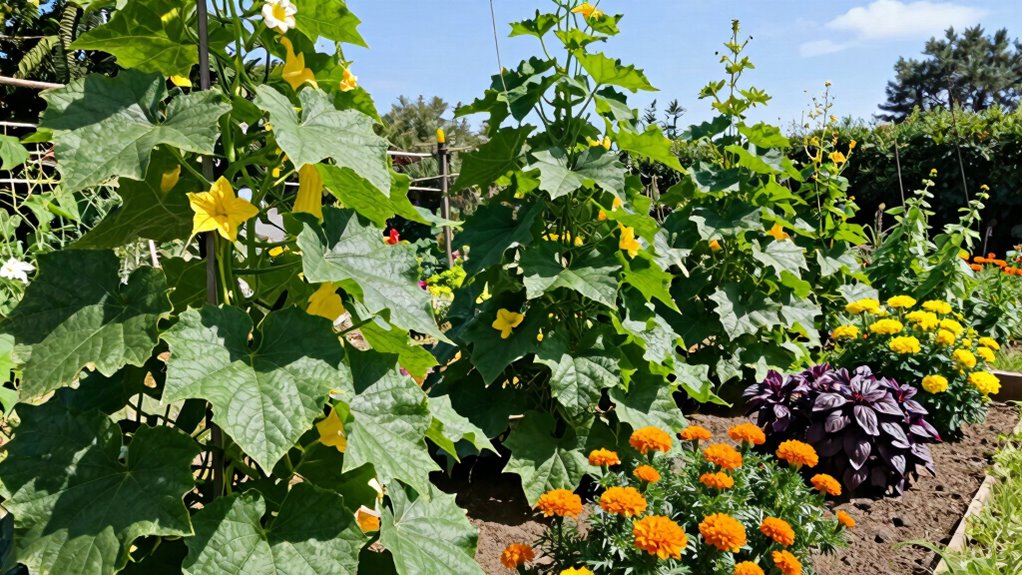

To boost your cucumber and squash harvest, plant companions like marigolds, nasturtiums, basil, and dill to naturally repel pests. Include pollinator-friendly plants such as lavender and coneflowers to improve pollination, while cover crops like clover and beans enhance soil health. Vegetables like radishes and lettuce support healthy growth without competing. Using the right combination of these plants can boost your garden’s health and productivity—continue exploring to learn more tips for success.
Key Takeaways
- Marigolds and nasturtiums repel pests like squash bugs and cucumber beetles, protecting your plants naturally.
- Basil and dill attract beneficial insects that aid in pollination and pest control.
- Clover, beans, and peas fix nitrogen, improve soil fertility, and support healthy cucumber and squash growth.
- Lavender and coneflowers attract pollinators, boosting fruit production and overall plant health.
- Radishes and spinach can be planted nearby to deter pests and maximize garden space efficiently.
companion planting kit for cucumbers and squash
As an affiliate, we earn on qualifying purchases.
As an affiliate, we earn on qualifying purchases.
What Are the Benefits of Companion Planting for Cucumbers and Squash?
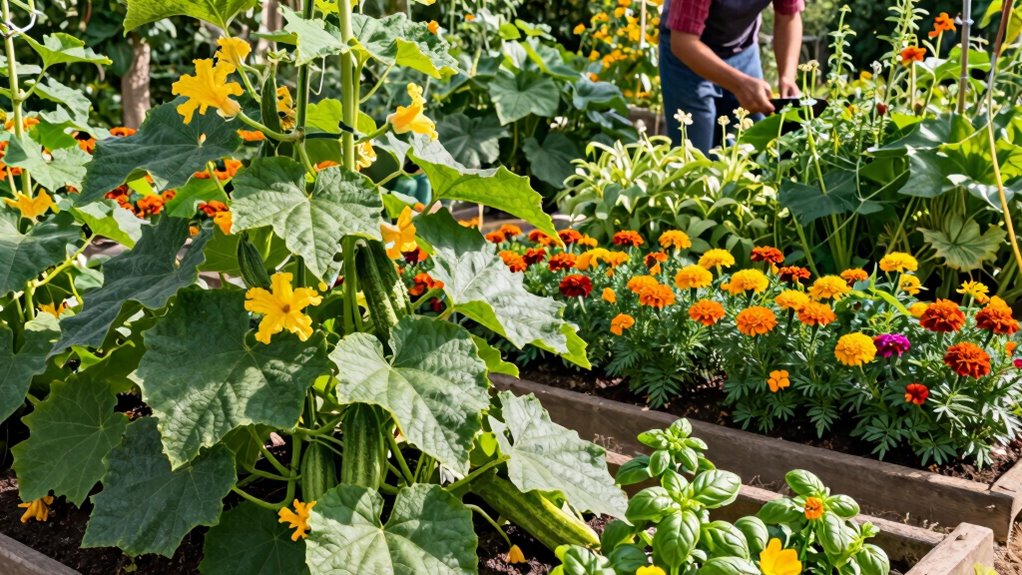
Companion planting offers several practical benefits when growing cucumbers and squash. A benefits overview shows that pairing plants strategically can improve yields, reduce pests, and enhance overall health. By implementing effective planting strategies, you can naturally deter pests like squash bugs and cucumber beetles, minimizing the need for chemical interventions. Additionally, some companion plants attract beneficial insects that pollinate or prey on common pests, creating a balanced garden ecosystem. Companion planting also helps optimize space, with certain plants providing shade or support for others. This approach encourages healthier growth, prevents disease spread, and can even improve flavor. Overall, using thoughtful planting strategies can make your garden more productive, sustainable, and easier to manage, all while supporting the health of your cucumbers and squash.
Pollinator-Friendly Plants to Support Cucumbers and Squash
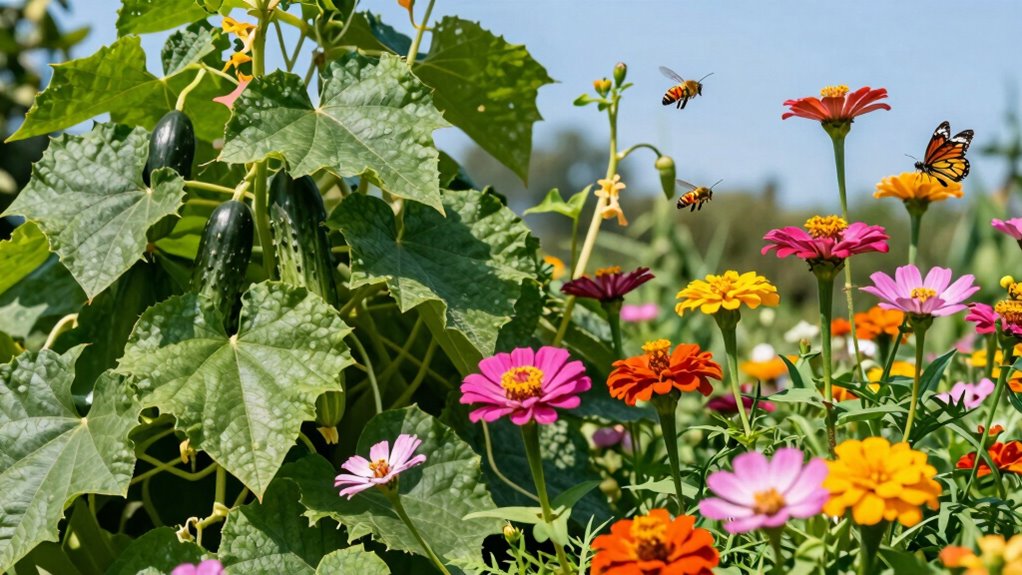
To guarantee your cucumbers and squash produce a healthy, abundant harvest, attracting pollinators like bees and butterflies is essential. Planting bee attracting flowers and butterfly friendly plants nearby encourages pollination, boosting fruit set. Some excellent options include lavender, coneflowers, and marigolds, which appeal to both bees and butterflies. These plants provide nectar and pollen, supporting pollinator health and activity. Incorporating these into your garden for a natural pollination boost can also benefit from understanding the importance of color accuracy in attracting these pollinators effectively. Additionally, selecting plants with native species can further enhance pollinator attraction and support local ecosystems. Using pollinator-friendly plants can significantly increase your garden’s productivity and ecological health. Understanding the impact of pollution on pollinator populations can help you choose the most beneficial plants for your garden.
Natural Pest-Repelling Plants for Cucumbers and Squash
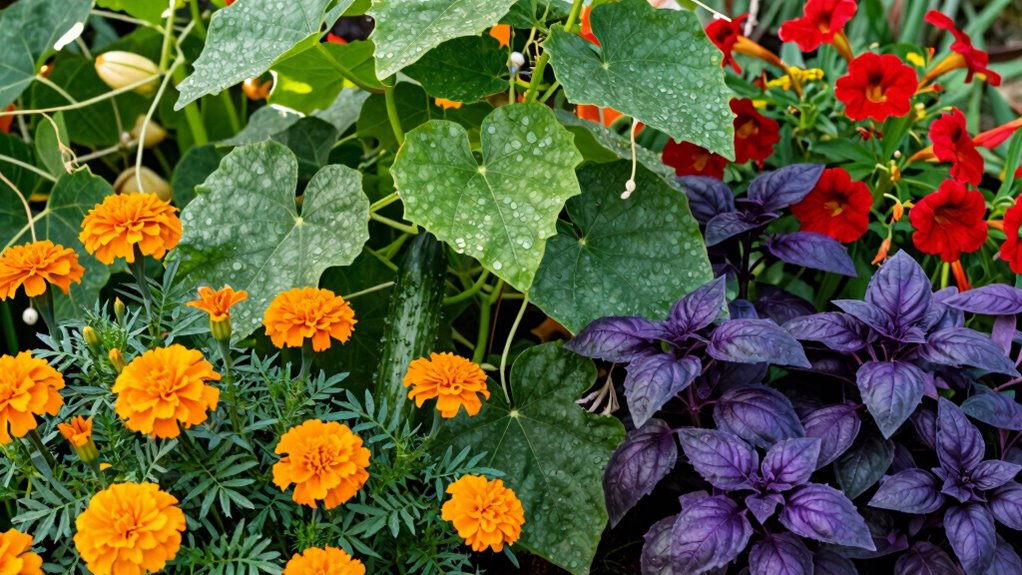
Incorporating natural pest-repelling plants into your garden can effectively protect cucumbers and squash from common pests. Plants like marigolds, basil, and nasturtiums act as natural repellents, deterring insects before they reach your vegetables. Marigolds release compounds that repel nematodes and aphids, while basil helps ward off thrips and mosquitoes. Nasturtiums serve as pest deterrents for cucumber beetles and squash bugs, keeping these pests away from your crops. These pest deterrents don’t just protect your plants; they also enhance your garden’s overall health by reducing the need for chemical interventions. Additionally, understanding world clock functionality can help you plan your gardening activities more efficiently, ensuring timely care and pest management. Properly integrating companion planting principles into your garden design can further optimize pest control and plant health. Recognizing beneficial insect relationships can also contribute to a more balanced and resilient garden ecosystem.
Best Soil-Improving Plants for Cucumbers and Squash
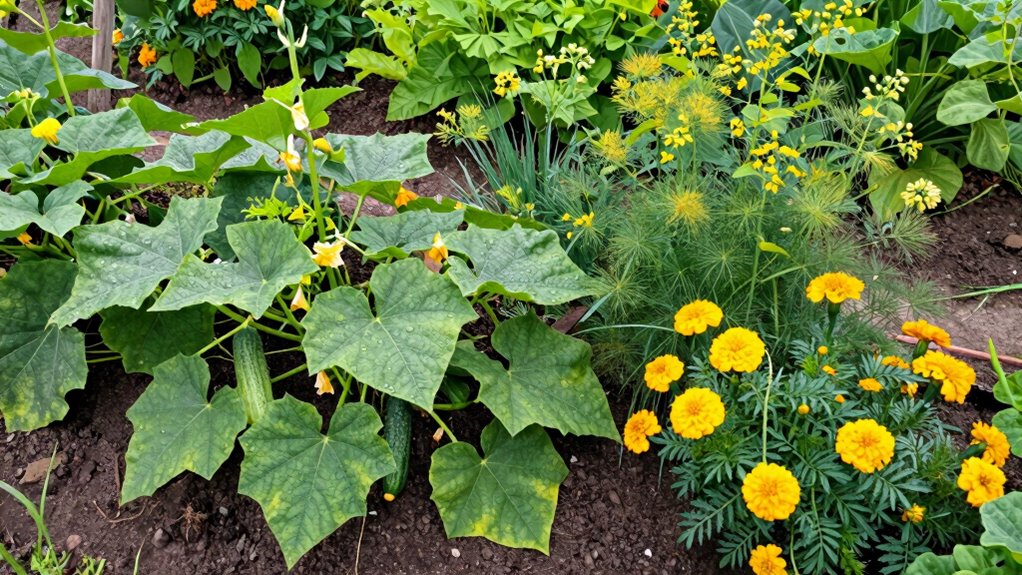
Natural pest-repelling plants contribute to a healthier garden, but maintaining rich, fertile soil is equally important for your cucumbers and squash to thrive. To achieve this, incorporate soil-enriching plants like clover, beans, or peas into your garden. These plants fix nitrogen and improve soil structure through their root systems, promoting better nutrient cycling. As they grow, they add organic matter, enhancing soil fertility and encouraging healthy plant development. Using cover crops or living mulches also helps prevent soil erosion and suppress weeds, maintaining ideal conditions for your cucumbers and squash. Additionally, implementing local automation techniques can optimize watering schedules, ensuring consistent moisture levels that support soil health. Proper vetted practices for soil care can further boost nutrient availability and overall garden productivity. Understanding soil chemistry is essential for effectively managing amendments and fertilizers to sustain soil vitality. Recognizing the importance of soil microbiology can lead to more effective biological soil management strategies. By focusing on soil enrichment through these plants, you support sustained nutrient cycling, which boosts plant growth, increases yields, and ensures a productive, resilient garden. Incorporating soil health principles into your gardening practices further enhances these benefits.
Herbs That Enhance Flavor and Help Control Pests
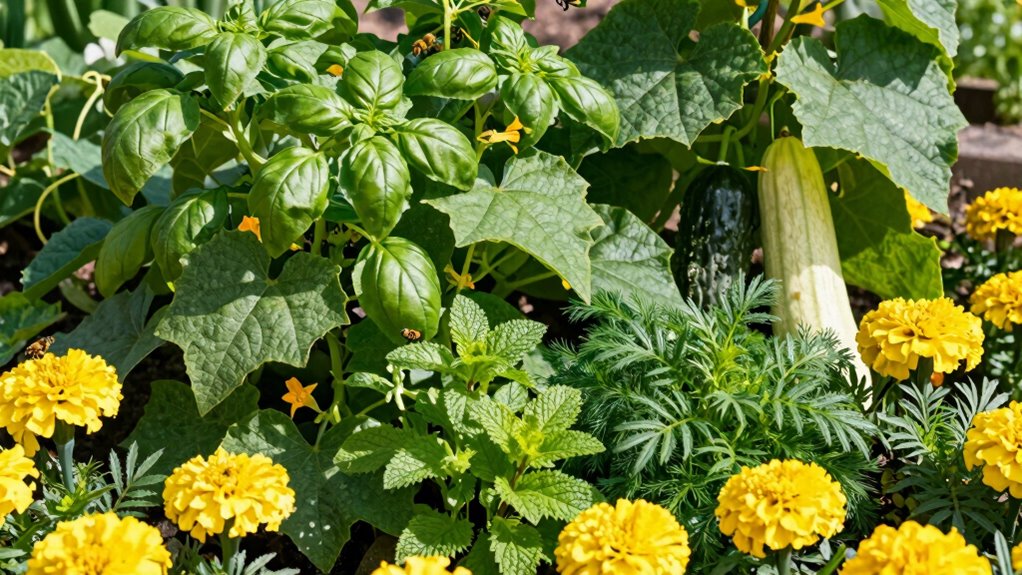
Herbs not only add vibrant flavor to your cucumbers and squash but also play a crucial role in pest management. Certain herb varieties, like basil, dill, and oregano, can repel common pests while boosting flavor enhancement. Basil, for example, deters aphids and improves the taste of your produce, while dill attracts beneficial insects that control pests naturally. Oregano acts as a deterrent for beetles and aphids, helping keep your plants healthy. Including these herbs in your garden creates a natural pest barrier and elevates flavor profiles without synthetic chemicals. Additionally, strategic placement of these herbs can integrate with multi-unit setups to optimize pest control and garden efficiency. Incorporating companion planting principles can further enhance the effectiveness of these herbs in your garden ecosystem. Using scent technology like aroma diffusers can also promote a healthier garden environment by reducing pests and disease spread. Properly managing pest populations is essential for maintaining a healthy crop, and companion herbs are an effective, eco-friendly method to achieve this. Implementing integrated pest management strategies alongside companion planting can further improve pest control results. You’ll enjoy more aromatic, flavorful cucumbers and squash, thanks to the dual benefits of pest control and flavor enhancement provided by these versatile herbs.
Cover Crops for Healthy Soil in Cucumber and Squash Gardens
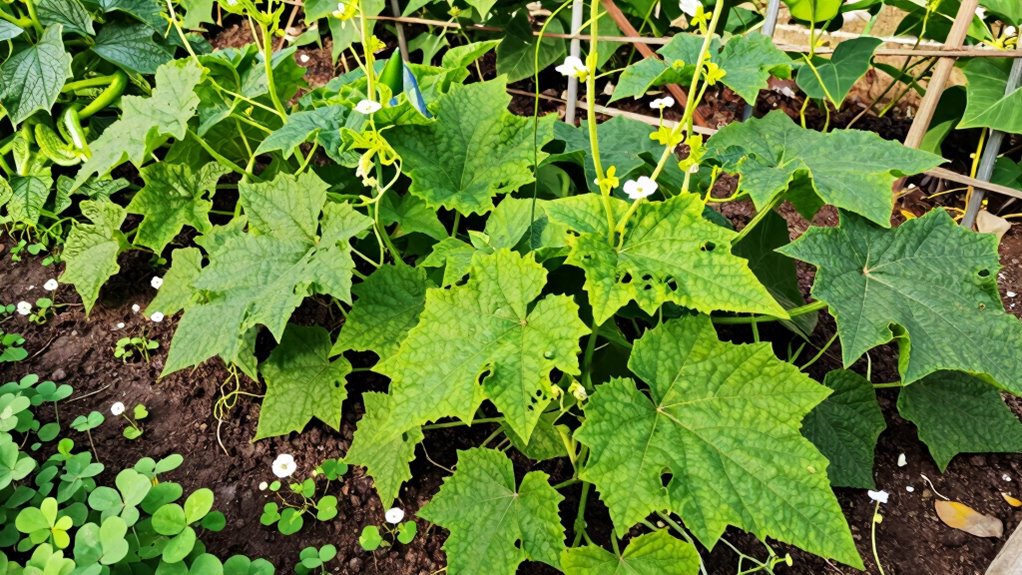
Cover crops are a smart addition to your cucumber and squash garden, helping to maintain healthy soil and reduce the need for chemical fertilizers. Proper cover crop selection improves soil nutrient management by fixing nitrogen, preventing erosion, and enhancing organic matter. Legumes like clover and vetch are excellent choices, enriching nitrogen naturally. Grasses such as rye and oats improve soil structure and suppress weeds. Selecting the right cover crop depends on your soil needs and season. Additionally, incorporating soil health practices can further enhance the benefits of cover crops throughout the growing cycle. Understanding cover crop functions can help you choose the best options for your garden’s needs. Using innovative gardening techniques can optimize plant growth and soil quality. Use the table below to understand their functions better:
| Cover Crop | Benefits |
|---|---|
| Clover | Fixes nitrogen, improves fertility |
| Vetch | Adds organic matter, nitrogen fixation |
| Rye | Prevents erosion, builds organic matter |
| Oats | Suppresses weeds, enhances soil structure |
Vegetables That Grow Well With Cucumbers and Squash
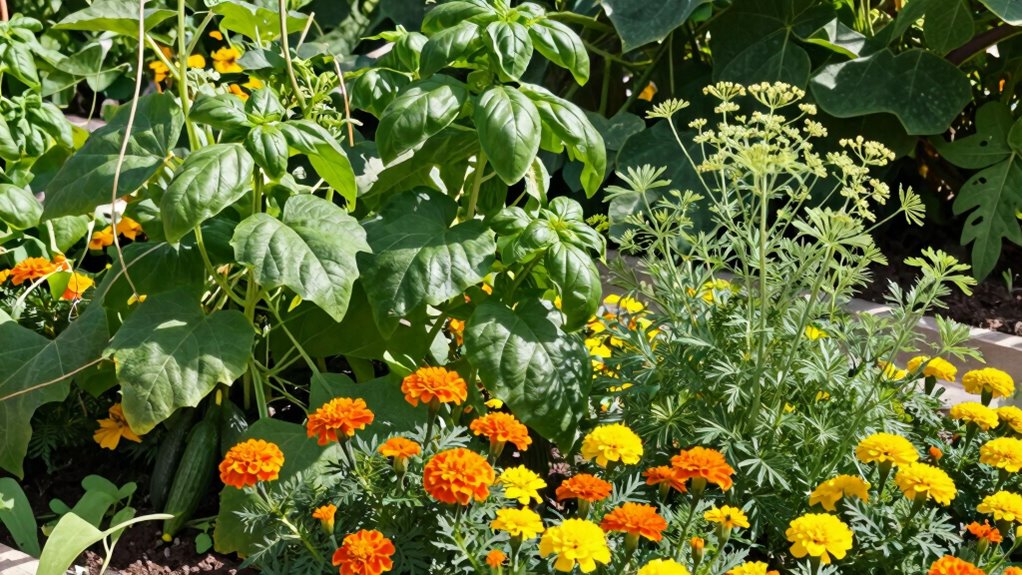
Companion planting can considerably boost your cucumber and squash yields by pairing them with vegetables that thrive alongside them. Vegetables like beans and radishes are excellent choices because of their companion plant compatibility, which promotes healthy growth for all. Beans fix nitrogen in the soil, benefiting cucumbers and squash, while radishes help deter pests. These vegetables also have compatible growth rate synergy, meaning they grow at similar paces, reducing competition for resources. Leafy greens like spinach and lettuce are also good options, as they don’t compete for space or nutrients. Incorporating these vegetables into your garden can create a balanced ecosystem, enhancing overall productivity and plant health for your cucumbers and squash. Consistent storytelling about your garden’s progress can also inspire others to adopt sustainable and effective planting strategies.
How to Combine Companion Plants for Maximum Benefits

To get the most from your companion plants, focus on optimizing plant spacing to prevent overcrowding and promote healthy growth. Combine plants strategically to naturally enhance pest control, reducing the need for chemicals. By carefully arranging your garden, you’ll maximize both productivity and plant health.
Optimize Plant Spacing
Maximizing the benefits of your companion planting starts with strategic plant spacing. Proper plant spacing guarantees each plant has enough room to grow and access nutrients, preventing overcrowding. When combining companion plants for cucumbers and squash, follow these tips:
- Maintain adequate plant spacing to avoid competition for resources, usually 12-18 inches apart.
- Group plants with similar growth habits to create a balanced and organized layout.
- Use companion planting principles to position mutually beneficial plants closer, while keeping less compatible ones apart.
Enhance Pest Control
Strategically combining certain plants can substantially boost your efforts to control pests naturally. By selecting companion plants that attract beneficial insects, you create a natural pest management system, reducing the need for chemical interventions. For example, planting marigolds or dill nearby encourages beneficial insects like ladybugs and predatory wasps to thrive, targeting pests on your cucumbers and squash. These insects help keep pest populations in check, supporting your disease prevention strategies. Additionally, some plants release compounds that deter specific pests, further protecting your crops. To maximize benefits, guarantee your companion plants are well-distributed and integrated into your garden layout. This approach not only enhances pest control but also promotes a healthier, more resilient garden ecosystem overall.
Tips for Planning and Maintaining a Companion Plant Garden
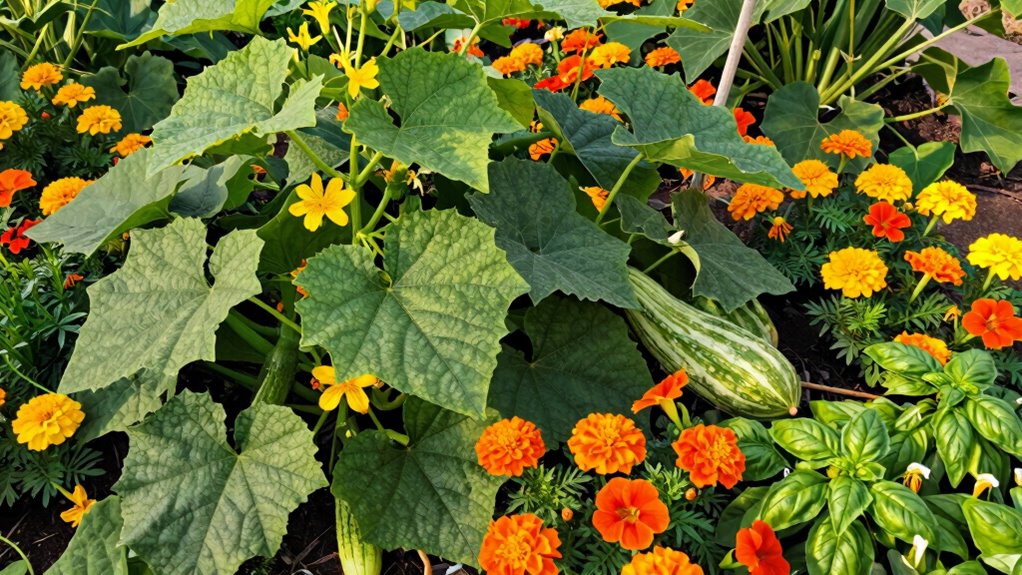
Planning and maintaining a successful companion plant garden requires careful thought and ongoing attention. First, don’t fall for companion planting myths—trust proven principles rather than folk advice. Second, blend traditional gardening methods with modern insights to optimize plant health and yield. Third, monitor your garden regularly to identify issues early, adjusting plant placement as needed. Focus on compatibility: guarantee your cucumbers and squash are paired with beneficial companions that improve growth and repel pests. Keep in mind that successful planning involves understanding each plant’s needs and avoiding overcrowding. Regular maintenance, such as watering and weeding, helps your garden thrive. By combining reliable techniques with attentive care, you’ll create a vibrant, productive space that benefits from the best companion planting practices.
Frequently Asked Questions
Which Companion Plants Are Best for Extending Cucumber and Squash Harvests?
To extend your cucumber and squash harvests, plant pollinator attractors like calendula or bee balm nearby to boost pollination. Additionally, include pest repellent plants such as nasturtium or marigolds to keep pests at bay. These companion plants not only attract beneficial insects but also protect your crops, ensuring healthier plants and longer harvests. Regularly maintain your garden to maximize these benefits and enjoy an extended, bountiful harvest season.
Can Companion Planting Help Reduce Fungal Diseases in Cucumbers and Squash?
Yes, companion planting can help reduce fungal diseases in cucumbers and squash. By choosing plants that promote fungal disease prevention, you improve airflow and reduce humidity around your crops. Additionally, some companion plants enhance soil health, which strengthens your plants’ natural defenses. This combination creates an environment less favorable for fungal growth, making your garden healthier overall. So, strategic planting not only boosts yields but also supports disease resistance.
Are There Specific Companion Plants for Different Cucumber and Squash Varieties?
Yes, certain companion plants can benefit specific cucumber and squash varieties by boosting root growth and pollination. For example, planting florescent marigolds nearby enhances pollination, while radishes improve root development. These plants attract beneficial insects and improve soil health, supporting different varieties’ growth. Customizing companion plants to your specific cucumber or squash type guarantees healthier roots and better pollination, ultimately increasing your harvest.
How Does Companion Planting Influence the Overall Yield of Cucumbers and Squash?
Companion planting boosts your cucumber and squash yields by enhancing pollination benefits and providing pest deterrent effects. When you plant beneficial companions nearby, pollinators like bees are attracted, increasing fruit set. Additionally, certain plants repel pests naturally, reducing damage and stress on your crops. As a result, you’ll notice healthier plants, more robust growth, and higher overall harvests, making your garden more productive and sustainable.
What Are Common Mistakes to Avoid When Planting Companions for Cucumbers and Squash?
When planting companions for cucumbers and squash, avoid pollination challenges caused by incompatible plants that attract different pollinators or block airflow. Make certain companion plant compatibility by selecting those that won’t compete excessively for nutrients or space. Don’t plant them too close, which can hinder growth and reduce airflow. Also, steer clear of using pest-prone plants that might attract pests, risking damage to your cucumbers and squash.
Conclusion
By choosing the right companion plants, you’ll create a vibrant garden that’s as harmonious as a symphony. These plants work together like a well-oiled machine, boosting growth, repelling pests, and enriching your soil. With a little planning and care, your cucumber and squash garden will flourish brighter than you imagined—turning your outdoor space into a lush, productive oasis you’ll love. Happy planting and watching your garden thrive!