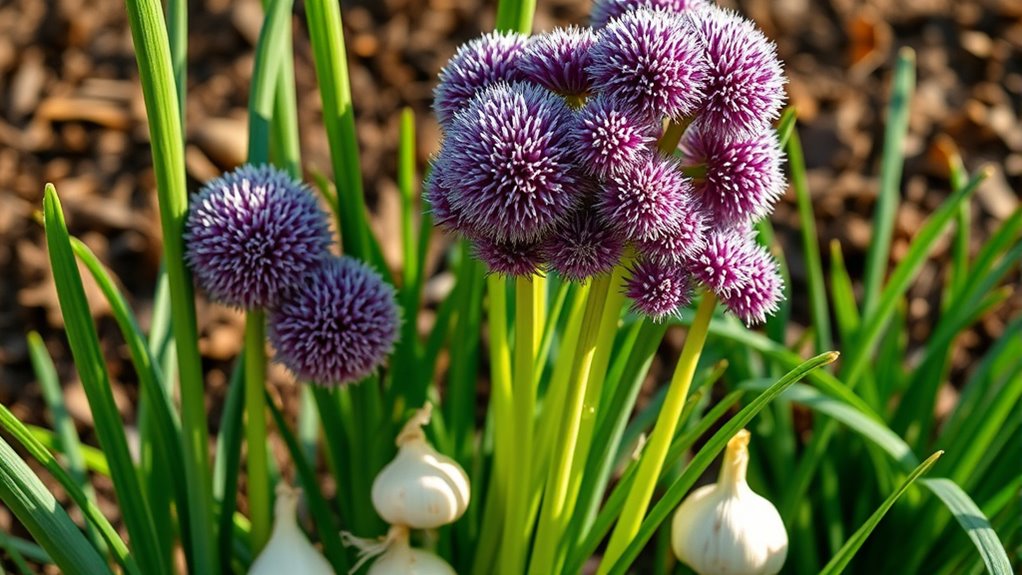

Plantting alliums like onions, leeks, and garlic together creates a natural pest barrier that benefits your garden. These crops emit compounds that repel aphids, beetles, and carrot flies, reducing your need for chemical pesticides. They also improve soil health and support healthy growth for nearby vegetables. When combined properly, alliums enhance plant resilience and garden sustainability. Keep exploring to discover how strategic planting can optimize these benefits for your garden’s overall health.

Get garden gear delivered free with Prime
- Fast, free delivery on millions of items
- Prime Video, Amazon Music and more included
- Member-only deals all year
Key Takeaways
- Alliums like onions, leeks, and garlic naturally repel pests, benefiting nearby vegetables and reducing pesticide reliance.
- Planting alliums alongside other vegetables helps break pest cycles and enhances garden health.
- Alliums improve soil aeration and structure, supporting the growth of compatible crops.
- Their pest-repelling compounds create a natural barrier, protecting sensitive plants like carrots and lettuce.
- Integrating alliums into crop rotation promotes sustainable gardening and resilient plant communities.

Have you ever wondered how certain plants can boost your health and brighten your garden? Alliums, like onions, garlic, and leeks, are not only flavorful additions to your meals but also powerful allies in your garden. When planning your planting schedules, consider integrating alliums with other crops to maximize their benefits. By doing so, you can create a symbiotic environment that enhances growth and reduces problems down the line. Alliums are known for their natural pest prevention properties, making them excellent companions for a variety of vegetables. They emit compounds that deter common pests such as aphids, beetles, and carrot flies, which often threaten more vulnerable plants. This natural pest control can reduce your reliance on chemical pesticides and make your gardening more sustainable.
Timing is essential when it comes to planting alliums. You want to align their planting schedules with those of your other vegetables to ensure everything grows harmoniously. Typically, alliums thrive when planted in early spring or fall, depending on your climate zone. By scheduling their planting early, you give them enough time to establish before pests become more active, consequently enhancing pest prevention. When you plant alliums at the right time, you also help prevent diseases and pests from taking hold, as healthy, well-timed plants tend to be more resilient. Incorporating alliums into your garden rotation can break pest cycles, especially if you alternate their placement each year, reducing the chances of pests developing resistance.
Furthermore, integrating alliums with other plants can improve soil health. Their strong roots can help aerate the soil, making it easier for other vegetables to grow. Plus, their natural pest-repelling abilities create a protective barrier around more delicate plants, like carrots or lettuce, which are often targeted by pests. By planning your planting schedules thoughtfully, you can stagger the harvest times, ensuring a continuous supply of fresh produce. This also allows you to monitor pest activity and respond promptly, leveraging the pest prevention benefits of alliums.
Allium companion plants for vegetable garden
As an affiliate, we earn on qualifying purchases.
As an affiliate, we earn on qualifying purchases.
Frequently Asked Questions
Can Allium Allies Be Grown Indoors Successfully?
Yes, you can grow allium allies indoors successfully with proper care. For indoor planting, guarantee they get enough light—aim for at least 6 hours of direct sunlight daily or use grow lights. Keep the soil well-drained and moist. Regular watering and good airflow help prevent disease. With attention to light requirements and consistent watering, your allium allies will thrive indoors and benefit your garden ecosystem.
What Are Common Pests That Affect Allium Companion Plants?
Ever wonder which pests crash your allium party? Common troublemakers include onion maggots, thrips, and aphids. To keep them at bay, use pest prevention strategies like crop rotation and proper spacing. Encourage beneficial insect interactions, like ladybugs and lacewings, to naturally control pests. Stay vigilant, and you’ll enjoy thriving onions, leeks, and garlic without turning your garden into an all-you-can-eat pest buffet.
How Often Should I Fertilize Allium Allies?
You should fertilize your allium allies regularly to meet their nutrient requirements. A good fertilizer schedule involves applying a balanced, nitrogen-rich fertilizer every 4-6 weeks during the growing season. If you’re using organic options, compost or fish emulsion work well. Keep an eye on plant health; if growth slows, increase feeding slightly. Consistent fertilization guarantees strong bulbs and healthy foliage, helping your plants thrive.
Are Allium Allies Suitable for Organic Gardening?
Think of your garden as a symphony where every instrument matters. Allium allies fit perfectly into organic gardening tips, making them ideal for organic gardening. They’re natural partners that promote healthy growth and pest control through companion planting benefits. Yes, they’re suitable for organic methods, enriching your soil without chemicals. Incorporating them helps you cultivate a thriving, eco-friendly garden that sings with life and balance.
How Do Allium Allies Influence Soil Health Over Time?
You might wonder how allium allies influence soil health over time. They help maintain soil nutrient balance by reducing pests naturally and releasing sulfur compounds that support beneficial microbes. These plants encourage microbial diversity, which boosts nutrient cycling and suppresses harmful pathogens. As you incorporate allium allies into your garden, you enhance soil vigor, ensuring healthier plants and sustainable growth for years to come.
Conclusion
Think of alliums as dependable friends in your garden, quietly boosting each other’s growth. I once planted garlic alongside my onions, and their friendship seemed to whisper success—like a well-rehearsed dance. Studies show they improve each other’s health and yield. So, when you choose your companions wisely, you’re not just planting vegetables—you’re cultivating a thriving, harmonious community. Embrace these allies, and watch your garden flourish with vibrant life and abundant harvests.
Halloween Picks
halloween
As an affiliate, we earn on qualifying purchases.