
TL;DR
A Homes & Gardens gardening report recommends a narrow bulb dibbler for planting spring bulbs in pots, where its slim shape can help gardeners make holes without disturbing nearby bulbs. The Burpee model described in the report has a depth marker and a pointed tip that can also be used to make seed-sowing drills; the article does not provide comparative tests or evidence of improved growing results.
Homes & Gardens has highlighted a bulb dibbler as a useful tool for planting spring bulbs in pots, describing how its narrow point and depth marker can help gardeners make planting holes in confined containers. The report also says the pointed tip can be used to make drills for spring seed sowing, though it does not present independent testing of the tool or measured results.

Get garden gear delivered free with Prime
- Fast, free delivery on millions of items
- Prime Video, Amazon Music and more included
- Member-only deals all year
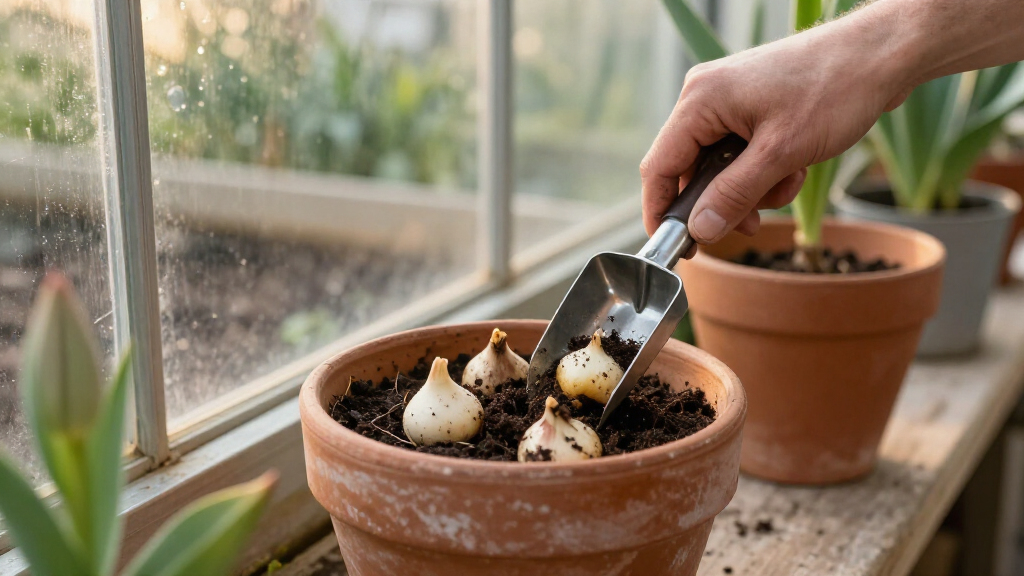
The report focuses on the Burpee stainless steel bulb dibbler, which has a pointed metal end, a wooden handle and a depth marker. It measures 11.5 inches long, including a six-inch handle, according to the product description in the article. The writer says the slim design is easier to maneuver in pots than a larger bulb planter, particularly when arranging bulbs in layers or planting close to existing ones.
A depth marker can help a gardener gauge how far to push the tool into the soil before placing a bulb. That may be useful when making a layered container planting, sometimes called a bulb lasagna, because different bulbs may need to sit at different depths. The article presents this as a way to make planting more controlled; it does not specify a single depth for all bulbs, which varies by bulb type and planting guidance.
The author also describes using the dibbler’s pointed end to create narrow channels for seeds. Other possible uses mentioned include loosening compacted soil and lifting weeds. The report recommends cleaning gardening tools after use to limit the spread of pests and disease before storing them, but offers no cleaning procedure specific to this dibbler.
A Slimmer Tool for Container Planting
Container planting leaves less room to work than an open garden bed. A narrow dibbler can make holes in that restricted space while helping avoid disturbing neighboring bulbs and plants. Its depth marker may also make it easier to repeat planting depths when arranging several layers, reducing reliance on guesswork.
The appeal described is practical rather than a claim of better flowering or higher germination. The same pointed tool may serve more than one seasonal job, from bulb planting in fall to preparing seed drills in spring. For readers considering a purchase, the report offers a use case and product dimensions, but not a price comparison, durability test or assessment against other tools.
Products Worth Considering

Dyson Car+Boat Cordless Handheld Vacuum

Sonos Era 100 SL Compact Microphone-Free Speaker, Black

Bose Lifestyle Ultra Wireless Home Speaker, White Smoke
As an affiliate, we earn on qualifying purchases.
From Fall Bulbs to Spring Seeds
The Homes & Gardens report is based partly on its writer’s experience planting daffodils, tulips and muscari in pots for a seasonal display near a front door. The writer says filling containers and judging planting depth can be fiddly, especially when bulbs are layered, and describes buying a dibbler as a response to that problem.
The article situates the dibbler among other bulb-planting options: a larger bulb planter, a bulb auger that attaches to a drill, and a trowel with a depth marker. These tools differ in size and operation, and the report does not compare their performance. Its recommendation is specifically that a slender hand tool can be convenient for working in tight container spaces.
“I love planting spring bulbs in pots to style by my front door for a seasonal welcome.”
— Homes & Gardens report author
What the Report Does Not Test
The article does not provide independent product testing, user surveys or comparisons showing whether the Burpee dibbler performs better than other planting tools. It gives no price, availability details or evidence about how well the depth marker holds up over time. The source also does not report measured effects on bulb growth, flowering or seed germination.
Planting depth depends on the particular bulb and the growing guidance for it, so a marker is a measuring aid rather than a universal setting. The report does not give depth recommendations for daffodils, tulips, muscari or specific seed varieties. Readers would need to check the instructions for the plants they are growing.
Check Planting Depths Before Use
The report identifies no upcoming product announcement, test or follow-up. Gardeners interested in using a dibbler can compare its size and features with other tools, then follow the planting directions for each bulb or seed variety. After garden work, the article advises cleaning tools before storing them for the season to help limit the spread of pests and disease.
Key Questions
What is a bulb dibbler?
A bulb dibbler is a narrow, pointed hand tool used to make holes in soil for bulbs. The Burpee model described in the report has a stainless steel point, a wooden handle and a depth marker.
Why might a dibbler be useful for bulbs in pots?
Its slim shape can be easier to use in a container than a larger bulb planter, particularly when planting close together or layering bulbs. A depth marker can help gauge the hole depth, but gardeners should still follow guidance for each bulb type.
Can a bulb dibbler be used for seed sowing?
The Homes & Gardens author says the pointed end can make narrow drills, or channels, for sowing seeds. The report does not test whether this affects germination.
What other tools can be used to plant bulbs?
The report also mentions a bulb planter, a drill-powered bulb auger and a trowel with a depth marker. It does not compare their results or recommend one option for every garden.
Does a depth marker give the right planting depth for every bulb?
No. A marker helps measure how deep a hole is, but the appropriate planting depth depends on the bulb or seed. Check the instructions for the variety being planted.
Source: rss