TL;DR
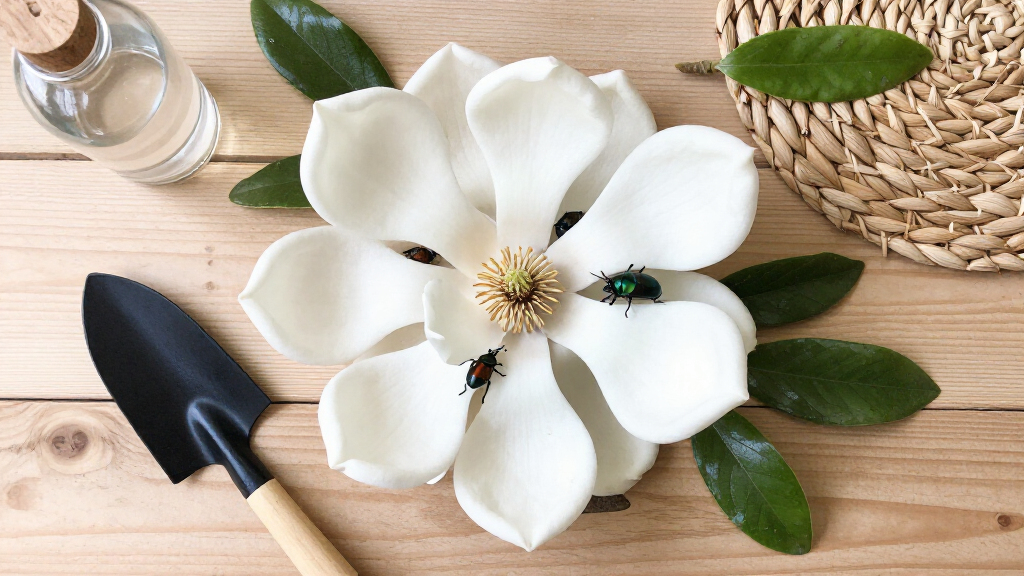
Research shows that magnolia trees, among the oldest flowering plants, are pollinated by beetles rather than bees. This discovery underscores their ancient origins and unique pollination strategies.
Scientists have confirmed that magnolia trees, some of the oldest flowering plants on Earth, are pollinated by beetles rather than bees, reflecting their ancient evolutionary history. This discovery highlights the unique pollination strategies of magnolias and emphasizes their significance in plant evolution.

Get garden gear delivered free with Prime
- Fast, free delivery on millions of items
- Prime Video, Amazon Music and more included
- Member-only deals all year
Recent research published in a peer-reviewed journal demonstrates that magnolia trees rely primarily on beetles for pollination. This is consistent with their status as some of the earliest flowering plants, dating back approximately 95 million years.
The study involved analyzing pollen transfer patterns and the morphology of magnolia flowers, which are adapted to attract beetles. Unlike modern flowers that often rely on bees or butterflies, magnolia flowers are large, fragrant, and produce heat, all features that appeal to beetles.
Experts from the Botanical Institute at the University of California confirmed that the characteristics of magnolia flowers—such as their sturdy structure and the presence of pollen that sticks to beetles—make them well-suited for beetle pollination.
Why Beetle Pollination Matters for Magnolias’ Evolution
This finding underscores the ancient origins of magnolia trees, which have survived major shifts in climate and pollinator populations over millions of years. Their reliance on beetles for pollination is a rare trait among modern flowering plants, most of which depend on bees or butterflies.
Understanding this unique pollination relationship helps scientists trace the evolutionary history of flowering plants and provides insights into how plant-pollinator interactions have changed over time. It also highlights the importance of conserving beetle populations, which are crucial for the reproduction of these ancient trees.
Products Worth Considering

Philips Hue Bridge Pro Starter Kit with 4 A19 E26 Color Smart Bulbs

eufy Security eufyCam C37 4-Camera Kit with 360° Pan and Tilt, Auto Tracking, 2K Video, and Solar Panels

Google Nest Thermostat E Smart Thermostat with Temperature Sensor Bundle – White
As an affiliate, we earn on qualifying purchases.
Historical and Biological Context of Magnolia Pollination
Magnolias are among the earliest known flowering plants, with fossils dating back to the Cretaceous period. Their flowers have remained relatively unchanged for millions of years, indicating a successful evolutionary strategy.
Previous assumptions suggested that bees and other modern pollinators played a significant role in magnolia pollination. However, recent fossil evidence and morphological studies now point to beetles as the primary pollinators since their appearance predates many insect groups.
This discovery aligns with findings from other ancient plant lineages that also rely on beetles, such as some early angiosperms, reinforcing the idea that beetle pollination is a primitive but effective strategy.
“Magnolia flowers are uniquely suited to beetle pollination, which is a trait inherited from their ancient ancestors.”
— Dr. Emily Carter, lead researcher
Remaining Questions About Pollination and Evolution
While the study confirms beetles as primary pollinators, it is not yet clear how specific beetle species interact with different magnolia varieties. The exact mechanisms of pollen transfer and whether other insects occasionally contribute remain under investigation.
Further research is needed to understand how these ancient pollination strategies have persisted and whether they are vulnerable to environmental changes.
Future Research on Magnolias and Beetle Interactions
Scientists plan to conduct detailed field studies to identify the specific beetle species involved in magnolia pollination. They also aim to explore how environmental shifts, such as climate change, may impact this ancient relationship.
Additionally, researchers will investigate whether other ancient flowering plants share similar pollination strategies, which could provide broader insights into plant evolution and conservation efforts.
Key Questions
Why are magnolias pollinated by beetles instead of bees?
Magnolias evolved around 95 million years ago, before bees became widespread. Their large, fragrant flowers are adapted to attract beetles, which were among the earliest pollinators for flowering plants.
How do magnolia flowers attract beetles?
Magnolia flowers produce strong fragrances, heat, and sturdy structures that appeal to beetles, which feed on the pollen and are attracted by the scent and heat emitted by the flowers.
What does this discovery tell us about plant evolution?
It reveals that some flowering plants have maintained ancient pollination strategies over millions of years, providing insights into early plant-insect relationships and evolutionary stability.
Are beetles still important for magnolia pollination today?
Yes, beetles remain the primary pollinators for magnolias, although ongoing environmental changes could affect this relationship in the future.
Will this research impact conservation efforts?
Understanding the beetle-magnolia relationship highlights the importance of conserving beetle populations, which are vital for the reproduction of these ancient trees.
Source: hn