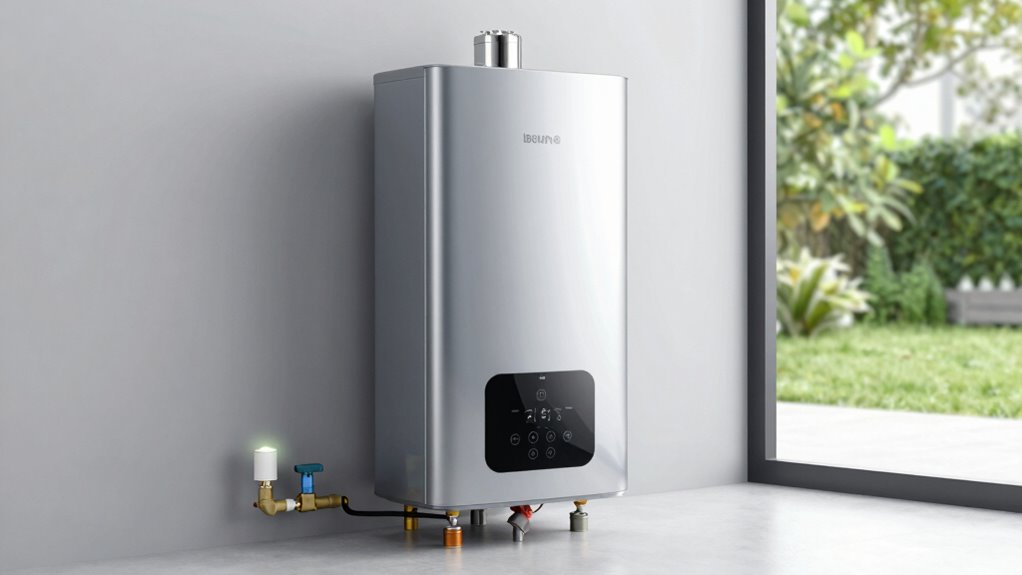

Heat pump water heaters matter for your efficiency goals because they extract heat from the surrounding air to warm water, reducing your electricity use and lowering bills. They operate intelligently, adjusting based on demand and ambient conditions, which improves performance and minimizes waste. By relying on eco-friendly air instead of fossil fuels, they also cut greenhouse gas emissions. To discover how these advanced systems can help you save more and support sustainability efforts, keep exploring this topic.
Key Takeaways
- They extract heat from ambient air, reducing energy consumption and lowering utility bills.
- They emit fewer greenhouse gases, supporting environmental sustainability and lower household carbon footprints.
- Advanced technology allows for intelligent operation, optimizing efficiency based on demand and conditions.
- Incentives and rebates make upgrading cost-effective, enhancing long-term savings.
- They help meet energy standards and contribute to overall household energy efficiency goals.

Heat pump water heaters are gaining popularity because they offer a more energy-efficient way to heat water compared to traditional models. If you’re looking to cut down on energy costs and reduce your carbon footprint, these systems could be a smart choice. They work by extracting heat from the surrounding air and using it to warm your water, which means they consume notably less electricity. This translates directly into noticeable energy savings over time. The more efficient your water heater, the less energy you use, which not only lowers your utility bills but also helps you achieve your efficiency goals.
Heat pump water heaters save energy by extracting heat from the air, reducing costs and environmental impact.
One of the biggest advantages of heat pump water heaters is their positive environmental impact. Because they rely on ambient air rather than burning fossil fuels or using electric resistance elements, they emit fewer greenhouse gases. This makes them an eco-friendly option for homeowners who want to reduce their carbon footprint. When you switch to a heat pump water heater, you’re making a conscious decision to support sustainability and lessen the environmental toll of your household energy consumption. Over the lifespan of the unit, the reduced energy use results in fewer emissions associated with electricity generation, especially in regions where electricity is generated from fossil fuels. Additionally, their reliance on ambient air means they can be integrated into solar-powered systems effectively, further enhancing their eco-friendly profile.
Beyond just the environmental benefits, heat pump water heaters also align with your energy efficiency goals by providing consistent performance with less waste. They operate more intelligently than traditional models, adjusting their operation based on demand and ambient conditions. This means you’re not wasting electricity during idle times or when hot water isn’t needed immediately. Their ability to efficiently store and deliver hot water helps you maximize every kilowatt-hour, making your home more energy-conscious. Moreover, as technology advances, these systems are becoming increasingly cost-effective, making them an attractive investment for the future.
Furthermore, the initial investment in a heat pump water heater can pay off over time through lower energy bills. Many utility companies offer rebates or incentives for upgrading to energy-efficient appliances, which can help offset the upfront costs. Plus, as regulations tighten and energy standards become more stringent, choosing a heat pump water heater puts you ahead of the curve. Your commitment to efficiency not only benefits your wallet but also contributes to broader environmental efforts.
In essence, heat pump water heaters matter for efficiency goals because they deliver considerable energy savings and have a reduced environmental impact. They help you lower operating costs while supporting sustainability initiatives. By making the switch, you’re taking a proactive step toward a more energy-efficient and eco-friendly home. This simple upgrade can make a meaningful difference in your energy consumption and environmental footprint, aligning your household with modern, responsible energy practices.
As an affiliate, we earn on qualifying purchases.
Frequently Asked Questions
How Long Do Heat Pump Water Heaters Typically Last?
Heat pump water heaters typically last around 10 to 15 years. Your energy savings can be significant during this lifespan, but lifespan factors like usage, maintenance, and water quality influence how long they perform well. Regular upkeep helps extend their efficiency and lifespan. If you stay proactive, you’ll enjoy reliable hot water and maximize your energy savings over the years.
Are Heat Pump Water Heaters Suitable for Cold Climates?
Like a polar bear braving icy waters, heat pump water heaters can handle cold climates, but with challenges. You’ll need to take into account insulation carefully, as cold weather can reduce efficiency. Modern units are designed to operate in lower temperatures, but their performance still depends on proper placement and insulation. So, if you’re in a chilly area, make sure your heater is well-insulated to keep energy use at its best.
Do Heat Pump Water Heaters Require Special Maintenance?
Heat pump water heaters do require some maintenance to keep them running efficiently. You should follow a regular maintenance schedule, including cleaning or replacing filters and inspecting the coils for dust or debris. Proper upkeep ensures your heater maintains peak energy efficiency, saving you money on energy bills. While their maintenance needs are minimal, staying on top of these tasks helps extend the lifespan and performance of your unit.
Can Heat Pump Water Heaters Be Installed Outdoors?
Like a sturdy tree standing tall against the wind, you can install a heat pump water heater outdoors, but weather considerations matter. Outdoor installation is possible, yet you need to protect it from extreme cold, snow, and rain. Proper shielding and insulation help it withstand the elements, ensuring efficiency and longevity. So, with careful planning, your outdoor heat pump water heater can serve you well, rain or shine.
What Is the Initial Cost Difference Compared to Traditional Water Heaters?
You’ll find that heat pump water heaters typically cost more upfront than traditional models, with a price difference of around $1,000 to $2,000. The initial investment might seem higher, but the cost comparison shows significant savings over time due to lower energy bills. While the upfront cost is greater, the efficiency benefits and potential rebates can make a heat pump water heater a smart long-term choice.
Conclusion
Switching to a heat pump water heater can substantially boost your home’s efficiency, saving you money and reducing environmental impact. Did you know these systems use up to 60% less energy than traditional electric water heaters? That means not only lower utility bills but also a meaningful step toward your sustainability goals. Embrace this technology and make a smart, eco-friendly choice for your home’s future.